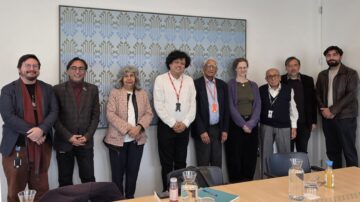

On 23 July 2026, Dr Najam Abbas, IIS editor and Research Associate in South Asian Studies, was invited by the Gulf Research Centre in Cambridge to present a paper and participate as a discussant in their sixteenth annual workshop. His presentation was about changing patterns of youth migration from South Asia to the Gulf region and formed part of a workshop titled Gulf–South Asia Relations in an Era of Deepening Interdependence.
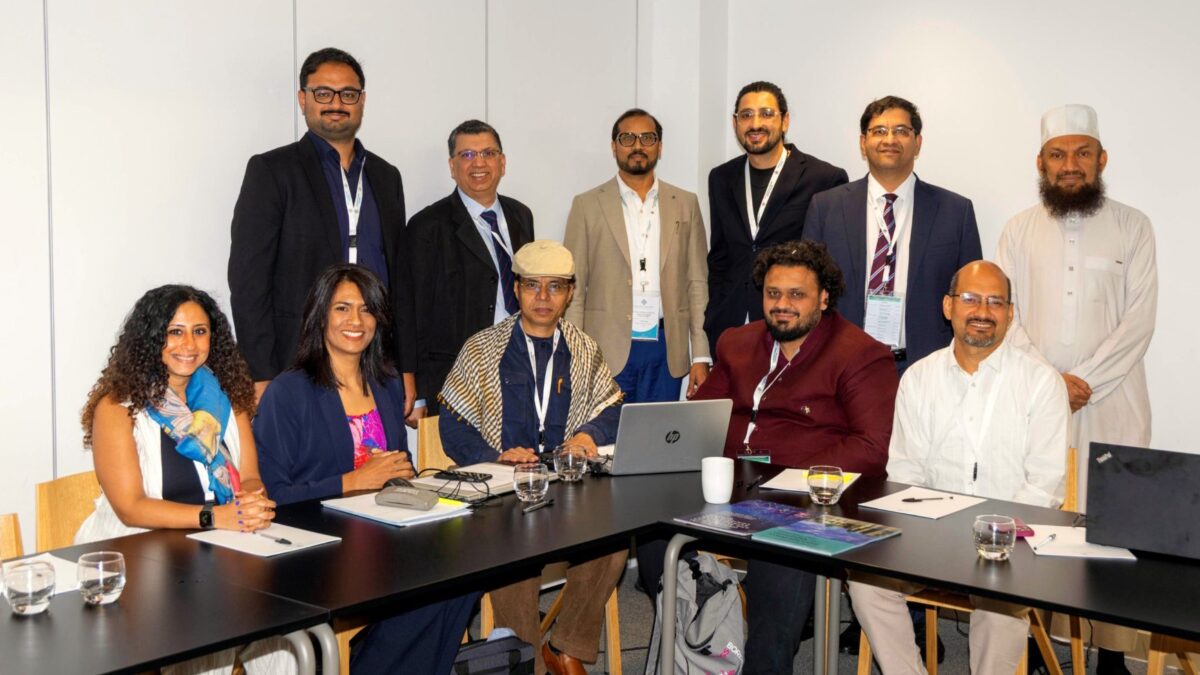
About the workshop
The workshop explored economic interdependencies, strategic alignments and the enduring role of labour mobility, while also considering future frameworks for institutionalised cooperation. By situating Gulf–South Asia relations within wider debates on connectivity, multipolarity, and global governance, the presentations aspired to inform policy strategies and deepen understanding of these increasingly important partnerships.
The participants of the workshop came from the University of Chittagong (Bangladesh); The University of Delhi (India); Quaid-i-Azam University (Pakistan); The Institute of Policy Studies of Sri Lanka; the Middle East Centre for Training and Development (UAE) and the National Defence College (UAE); the University of Exeter (UK) and Franklin and Marshall College (USA).
From labour export to talent pipeline
Dr Abbas’ paper argued that for South Asian workers, the labour corridor to the Gulf Cooperation Council (GCC) states constitutes a critical macro-economic pillar, generating remittances while supplying a vital workforce to destination economies. In accessing the GCC labour market, there is significant competition among the world’s most populous country (India) as well as from Pakistan, Bangladesh and the Philippines. South Asian states must therefore transition from exporting low-skilled labour surpluses to creating a validated, demand-driven, and sector-specific pipeline of certified talent.
However, systemic disruptions—evidenced by the COVID-19 pandemic and rising GCC nationalisation and automation—underscore the limits of relying on labour exports. To overcome these vulnerabilities, the paper introduced a six-pillar analytical framework encompassing demographic momentum, cognitive competencies, technical certification, competitive benchmarking, diaspora governance, and dynamic demand forecasting.
It argued that structural asymmetry need not perpetuate passive dependence; instead, South Asian economies can convert their demographic surplus into a verified, sector-aligned talent conveyor. Dr Abbas noted that the bilateral corridor between South Asia and the GCC stands at a decisive juncture.
While historical migration patterns have provided indispensable balance-of-payments relief and met critical Gulf infrastructure demands, shifts toward economic nationalisation, digital transformation, and industrial diversification across the Gulf necessitate an immediate departure from reactive, low-skilled labour exportation. The paper proposed that converting structural vulnerabilities into shared strategic leverage requires anchoring bilateral policy in three core tenets: reflexivity in institutional learning, relevance to evolving destination labour markets, and continuous reinvention of the domestic human capital pipeline.