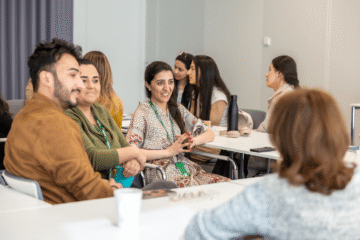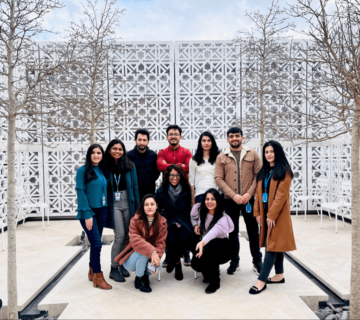
Les étudiants de la promotion 2027 du programme de master en études islamiques et sciences humaines (GPISH) se sont rendus en Andalousie, en Espagne, dans le cadre du voyage d'étude de deuxième année. Sous la houlette du Dr Gregory Bilotto, ce voyage s'inscrit dans le cadre du programme d'enrichissement du GPISH et est consacré aux monuments architecturaux musulmans de l'Occident islamique. Il vient compléter les modules universitaires dispensés au sein de l'établissement, notamment celui intitulé "Arts et architecture dans les sociétés musulmanes", en donnant vie aux lieux qu'ils ont étudiés à travers des textes, des images, des cours et des débats.
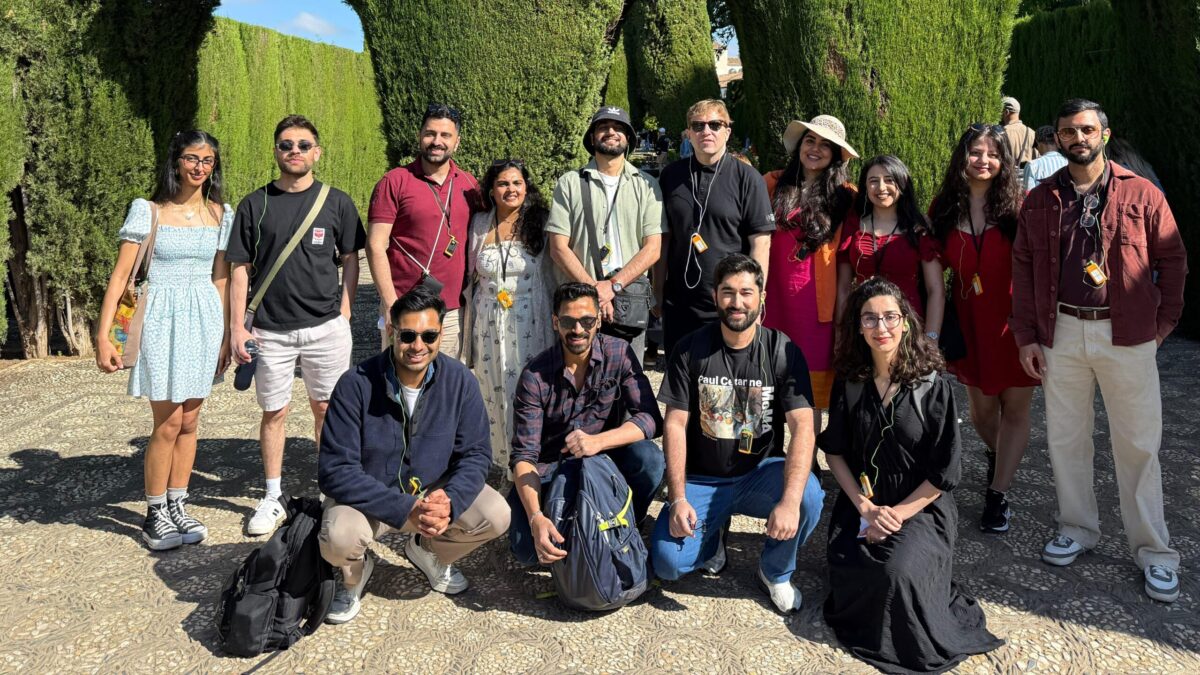
Pendant quatre jours, le groupe a visité Malaga, Cordoue, Madīnat al-Zahrāʾ et Grenade, à la découverte de certains des sites architecturaux les plus marquants en lien avec l'histoire de la domination musulmane dans la péninsule ibérique.
Cette visite a permis d'étendre l'apprentissage en classe à une découverte véritable du lieu. Les étudiants avaient déjà étudié les formes, l'histoire et la signification de l'architecture islamique. En Andalousie, ils ont pu parcourir ces lieux, les observer de près et réfléchir à la manière dont les édifices continuent de véhiculer des idées sur le pouvoir, la foi, la beauté, la mémoire et l'héritage culturel.
Faire sortir l'architecture des salles de classe
Le module "Arts et architecture dans les sociétés musulmanes" initie les étudiants aux traditions visuelles, matérielles et architecturales des sociétés musulmanes à travers différentes époques et régions. Il les invite à porter un regard critique sur les bâtiments, non seulement en tant qu'objets esthétiques, mais aussi en tant qu'espaces façonnés par le contexte historique, le mécénat, les croyances et la vie sociale.
Le voyage d'étude en Andalousie a permis aux élèves d'enrichir leurs études d'une expérience concrète. Plusieurs étudiants ont évoqué la différence entre étudier l'architecture à distance et se trouver à l'intérieur même des bâtiments.
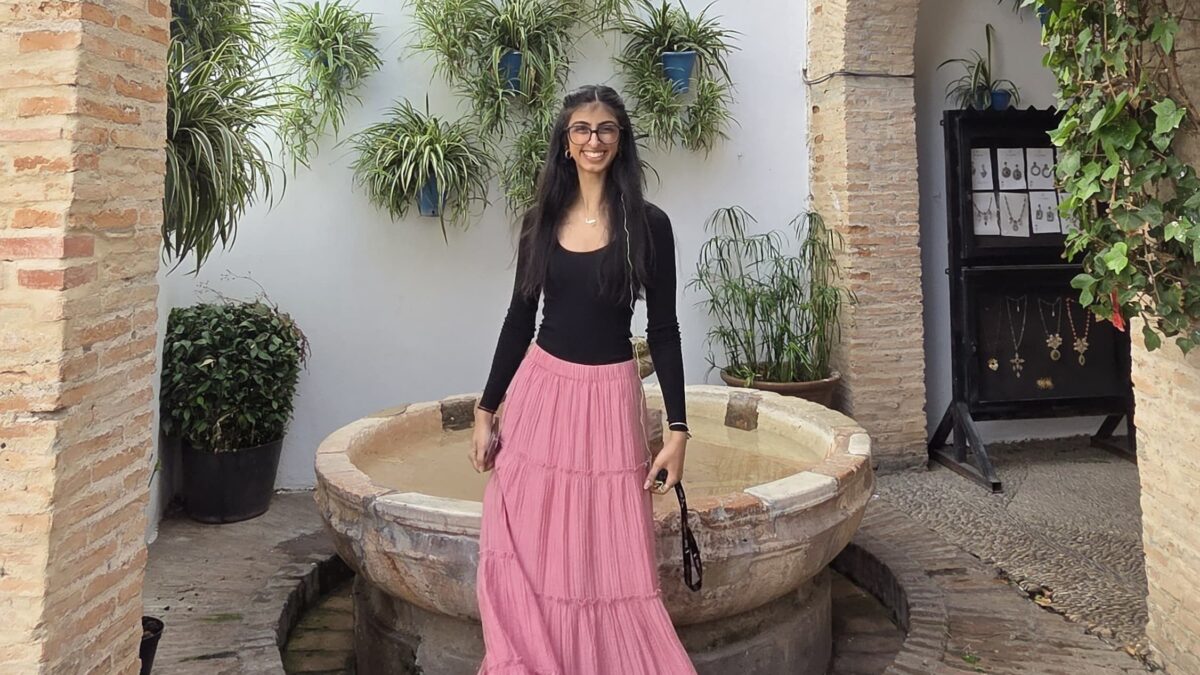
Pour Haya Hussain, originaire du Canada, cette visite a permis d'aborder l'un des principaux défis des études universitaires : le fossé qui peut parfois exister entre les idées et l'expérience vécue. « L'une des choses les plus difficiles dans le monde universitaire, c'est qu'il donne souvent l'impression d'être abstrait et déconnecté du monde réel.
Des voyages comme celui en Espagne, organisé dans le cadre du module "Art et architecture", nous permettent de prendre conscience que les lieux faisant l'objet de nos apprentissages, études et recherches ne se limitent pas à une simple expérience théorique, mais que notre travail peut avoir des répercussions et des conséquences concrètes dans le monde réel.
Ce sentiment d'apprentissage concret était partagé par l'ensemble de la promotion. Les étudiants avaient déjà découvert les monuments d'Andalousie à travers des cours et des images, mais le fait d'être sur place leur a permis d'aller plus loin et de mesurer leur ampleur, leur atmosphère et leur complexité.
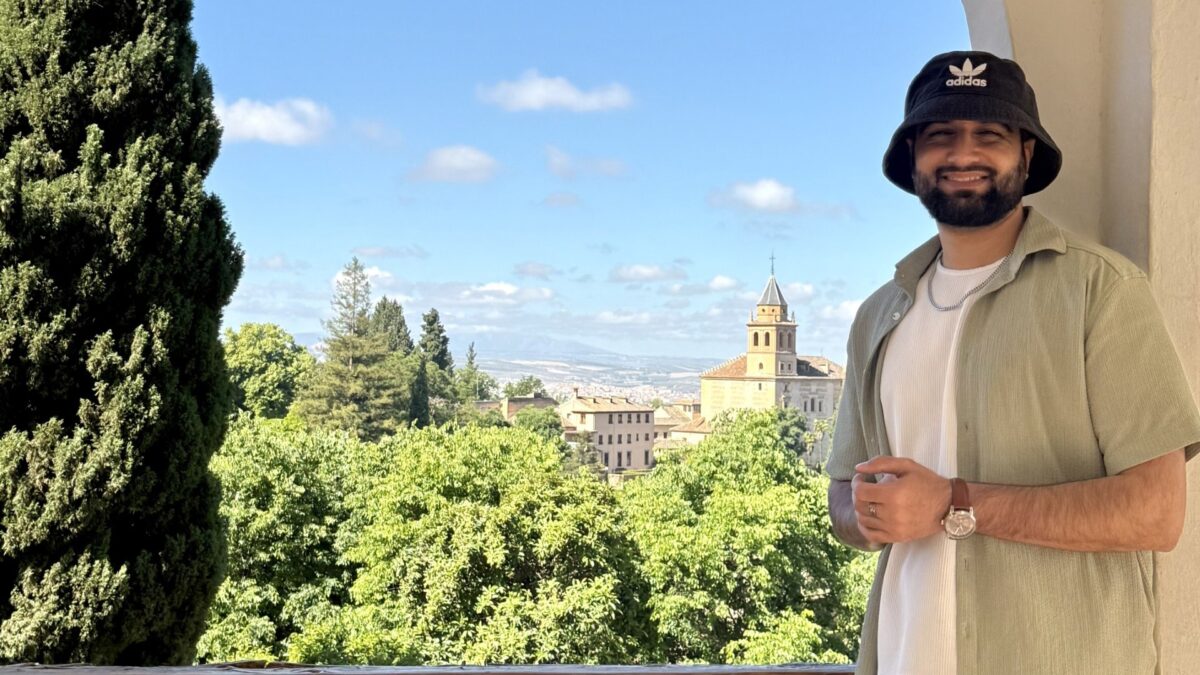
Comme l'a fait remarquer Mohsin Baig, originaire de Chitral au Pakistan :
Après avoir passé des semaines à étudier l'architecture islamique à Londres, à assimiler des dates, des noms, des motifs architecturaux et des photographies, rien ne m'avait vraiment préparé à me retrouver réellement à l'intérieur de ces lieux.
…En tant que groupe, notre voyage de quatre jours à Malaga, Cordoue et Grenade, organisé dans le cadre de notre module "Arts et architecture dans les sociétés musulmanes", a permis de transformer des connaissances théoriques en une expérience concrète et tangible que je peux désormais ressentir. »
Le passage de la théorie à l'expérience a transformé la vision des étudiants sur l'architecture en tant que discipline.
Mohsin a poursuivi :
« En parcourant la Grande Mosquée des Omeyyades à Cordoue, en suivant le tracé de sa forêt d’arcades, ou en flânant dans les jardins époustouflants de l’Alhambra, dans la ville poétique de Grenade, j’ai compris des choses qu’aucun cours ne pourrait totalement m’enseigner. Je crois que l'expérience est l'une des formes de savoir les plus profondes, et c'est exactement ce que m'a apporté ce voyage. »
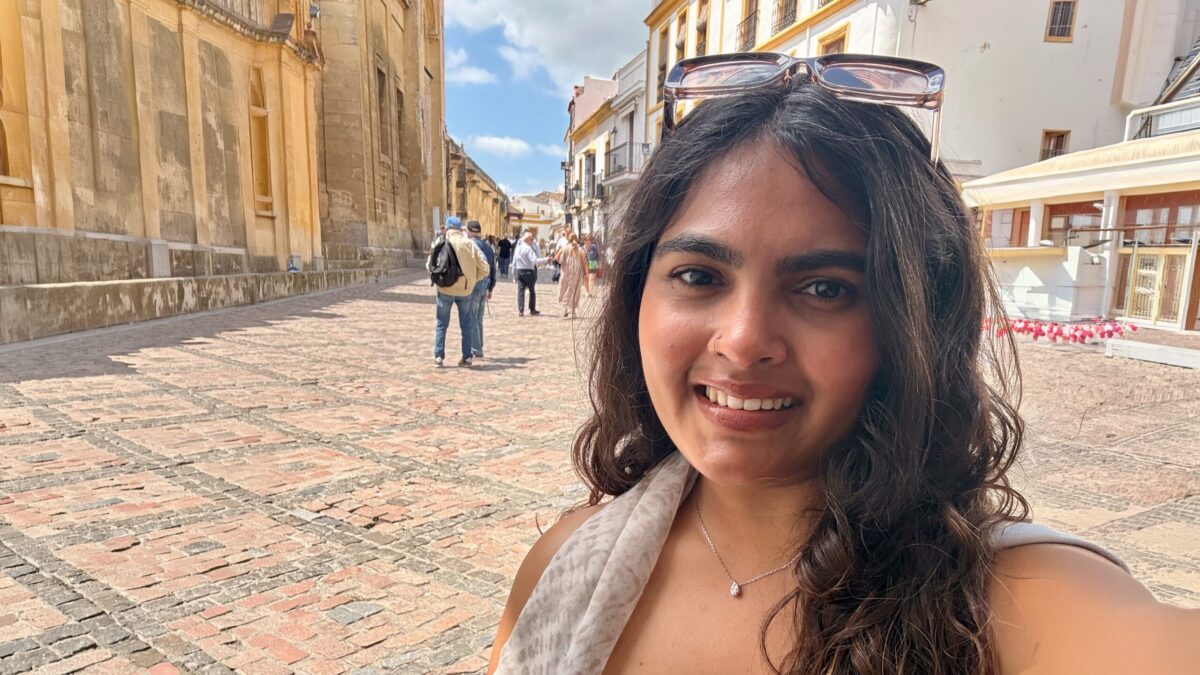
Pour Nurain Lakhani, originaire de Calcutta en Inde, ce voyage a permis d'aiguiser son sens du détail et de transformer sa relation avec le contenu du module.
Je crois que j'ai sous-estimé à quel point le fait de voir ces bâtiments de mes propres yeux allait réellement changer ma façon de comprendre le contenu du module.
La mosquée-cathédrale de Cordoue a été l'un des premiers sites à remettre en question ses attentes.
« La mosquée-cathédrale de Cordoue a été la première chose qui m’ait véritablement surprise. J’avais vu des photos de ces arches un nombre incalculable de fois en cours, mais me retrouver sur place et prendre conscience de la façon dont elles s'étendent dans toutes les directions a été une expérience tout à fait différente. »
Ce voyage m'a permis non seulement d'apprécier les lieux, mais aussi d'adopter un regard plus actif. Les élèves ont commencé à considérer les bâtiments comme des sources d'information : ils se sont interrogé sur ce qu'ils révèlent, ce qu'ils dissimulent et la façon dont leur signification a évolué au fil du temps.
Lire les bâtiments comme des textes historiques
À Cordoue, à Madīnat al-Zahrāʾ et à Grenade, les étudiants ont découvert des espaces façonnés par différentes formes de mécénat, d’ambition politique, de transformation religieuse et de mémoire culturelle.
Ce voyage les a amenés à voir l'architecture comme un texte historique : quelque chose pouvant être lu, remis en question et interprété. Les bâtiments ne se contentent pas de survivre au temps. Ils sont modifiés, réutilisés, restaurés, remis en question et réinterprétés par chaque génération qui en hérite.
Pour Nurain, la mosquée-cathédrale de Cordoue a soulevé des questions qui ont pris une dimension plus immédiate du fait de sa présence physique à l'intérieur de ce lieu.
« Je ne cessais de penser à la décision de construire la cathédrale via la mosquée directement, plutôt que de démolir cette dernière. Cela en dit long, de façon complexe, sur le pouvoir et la coexistence, et le fait de me trouver physiquement dans cet espace m’a permis de ressentir ces tensions de manière très immédiate, plutôt qu’abstraite. »
Ce passage de l'abstrait à l'immédiateté a inspiré plusieurs réflexions chez les élèves. Le site a été perçu comme un espace à plusieurs niveaux où les histoires de pouvoir et d'adaptation restent visibles.
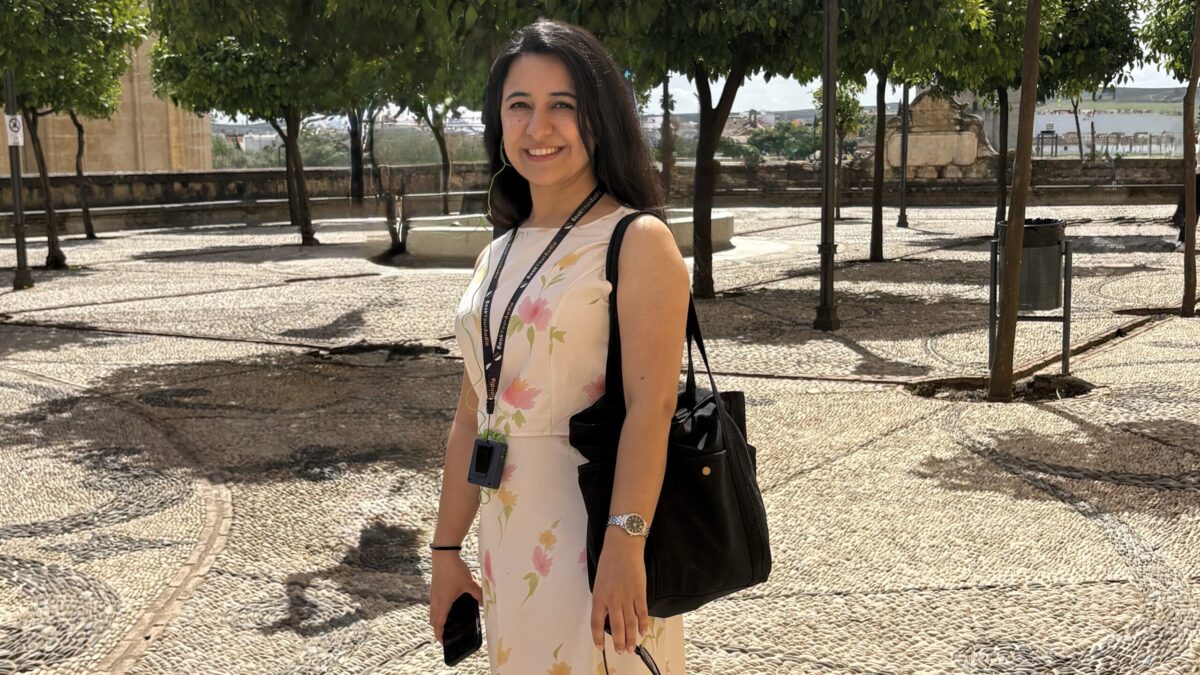
Shabnaz Wali, originaire de Chitral au Pakistan, a également abordé cette complexité à travers la relation entre l'architecture et l'autorité.
« L'architecture a rarement été une discipline politiquement neutre. Les pouvoirs en place ont toujours utilisé l'environnement construit comme un instrument de légitimation, en créant des espaces qui véhiculent une idéologie, affirment une continuité dynastique et projettent l'autorité d'une manière que les proclamations écrites parviennent rarement à égaler. »
Pour Shabnaz, l'Andalousie offrait un cadre puissant pour explorer ces idées.
Le voyage de notre promotion en Andalousie, dans le cadre du module "Arts et architecture", nous a offert une occasion rare de découvrir ces espaces controversés et de réfléchir à ce qu’ils révèlent sur le pouvoir, la mémoire et la continuité culturelle.
La visite de ces monuments a permis de les replacer dans un contexte plus large, celui des histoires de pouvoir, de succession et de transformation. Plutôt que de considérer l'architecture comme un héritage figé, elle l'a abordée comme le témoignage de revendications contradictoires.
D'après elle, la mosquée-cathédrale de Cordoue demeure un exemple particulièrement significatif :
« L’état actuel du bâtiment, où des inscriptions coraniques coexistent avec une pratique liturgique chrétienne active, s’oppose aux récits univoques de supplantation et constitue au contraire une archive vivante d’une légitimité contestée. »
Cette façon de voir le bâtiment comme une « archive vivante » renvoie à l'un des principaux objectifs pédagogiques du voyage : savoir interpréter les traces visibles des changements historiques. Madīnat al-Zahrāʾ a permis d'approfondir ces questions sous un angle différent. Pour Nurain, ce fut l'un des moments les plus passionnants du voyage, en raison des fouilles en cours sur le site et des questions qu'elles soulevaient concernant la reconstruction.
« C’est Madīnat al-Zahrāʾ qui m'a le plus fascinée. Dans un site que l'on découvre encore, il y a quelque chose qui vous sensibilise davantage à ce que vous êtes en train de regarder. Pouvoir accéder à la Salle Royale, qui n'est pas ouverte au public, est ce qui m'a le plus marquée au cours de ce voyage. »
Cette expérience l'a incitée à réfléchir sérieusement aux questions de préservation et d'interprétation.
« Les décorations sculptées dans la pierre qui ont survécu sont d’un raffinement et d’une réflexion tels que les voir à l’état brut m’a permis de réfléchir plus attentivement à la manière dont nous interprétons et reconstituons le passé. Cela m'a amené à m'interroger sur les priorités en matière de restauration et sur les raisons qui les motivent. »
Shabnaz a également évoqué Madīnat al-Zahrāʾ comme un lieu où se croisent architecture et ambition politique.
« En parcourant les allées encore visibles du site et en pénétrant dans cette salle cérémoniale, j’ai été confrontée simultanément à l’ambition de la civilisation qui l’avait édifiée et à l’ampleur de son effondrement. »
Pour les étudiants, ces rencontres ont soulevé des questions qui allaient au-delà de la forme architecturale. Ces lieux invitaient à réfléchir à la fragilité du pouvoir, à la pérennité de la culture matérielle et aux responsabilités liées à l'interprétation du passé.
La beauté, le sens et l'environnement construit
La visite de Grenade et de l'Alhambra a inspiré d'autres réflexions. Les étudiants ont examiné comment les éléments de la conception spatiale s'articulent au sein des traditions architecturales islamiques.
L'Alhambra est devenue un lieu où les étudiants ont pu réfléchir à la relation entre le concept et la mise en œuvre, la théorie et l'expérience, ainsi qu'entre le spirituel et le quotidien.
Nurain a émis la réflexion suivante :
« Au début, l'Alhambra m'a presque submergé. Les palais nasrides m’ont tout particulièrement amenée à réfléchir à la manière dont la théorie architecturale islamique se concrétise dans la pratique, et à la façon dont la géométrie, la lumière, l’eau et la décoration des surfaces ne constituent pas des éléments distincts, mais s’inscrivent dans une intention unique et unifiée. »
Cela a changé sa façon d'appréhender les éléments étudiés en classe.
J'avais lu des choses sur ce lien entre le concept et la réalisation, mais je ne l'avais pas vraiment assimilé avant de me retrouver sur place.
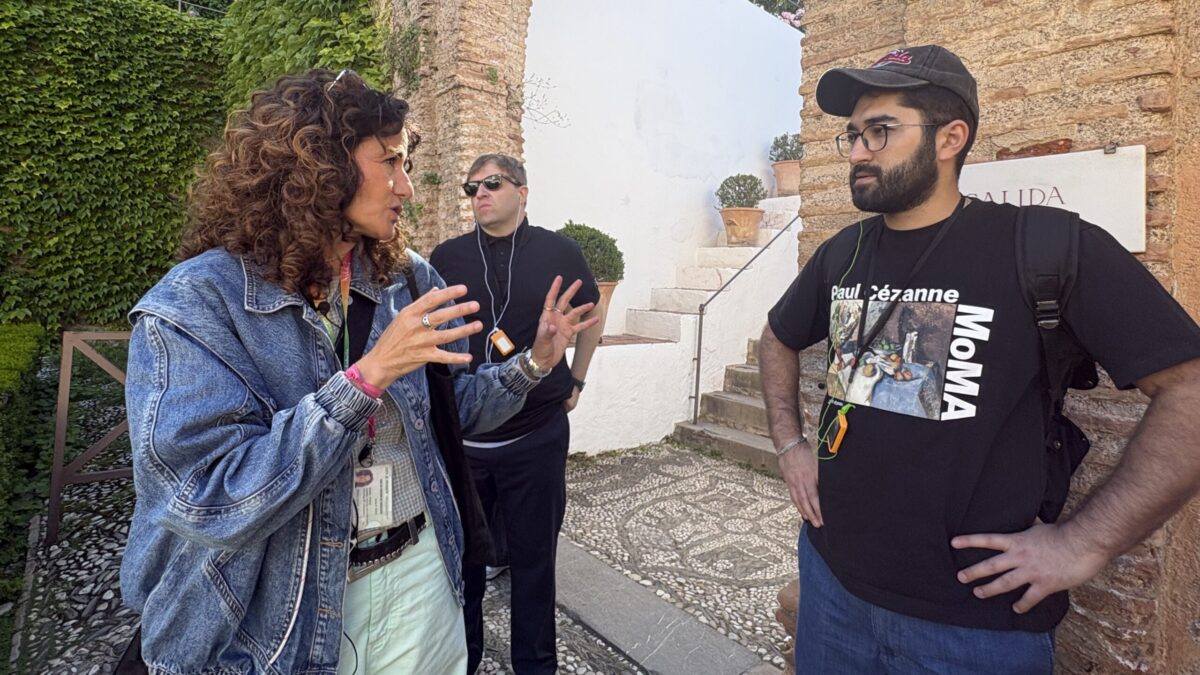
Mubashir Artas, originaire de Gilgit au Pakistan, a également évoqué les limites des sources écrites dans l'étude de l'architecture et de l'histoire.
Il existe une différence fondamentale entre lire l'histoire dans les manuels scolaires et la découvrir sous une forme concrète.
Pour lui, cette visite a révélé que l'architecture est le reflet de valeurs et d'une ambition intellectuelle.
« J’ai appris à apprécier ces archives vivantes qui témoignent des valeurs, des croyances et des ambitions intellectuelles d’une civilisation d’une manière que les sources écrites seules ne peuvent égaler. »
Sa réflexion remettait également en question la tendance à séparer le religieux et le profane lorsqu'on aborde l'art et l'architecture islamiques.
« En me tenant devant l’Alhambra et en parcourant la mosquée-cathédrale de Cordoue, j’ai été frappé par la façon dont la spiritualité et la vie quotidienne s’entremêlaient en toute harmonie. »
Il a poursuivi :
L’un des principaux enseignements que je retiens est que de nombreuses études contemporaines sur l’art et l’architecture islamiques imposent une dichotomie entre le religieux et le profane, alors que les constructeurs et les mécènes de ces lieux ne percevaient probablement pas une telle distinction. Pour eux, la beauté, la foi, la connaissance et la vie quotidienne formaient un tout unique et cohérent, une vision qui mérite d’être redécouverte. »
Cette réflexion s'inscrit en parfaite adéquation avec les objectifs du programme GPISH, qui encourage les étudiants à adopter une approche interdisciplinaire et à remettre en question les catégories établies.
Apprendre à porter un regard différent
Dans leur ensemble, ces réflexions montrent à quel point ce voyage d'étude a transformé la perception des élèves. Pour Mohsin, ce changement a été profond et durable.
« Ce qui a le plus changé, c’est ma confiance en moi. Je ne me contente plus de regarder l'architecture et de l'admirer de loin. Aujourd'hui, je l'étudie à travers ses motifs, ses proportions, sa signification. Cette expérience restera gravée dans ma mémoire tout au long de ma vie. »
Pour Haya, ce voyage a permis de faire le lien entre différents aspects de l'enseignement dispensé dans le programme GPISH.
« Ce module se distingue d’une grande partie du programme GPISH car il repose sur des modes de réflexion et d’approche des textes et des contextes différents ; il était donc particulièrement important de pouvoir se trouver physiquement à l’intérieur de l’architecture dont nous avions parlé durant tant de séances. »
L'expérience de Cordoue, en particulier, est devenue un point de convergence entre différents domaines d'étude.
« Alors que je me trouvais dans la mosquée-cathédrale de Cordoue, je ne pouvais m’empêcher d’être émerveillée par le fait que la ville était un véritable labyrinthe de palimpsestes, et cela transparaissait clairement dans l’expérience elle-même. Alors que la ville était un mélange de cultures, de religions et d’empires, tous les cours du programme GPISH suivis jusqu’à présent ont trouvé leur aboutissement dans l’expérience que nous en avons faite. »
C'est là que l'intérêt du voyage d'étude apparaît le plus clairement. Ce dernier a permis aux étudiants de combiner l'étude de l'histoire, l'analyse textuelle, la culture matérielle et les études religieuses grâce à l'observation sur le terrain. Ces expériences sont au cœur de la mission éducative globale du programme GPISH. Ce programme prépare les étudiants à aborder de manière critique l'histoire, les sociétés et les traditions intellectuelles musulmanes. Les voyages d'étude enrichissent cet apprentissage en mettant les élèves en contact direct avec les environnements matériels et culturels à travers lesquels ces histoires sont préservées, remises en question et commémorées.
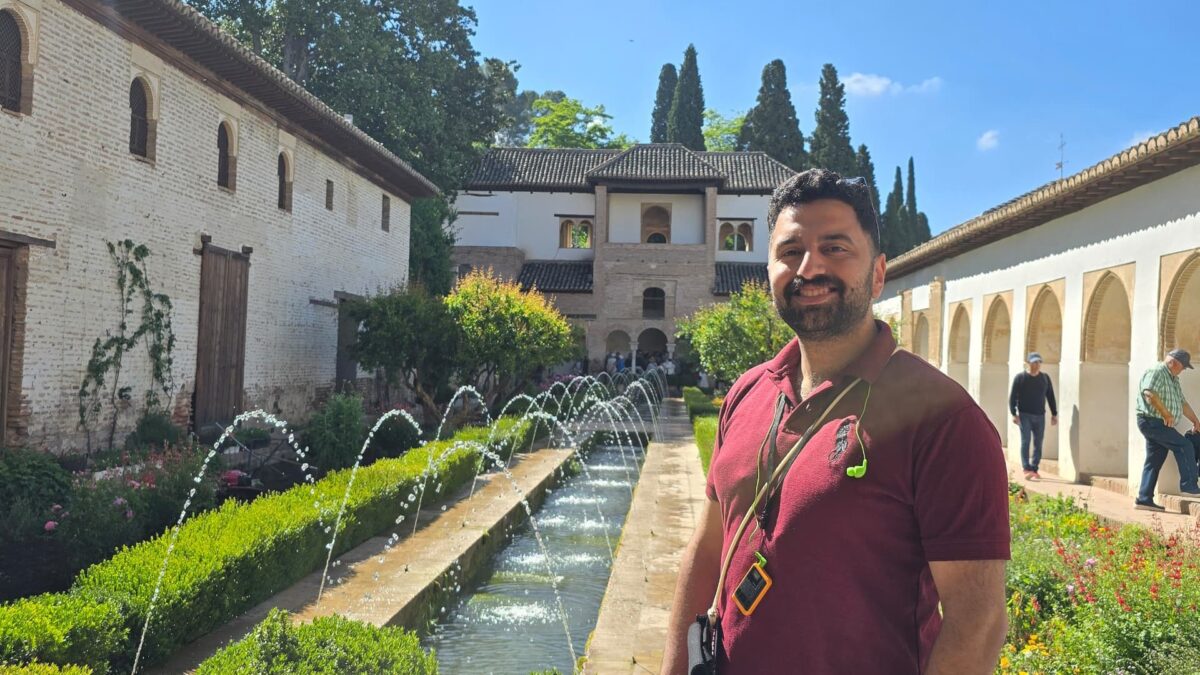
Nasr Zain, originaire de Salamiyah en Syrie, a découvert l'Andalousie à travers la musique. Passionné de guitare depuis son plus jeune âge, il a associé ce voyage à l'un des premiers morceaux difficiles qu'il ait appris, "Recuerdos de la Alhambra".
« Cela prend désormais tout son sens après avoir visité l'Andalousie, où chaque scène et chaque décor ressemblent à un morceau de guitare. »
Sa réflexion propose une manière différente, mais tout aussi puissante, d'appréhender le lieu à travers le rythme et le mouvement.
« Cordoue était un morceau magnifique et entraînant qui vous emmène à la découverte de l'architecture musulmane. Grenade, c'était cette musique lente, enchevêtrée et parfois ascendante qui accompagnait chacune de ses rues. »
Il a ajouté :
« Et malgré toute cette agitation et ces déplacements, le temps s'écoulait lentement tandis que je passais d’un lieu mémorable à un autre. »
Cette réflexion finale met en lumière un sentiment partagé par l'ensemble de la promotion. Ce voyage a été exigeant sur le plan intellectuel, mais il a également revêtu un caractère personnel, empreint d'émerveillement.
Une rencontre permanente avec le passé
Le voyage d'étude de la promotion GPISH 2027 à Cordoue, à Madīnat al-Zahrāʾ et à Grenade a montré à quel point le contact direct avec les lieux peut enrichir les études universitaires. Cette visite a permis aux étudiants d'approfondir leur compréhension de l'architecture en tant qu'archive vivante du pouvoir, de la culture et de la foi. Ils ont également décrit une évolution en eux-mêmes : passer de la simple observation des bâtiments à leur interprétation, et de l'étude du passé à la découverte de sa présence physique.