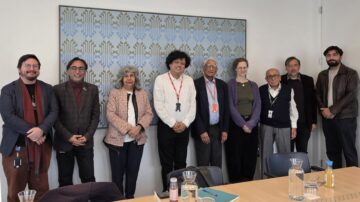
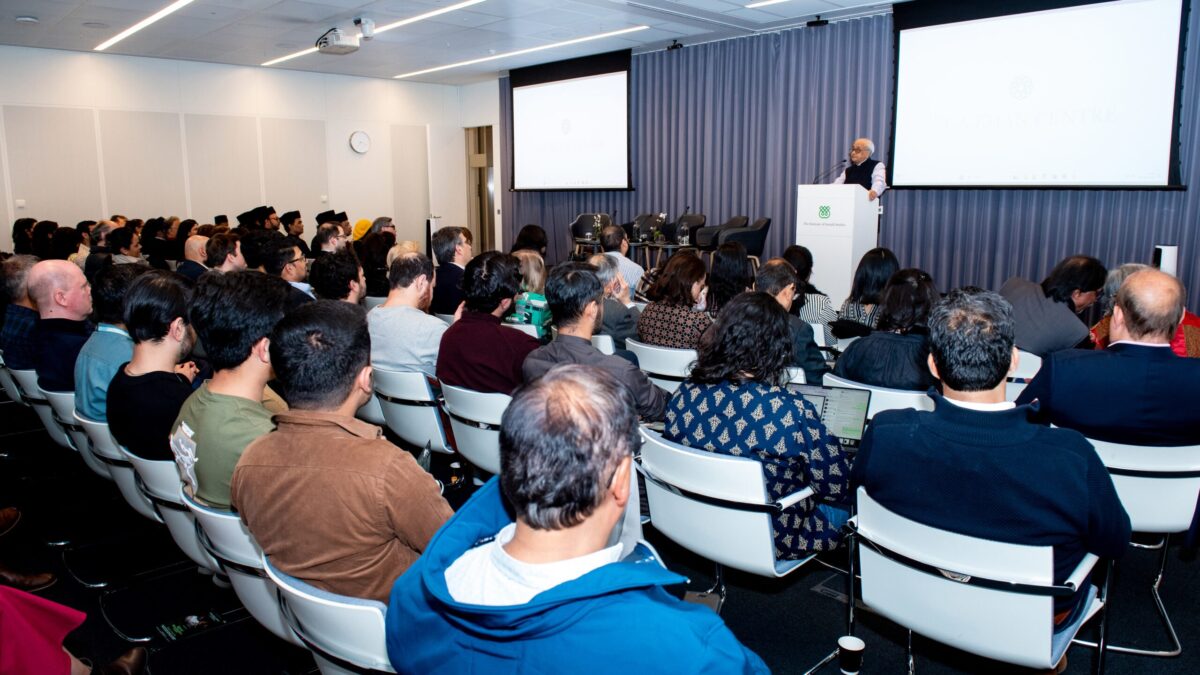
A Unidade de Estudos do Sul da Ásia do Instituto de Estudos Ismailis (IIS), em colaboração com a SAMA Arts Network e a Indus Music, organizou uma noite especial intitulada «Em Louvor de Khusrau», com a participação dos célebres Irmãos Warsi, intérpretes de Qawwal. O programa reuniu académicos, artistas, entusiastas de música e membros da comunidade em geral para uma exploração emocionante da vida, legado e perdurável influência cultural do lendário poeta e músico sufi Amir Khusrau*. A noite contou com uma rica mistura de conversas, reflexões e atuações musicais, centradas nas contribuições de Amir Khusrau para as tradições artísticas e espirituais do Sul da Ásia.
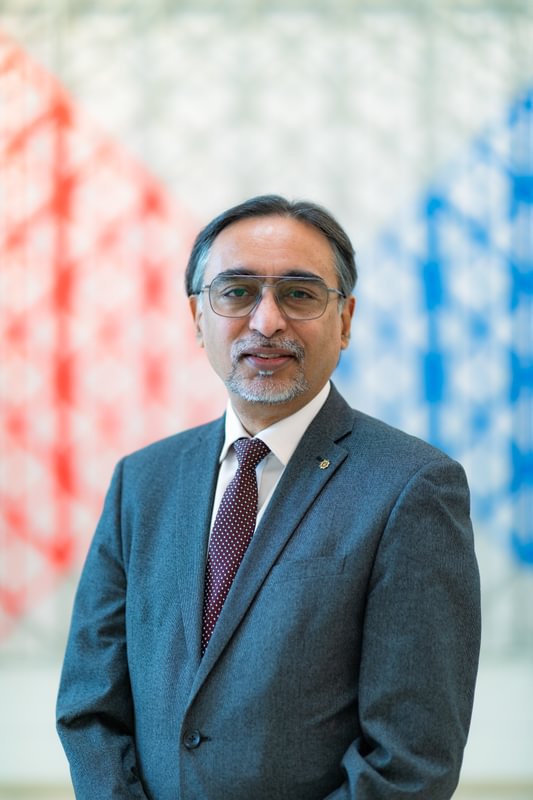
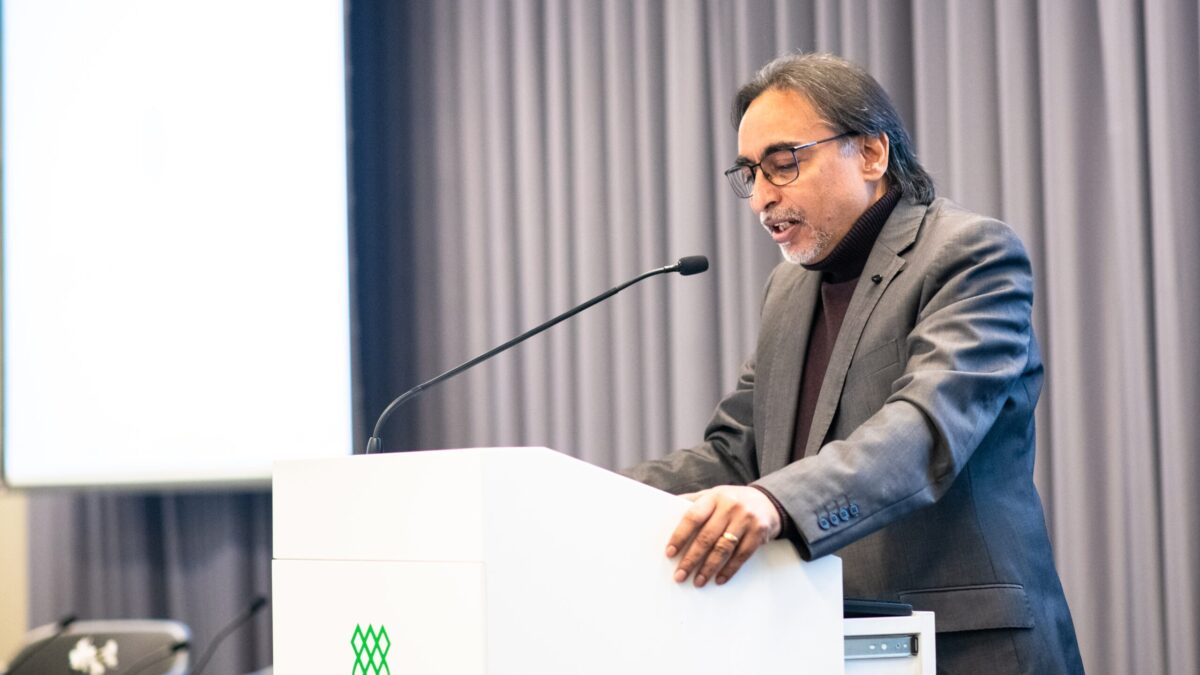
Hussain Jasani, diretor da Unidade de Estudos do Sul da Ásia do IIS, deu as boas-vindas aos convidados, numa noite dedicada à reflexão, à música e à partilha de experiências culturais, e descreveu o qawwali como uma tradição que «fala tanto ao coração como ao intelecto». Agradeceu a Jay Visvadeva e à Rede SAMA pela sua colaboração na criação de espaços propícios às tradições musicais do Sul da Ásia. Expressou ainda o seu apreço à Professora Zayn Kassam pela sua liderança e apoio, que permitiram um envolvimento cultural e intelectual significativo através das iniciativas dos Estudos do Sul da Ásia do Instituto.
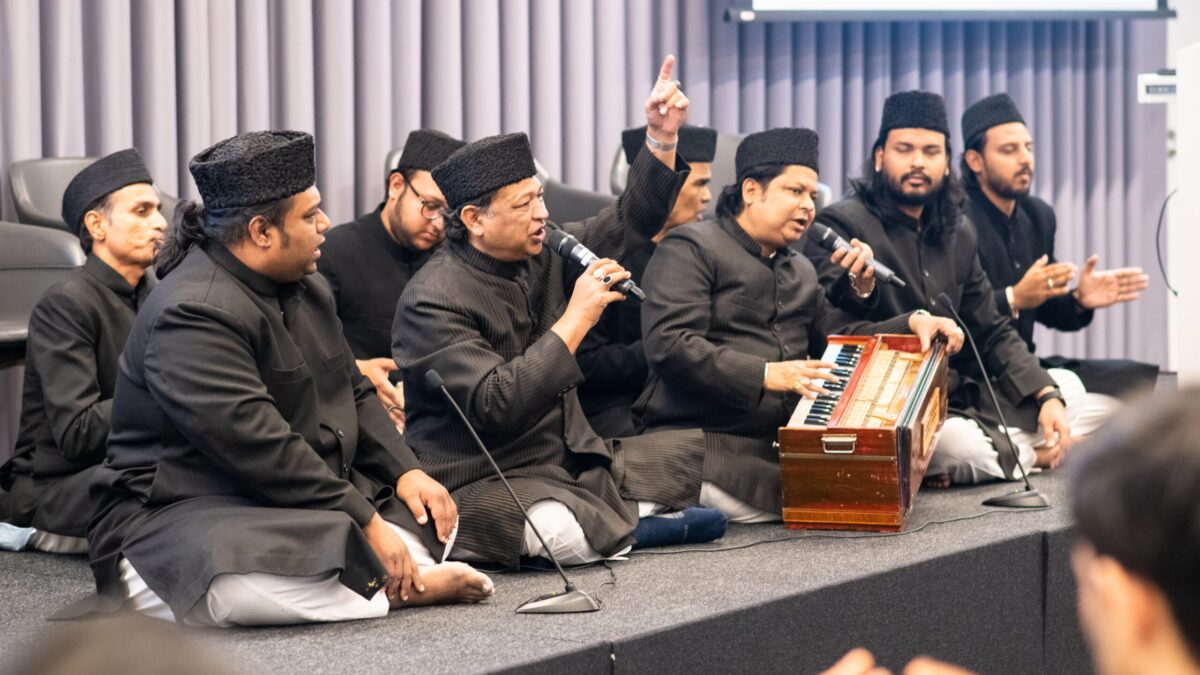
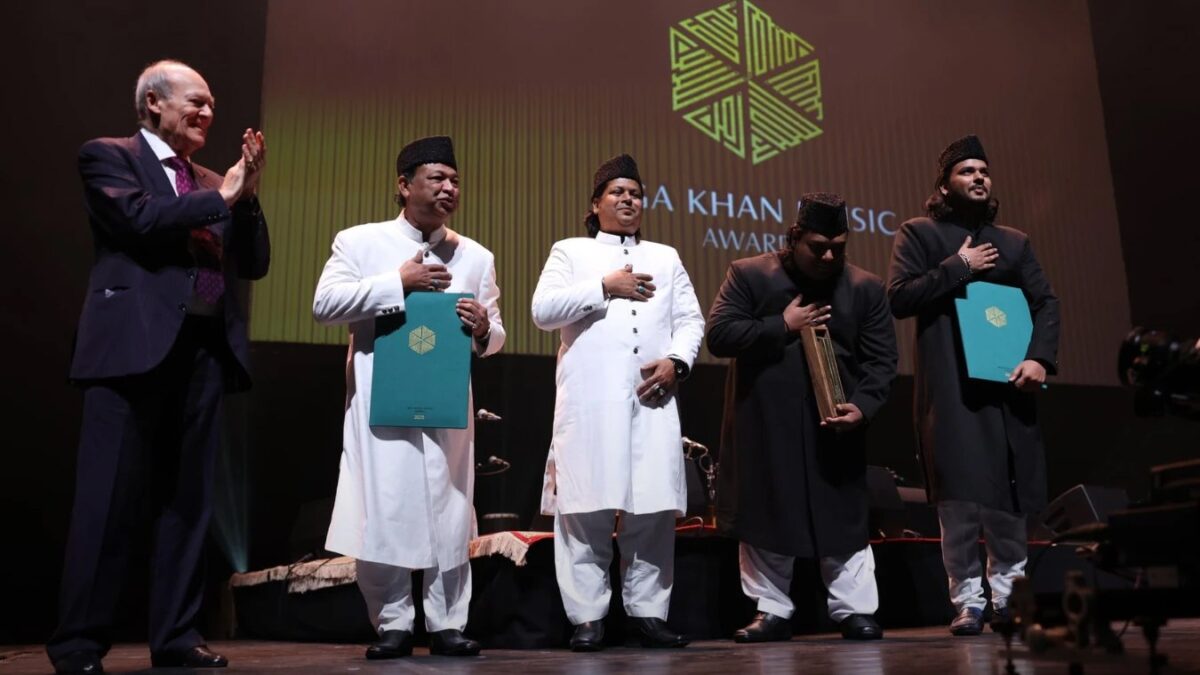
Ao apresentar os Irmãos Warsi, destacou o reconhecimento que estes receberam recentemente através do Prémio do Patrono da edição de 2025 dos Prémios Aga Khan para a Músicae refletiu sobre o qawwali como uma tradição sufi viva, enraizada na recordação, na devoção e na escuta espiritual (sama). Baseando-se nos escritos dos Ikhwan al-Safa e de outros pensadores muçulmanos, Jasani falou sobre a música como forma de arte tanto intelectual como espiritual, capaz de refinar a alma, cultivar a reflexão e promover a ligação humana entre culturas e gerações.
Jay Visvadeva, diretor artístico honorário da SAMA, produtora da Digressão de 2026 dos Irmãos Warsi Qawwal no Reino Unido, apresentou uma análise comparativa dos principais qawwals dos últimos 50 anos (1975–2025) com quem trabalhou. Entre estes contam-se os Irmãos Sabri, Ustad Nusrat Fateh Ali Khan, Ustad Jaffar Hussain Khan, Abida Parveen, os Qawwals Munshi Raziuddin e Fareed Ayaz, o qawwal Bahauddin Khan, Najmuddin Saifuddin e o seu grupo, e Rizwan Muazzam. Cada um representava uma abordagem artística distinta. Jay destacou a transformação dramática por que passou o género qawwali ao longo das últimas cinco décadas — passando de atuações devocionais em santuários a um fenómeno musical global.
Os Irmãos Warsi e os Prémios Aga Khan para a Música
Um dos pontos altos do programa foi a participação dos internacionalmente aclamados Irmãos Warsi — Naseer Ahmed Khan Warsi e Nazeer Ahmed Khan Warsi —, que se contam entre os expoentes mais respeitados da música qawwali na Índia.
Os Irmãos Warsi foram agraciados com o Prémio do Patrono na prestigiada cerimónia de atribuição dos Prémios Aga Khan para a Música, na sua edição de 2025, realizada no Southbank Centre, em Londres. Na declaração oficial, o júri reconheceu a dupla pela sua "preservação dinâmica e transmissão do legado espiritual e musical de Amir Khusrau a públicos multigeracionais, ao mais alto nível de excelência musical".
Qawwali enquanto tradição sufi viva
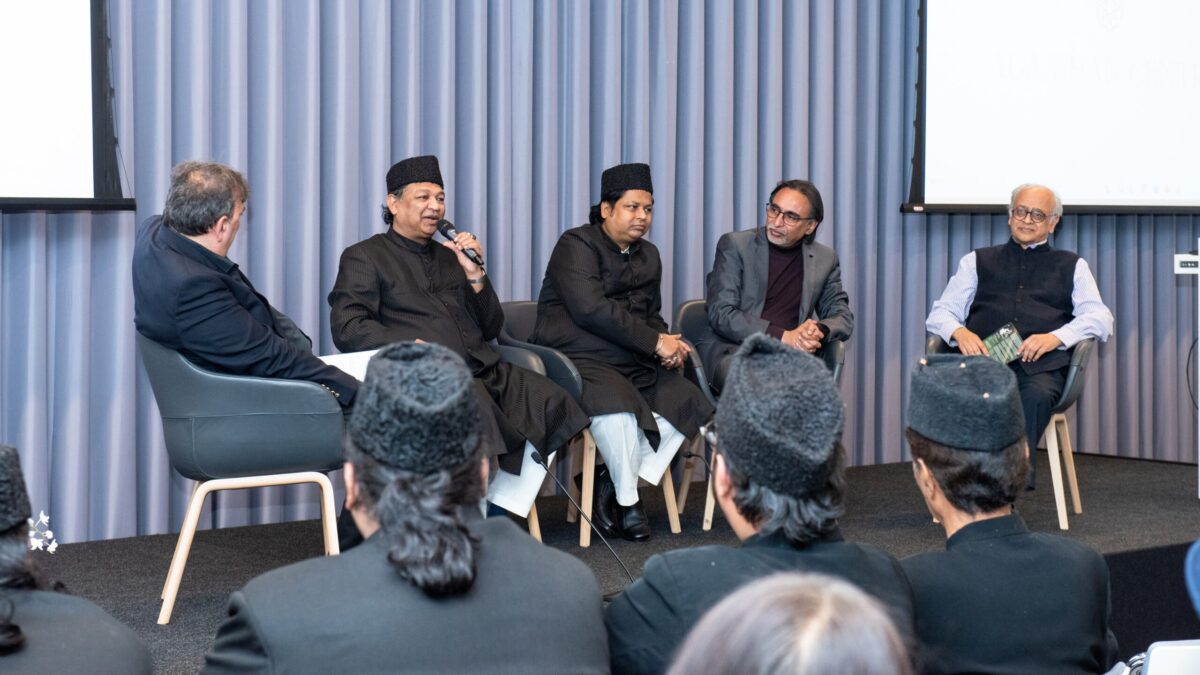
Jay Visvadeva moderou o painel de debate, no qual os participantes discutiram o conceito de espiritualidade no qawwali. Os Irmãos Warsi, intérpretes de qawwali, salientaram que o qawwali não é meramente um género musical, mas sim uma prática espiritual enraizada no sufismo, ou tasawwuf, servindo de veículo para a recordação espiritual e o amor divino. O objetivo supremo do qawwali, de acordo com a tradição sufi, não é o aplauso nem a perfeição musical, mas sim aquilo a que os mestres Chishti chamavam «Do ouvido ao coração, e do coração a Deus». O painel de debate incluiu, ainda, uma breve panorâmica da tradição do qawwali, apresentada por Kalim Sheikh (vocalista – Ghazals, Sufis e Bhajans. Ele salientou que, ao contrário da crença popular, historicamente nunca houve inimizade entre o Islão e a música. Recorrendo ao exemplo do *Kitāb al Mūsīqā al Kabīr*, um grande tratado musical de al-Farabi (erudito do século X), Kalim destacou a importância da música na sociedade. Além disso, segundo Kalim Sheikh, a tradição do ghazal teve origem no Norte de África, enquanto o qawwali é uma tradição do Médio Oriente.
A participação dos Irmãos Warsi conferiu ao evento um significado artístico e cultural excecional e proporcionou ao público uma oportunidade única de apreciar o autêntico qawwali interpretado por mestres desta arte.
O programa conseguiu promover com sucesso o diálogo e o envolvimento em torno do património cultural do Sul da Ásia, das tradições sufis e da importância de preservar as práticas artísticas imateriais. Os participantes adquiriram uma compreensão mais profunda das contribuições de Amir Khusrau e da vitalidade contínua do qawwali, tanto como tradição musical como espiritual.
O evento também reforçou as relações de colaboração entre instituições académicas, organizações culturais e artistas de palco, demonstrando o valor das parcerias interdisciplinares e interculturais na promoção do património artístico e da formação de públicos.
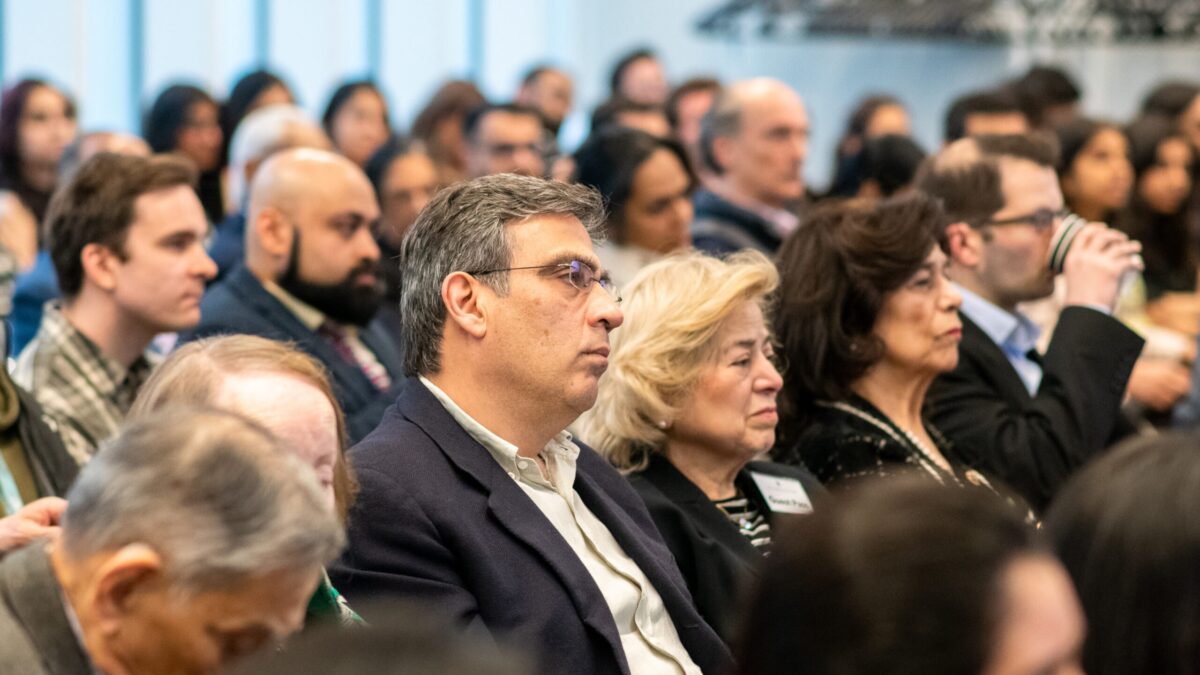
Os membros da audiência reagiram positivamente à combinação de debate académico e interação artística ao vivo, o que criou uma experiência cultural envolvente e significativa.
Sobre Amir Khusrau
Amir Khusrau (1253–1325 EC), frequentemente referido como o «Papagaio da Índia» (Tuti-e Hind), continua a ser uma das figuras mais influentes da história cultural e espiritual do Sul da Ásia. Poeta sufi de renome, erudito, poeta da corte e músico, Khusrau viveu durante o Sultanato de Deli e serviu nas cortes de vários governantes, incluindo Alauddin Khilji e Ghiyasuddin Tughlaq.
Khusrau é amplamente considerado um símbolo da cultura heterogénea da Índia, devido à sua capacidade de harmonizar as tradições artísticas persas, árabes e indianas. A sua obra influenciou significativamente a evolução da literatura e da música indianas, sendo-lhe frequentemente atribuído o mérito de ter lançado as bases da música clássica hindustani. A sua poesia e as suas composições expressavam profunda devoção espiritual, amor divino e a unidade da humanidade, temas que continuam a ser centrais no pensamento e na prática sufi.