How do Muslim communities maintain connections to their traditions while responding to the changing realities of contemporary life?
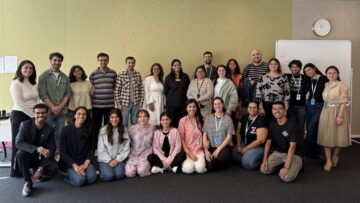
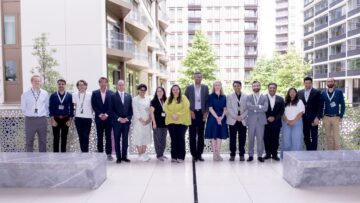
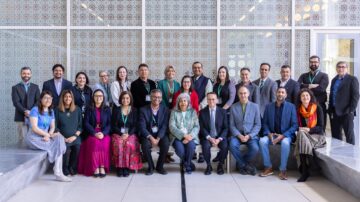
This question brought together graduate researchers from The Institute of Ismaili Studies (IIS) for its Annual Graduate Conference, Muslim Lives in Transition: Continuity and Change in Contemporary Times, held on 28 September 2026 at the Aga KhanA title granted by the Shah of Persia to the then Ismaili Imam in 1818 and inherited by each of his successors to the Imamate. Centre in London and online.
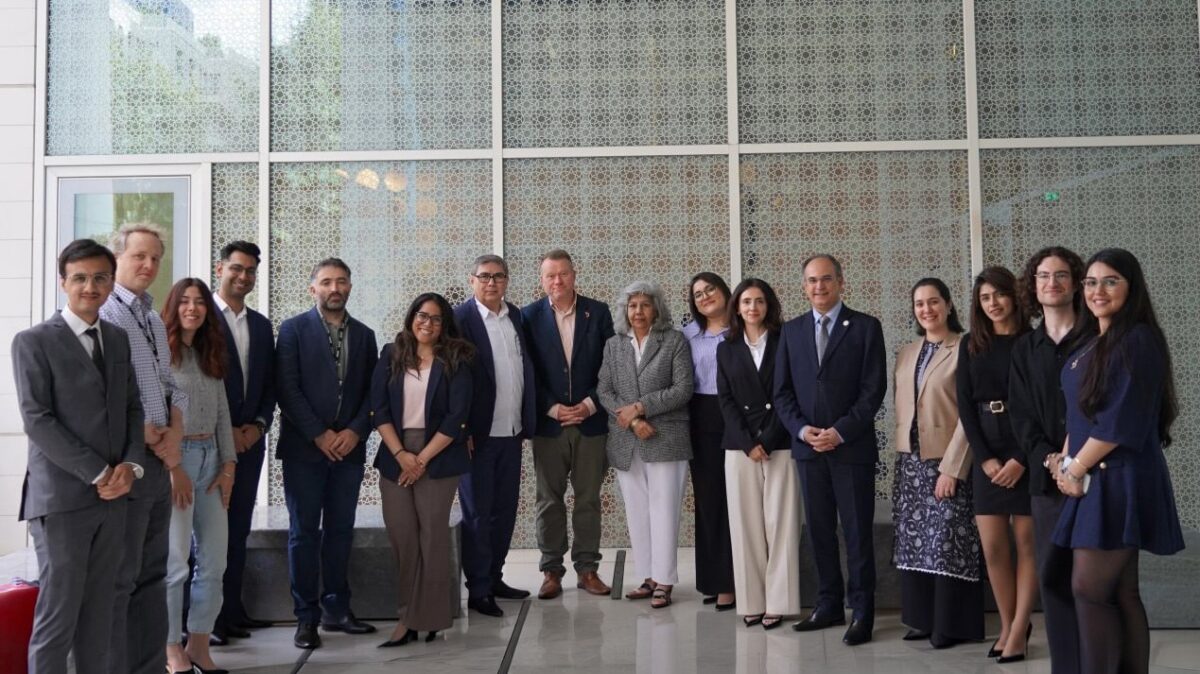
Professor Zayn Kassam, Director of IIS, opened the conference, and Dr Daryoush Mohammad Poor offered welcome remarks in which he urged participants to think critically and creatively about the transformations reshaping the Muslim world, from migration and artificial intelligence to digital media and climate change. The conference theme explored how technology, migration, environmental change, and new forms of communication are reshaping Muslim lives. Presenters asked what remains constant, what evolves, and how communities reinterpret inherited traditions.
Fifteen graduate researchers presented across five panels. Presenters included current students and recent graduates of two IIS programmes the Graduate Programme in Islamic Studies and Humanities (GPISH) and the Secondary Teacher Education Programme (STEP).
Education and identity
Dr Aliyyah Datoo chaired the first panel, Education, Curriculum and the Formation of Muslim Identity. Reham Hwaijeh (STEP) explored how Ismaili youth in SalamiyyaA city in central Syria, which was the residence of several early Ismaili imams in the pre-Fatimid period., Syria, navigate two religious education systems. Sahil Himani (STEP) asked how the IIS Secondary Curriculum addresses body image among Ismaili adolescents in Gujarat. Aalmeen Daredia (STEP) proposed using historical empahty to teach the 1866 Aga Khan Case in the Connecting Worlds module.
Gender, memory, and tradition
Dr Karen Bauer chaired the second panel, Gender, Cultural Memory and Tradition in Times of Social Change. Ameeqa Qureshi (GPISH) looked at how women rebuild home after climate-induced migration in Upper Chitral. Javeria Khan (STEP) explored how families in Upper Chitral negotiate tradition and consumer culture in marriage practices. Aleena Amin (STEP) compared competing memories of the Shaista narrative, a story of honour, love, and gendered violence in Hunza.
Diaspora and belonging
Dr Yahia Baiza chaired the third panel, Diaspora, Belonging and the Negotiation of Identity. Elnaz Basiri (GPISH) explored how second-generation Iranians in London experience events in Iran through Instagram. Maya Dayoub (GPISH) screened a film extract on Arabic-speaking stand-up comedians in London and their stories of migration. Urooj Baig (GPISH) studied belonging among Northern Pakistani IsmailisAdherents of a branch of Shi’i Islam that considers Ismail, the eldest son of the Shi’i Imam Jaʿfar al-Ṣādiq (d. 765), as his successor. who have moved to Karachi.
Ritual, devotion, and inherited traditions
Dr Alex Henley chaired the fourth panel, Ritual, Devotion and the Transformation of Inherited Traditions. Junnade Ali (GPISH) compared two gatherings shaped by sound and shared attention – a Chirāgh-e Rawshan ceremony, an Ismaili ritual, in Hunza. The other paper looked at techno rave parties for marginalised communities.
Ahad Tharani (GPISH) examined how young Ismailis in Nairobi understand and question monetary offerings while Salimah Hameed (STEP) explored how listeners experience spirituality through qawwali, from shrine performances to digital platforms.
Ethics and education in the digital age
Dr Aslisho Qurboniev chaired the final panel, Religious Knowledge, Ethics and Muslim Education in the Digital Age. Shabnam Barkat Ali (STEP) reflected on how generative AI renews the enduring purposes of Muslim education. Asifa Fida (GPISH) considered how generative AI can fuel false blasphemy allegations, and proposed ways to prevent harm before verification. Abida Nasreen (STEP) explored how Sufi teachings on self-knowing can deepen reflective practice among secondary students.
Dr Gurdofarid Miskinzoda closed the conference with a note of thanks.
A conference led by students
Two IIS students convened the conference: Elnaz Basiri (GPISH) and Shan Ali (STEP).
Elnaz Basiri said that:
When we were thinking about this year’s theme, we wanted to explore something that feels increasingly relevant to our lives: how people respond to change while remaining connected to their histories, identities, and traditions.
…We were particularly interested in how Muslim communities negotiate this balance in different social, cultural, and political contexts. What made the conference meaningful for me was seeing how each presentation approached these questions from a different perspective, reminding us that continuity and change are not necessarily opposites, but often shape one another. It was rewarding to see these ideas come to life through such thoughtful discussions.
Shan Ali reflected saying that:
The conference provided student researchers with a valuable opportunity to present their work and gain experience of sharing their research at an academic platform.
…Beyond the presentations themselves, the discussions and feedback enabled presenters to gain new perspectives on their research, consider other avenues of exploration, and identify possibilities for taking their work forward. The conference also offered a valuable space for networking, exchanging ideas, and building connections with fellow researchers and academics, while encouraging presenters to reflect on the limitations of their current research and consider how these might be addressed in future work.
Rizwan Karim mentored the presenters, providing guidance and feedback as they developed their research papers and prepared to share their findings at the conference
Emerging scholars, enduring questions
The Annual Graduate Conference gives graduate researchers a platform to present work-in-progress and test ideas. This year’s papers drew on education, anthropology, history, psychology, digital media, and the arts.