
This book is also available OPEN ACCESS to download or read online for free.
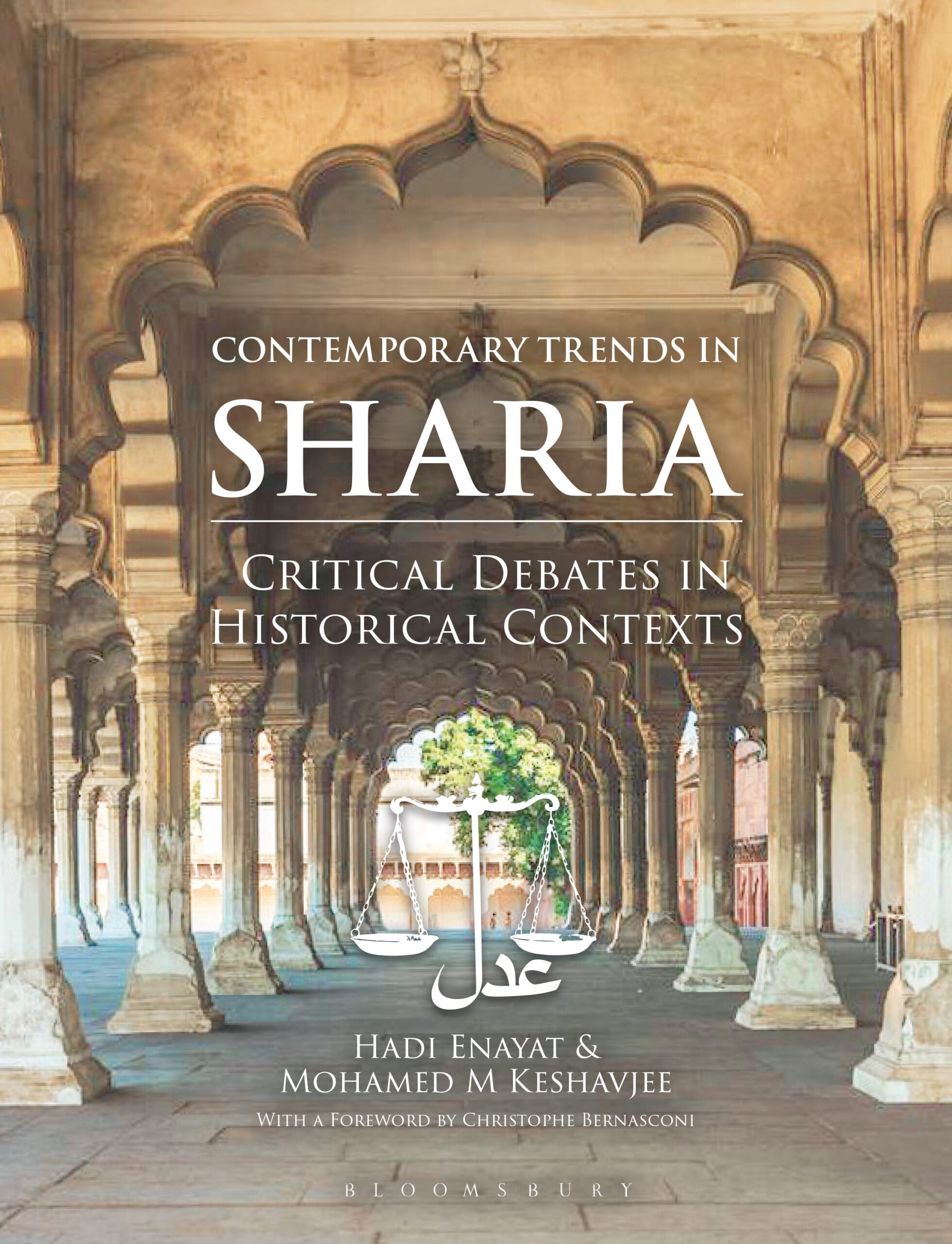
This book serves as a critical introduction to a modernist, progressive and neo-traditionalist perspective on Islamic thought and practice regarding sharia. This approach reflects the efforts undertaken by Muslims – particularly those in the diaspora – to forge an alternative Muslim modernity based on creative engagement with both Islamic tradition and modern Western forms of knowledge. The book highlights the ground-breaking work of some of these seminal thinkers in various fields of law.
The book is divided into thirteen chapters. It first covers what sharia is, its origins and how it developed in real time for Muslim societies. This discussion is then followed by chapters on each of the most challenging subjects of Islamic law in the contemporary world, including: constitutionalism, human rights, gender justice, biomedical ethics, religious freedom, criminal law, economics and finance and property rights. Each of these themes is discussed by the co-authors in light of the state-of-the-art literature available, each topic’s individual history, and the current debates and diverse global case studies that relate to each theme. The aim is to highlight that there is no monolithic version of sharia. Rather, sharia is an active set of humanistic principles that inspires Muslims around the world to live according to the ethics of their faith.
The book is a collaboration by two experts from different professional backgrounds and aims to take a panoramic view of the subject to appeal to a wide audience. Each chapter can be read ‘stand alone’ while contributing to the book’s broader framework. All together, the chapters challenge misconceptions about sharia and showcase the developments surrounding sharia in the Muslim world and within the Muslim diaspora.
Authors’ Note
Preface (Mohamed M. Keshavjee)
Abbreviations
Foreword by Christophe Bernasconi
Acknowledgements
Introduction (Hadi Enayat and Mohamed M. Keshavjee)
- Sharia: Its Origin, Evolution and Multiple Interfaces in the History of the Muslim Peoples (Mohamed M. Keshavjee)
- Islamic Constitutionalism and its Discontents (Hadi Enayat)
- Secularism, Religious Freedom and the Sharia (Hadi Enayat)
- Criminal Justice in Islam (Mohamed M. Keshavjee)
- Gender Justice: The Rights of Women in Islam – A Need for New Hermeneutics and a New Epistemology (Mohamed M. Keshavjee)
- Alternative Dispute Resolution (ADR) and the Politics of Informal Justice (Mohamed M. Keshavjee)
- Sharia and Human Rights: The Clash of Universalisms and the Search for Common Ground (Hadi Enayat)
- The Quest for a Moral Economy and the Vital Role of Faith and Sharia-Inspired Finance (Mohamed M. Keshavjee)
- Property Rights in Sharia: Between Social Justice and Pious Neoliberalism (Hadi Enayat)
- Muslims and Bioethics – Developments in the Field of Organ Donation and Transplantation under Sharia (Mohamed M. Keshavjee)
- Continuity and Change in the Islamic law of Jihad: Modernity and the Crisis of Political Authority (Hadi Enayat)
Epilogue (Hadi Enayat and Mohamed M. Keshavjee)
Glossary
Index
‘Thought-provoking, non-sectarian and non-polemical.’
— Carimo Mohomed, The Muslim News
‘An intelligent and useful guide to a complex legal and ethical concept.’
— Naureen Shariff, Solicitors Journal
‘Contemporary Trends in Sharia: Critical Debates in Historical Contexts explores how Muslims worldwide are reinterpreting Islamic law to meet the challenges of modern life. From human rights and gender justice to economics, property, and dispute resolution, Enayat and Keshavjee demonstrate that sharia is not as rigid a code as exaggerated by some, but is a living tradition and an unfinished project. Drawing on the voices of reformist and progressive thinkers, it illuminates the creative, contested, and urgent search for justice and flourishing at the heart of Islam’s encounter with the twenty-first century. Vital reading.’
– Professor Ebrahim Moosa, University of Notre Dame, USA
‘Carefully researched and clearly written, Contemporary Trends in Sharia offers a rigorous and accessible analysis of today’s key debates on Islamic law. The authors examine how modernist, progressive, and neotraditionalist thinkers have approached areas such as constitutionalism, human rights, gender, bioethics,and economics. By situating these debates in wider historical and political contexts and tracing their reception among Muslims, the book combines scholarly depth with clarity. It is an authoritative contribution to the study of Islamic law, reform, and modernity.’
– Professor Abdullah Saeed, University of Melbourne, Australia
‘A timely and deeply engaging exploration of how modernist and progressive Muslim thinkers reinterpret sharia amid modern moral, political, and technological challenges and how these ideas are received by lay-Muslims. A must read for anyone seeking to understand the dynamism of modern Islamic thought.’
– Professor Masooda Bano, University of Oxford, UK
‘For a Jew, interested in inter-faith harmony, this fascinating book opens doors of understanding, as befits sharia, which, I learn, is “the way to the watering place”. The authors have written a deeply impressive work from the point of view of a modern progressive Islam. Here the educated layperson, Muslim or non-Muslim alike, can learn of the tensions and solutions of a liberal Islamic approach to the age-old problems of a moral life, be it personal, familial, or economic, and of the ends of justice.’
– Rt Hon Professor Sir Bernard Rix, Queen Mary University, UK
Hadi Enayat is Assistant Professor at the Institute for the Study of Muslim Civilisations at the Aga KhanA title granted by the Shah of Persia to the then Ismaili Imam in 1818 and inherited by each of his successors to the Imamate. Centre in London.
He specializes in the politics of the Middle East with a particular focus on religion, law, political theology and intellectual history. He is the author of Law, State and Society in Modern Iran (Palgrave Macmillan 2013 — winner of the Biennial Mossadegh Prize 2013), Islam and Secularism in Post-Colonial Thought: A Cartography of Asadian Genealogies (Palgrave Macmillan, 2017), The Rule of Law in the Islamic Republic of Iran: Power, Institutions and the Limits of Reform (co-edited with Mirjam Künkler, (Cambridge University Press, 2024).
Mohamed M. Keshavjee with legal training in three common law jurisdictions – the U.K. Kenya and Ontario, Canada – is a Barrister at Law from Gray’s Inn London.
An internationally recognised specialist in cross cultural mediation, he has keynoted leading conferences on mediation in countries as diverse as Argentina, France, Lithuania, Ireland and Canada. His first co-authored book Understanding Sharia: Islamic Law in a Globalised World received critical acclaim from various publications including the Financial Times and the Times Literary Supplement. A scholar of contemporary Islamic thought, Dr Keshavjee has specialised in family mediation, transitional justice in post-conflict societies and Indian diasporic developments based on the 19th century indentured labour system across the former British empire. For his commitment to peace and human rights education globally, Dr Keshavjee was awarded the 2016 Gandhi King, Ikeda peace prize.