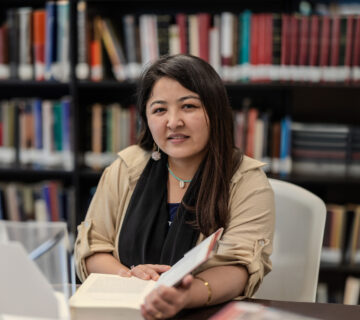
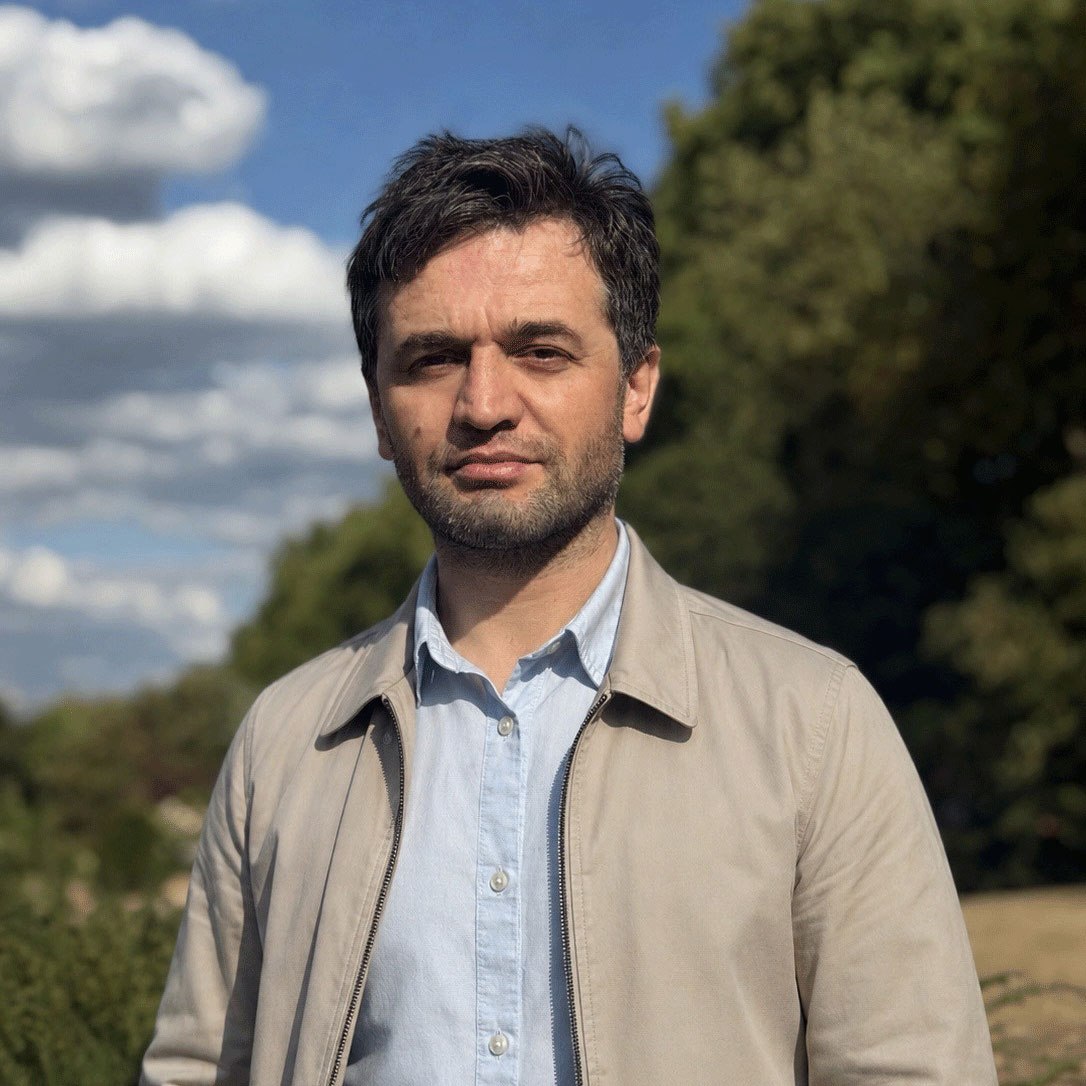
Hidoyatullo Shozodamamadov is from Badakhshan, Tajikistan. He completed the Graduate Programme in Islamic Studies and Humanities (GPISH) at The Institute of Ismaili Studies (IIS), followed by another master’s degree in the same field at SOAS, University of London. He is currently undertaking an internship with the Qur’anic Studies Unit at IIS.
In these personal reflections, written during a visit to Cairo, Hidoyatullo describes the sentiments evoked by the transformation of a single site across a thousand years. His journey roams through time and space from the tombs of the Fatimid Imam-caliphs to a Mamluk marketplace, a forgotten rubbish mound, and finally the gardens of al-Azhar Park. Drawing on the medieval historian al-Maqrizi (d. 1442 CE) and Hidoyatullo’s own encounter with the city, he reflects upon how a place can be destroyed and, centuries later, transformed, while retaining a thread of spiritual connection.
A taxi ride into Fatimid Cairo
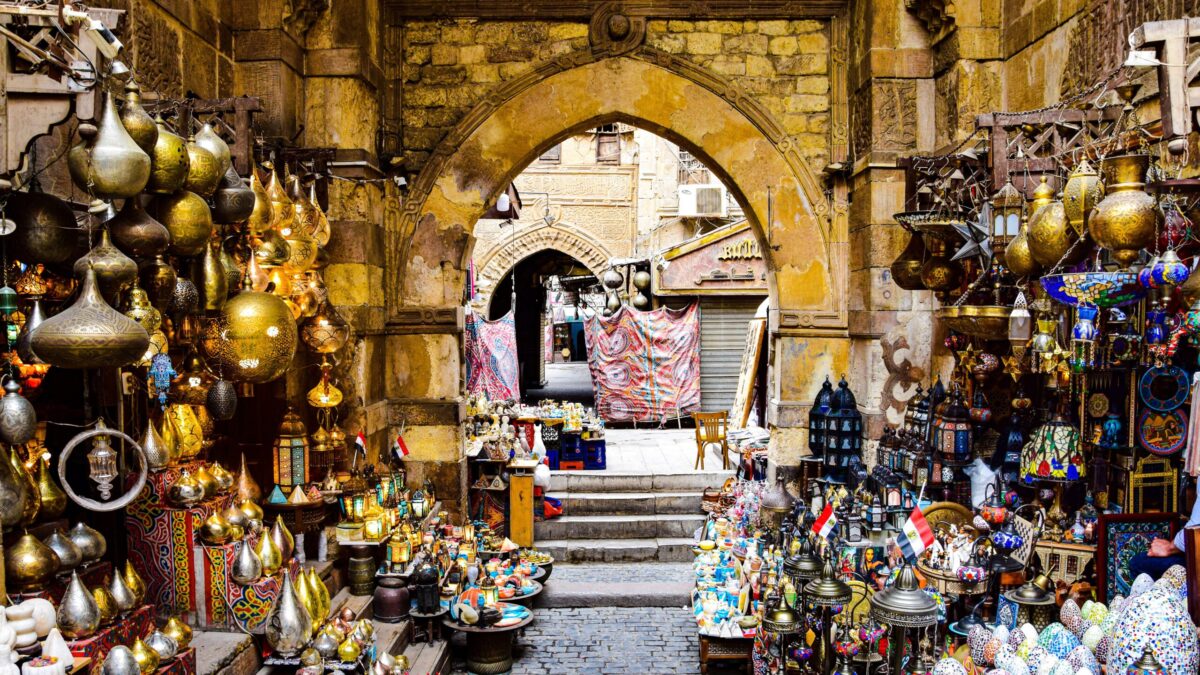
On my first day in Cairo, as I stepped out of the airport, I was greeted by a taxi driver who was very enthusiastic to tell me all about the city’s attractions. As he drove, he pointed to a place and insisted that it was one spot I simply couldn’t miss. It was Khan al-Khalili, the historical bazaar in ‘Fatimid’ Cairo. I smiled at his suggestion while lost in my thoughts, imagining myself setting foot upon grounds that had once been the resting place of the Imams. Today it is a thriving commercial district, but once Khan al-Khalili told a very different story.
al-Maqrizi’s account of the cemetery of the Fatimid Imam-caliphs
The tombs of the Fatimid Imam-caliphs had long interested me as a GPISH student even before I had the chance to visit Cairo. One day, while I was reading al-Maqrizi’s fifteenth-century history, al-Mawaʿiz wa’l-iʿtibar, a tragic story came to my attention. Al-Maqrizi writes that the royal cemetery of the Fatimids, known as Turbat al-Zaʿfaran (The Saffron Cemetery), had survived for two centuries after the fall of their caliphate. However, during the first reign of Sultan Barquq (r. 1382-1389), a Mamluk emir named Jaharkas al-Khalili destroyed the historical cemetery and built a large market upon the site. The moment the taxi driver mentioned the name of the bazaar, I was instantly reminded of al-Maqrizi’s account:
Part of the Great Palace was al-Turba al-Muʿizziyya, where [the Imam-caliph] al-Muʿizz li-Din Allah buried his forefathers, whose bodies he had brought with him in coffins from the Maghrib.
These [ancestors] were the Imam al-Mahdi ʿUbayd Allah Muhammad, his son al-Qaʾim bi-Amr Allah Muhammad, and his son Imam al-Mansur bi Nasr Allah Ismaʿil. The site eventually became the permanent burial ground of the caliphs, their children, and their wives, and it came to be known as Turbat al-Zaʿfaran. The cemetery had its own rituals and customs, among which was that the caliph would always enter the city through this cemetery to pay homage to his forefathers whenever he returned to his palace after an excursion…When Amir Jarkas al-Khalili built his khan on the same road, the bones (of the Fatimid caliphs) were exhumed and discarded among the refuse and the rubble on Kiman al-Barqiyya (the Barqiyya Mounds).
(al-Maqrizi, al-Mawaʿiz wa’l-iʿtibar, p. 407)
As I was translating the passage, the name of the rubbish mounds ‘Kiman al-Barqiyya’ did not resonate with me, except that I remembered Cairo’s famous gate, Bab al-Barqiyya. However, a friend soon shared with me a blog post by Shehab Ismail, a historian of the modern Middle East, entitled The Historical Junkyards of Cairo, in which he narrates how he came across those rubbish mounds during his research on the history of sanitation in the city. Kiman al-Barqiyya, one of Cairo’s largest historical rubbish dumps, was the main focus of his research.
Shehab Ismail writes:
By the beginning of the twentieth century al-Barqiya mounds had reached a height of forty-two meters, well above the buildings at the opposite side of the city wall. During the rest of the century, the government removed much of the eastern mounds, and the Aga Khan Trust for Culture transformed the remaining part into al-Azhar Park.
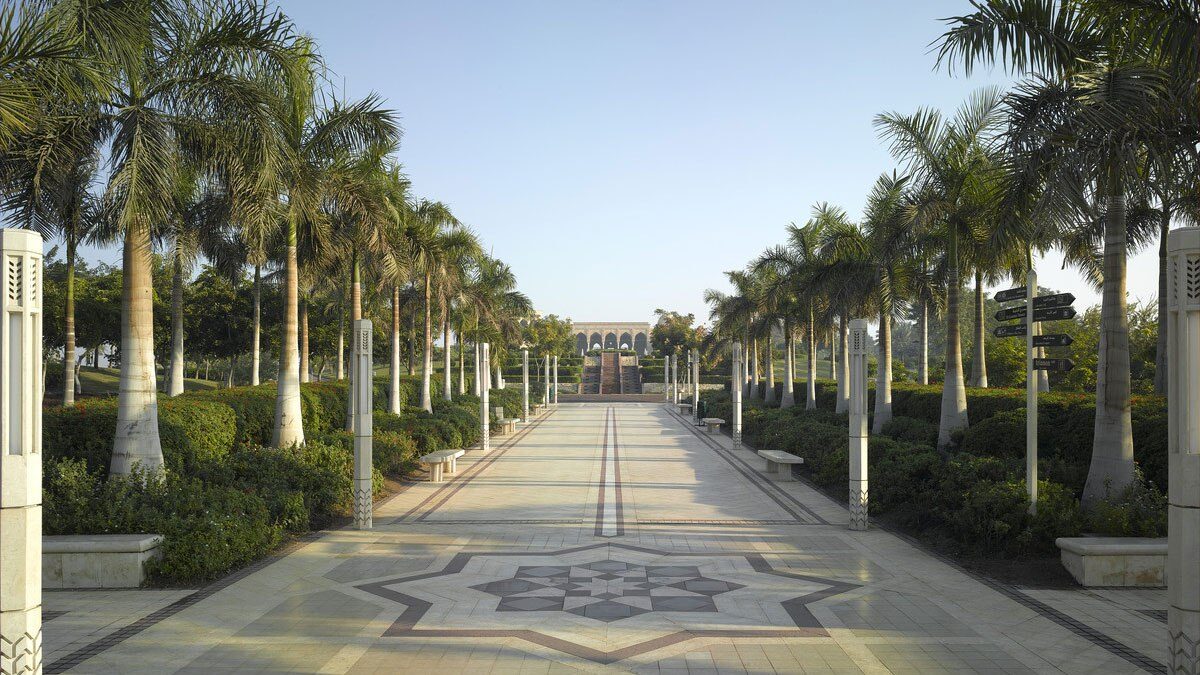
I was deeply moved to learn that the Turbat al-Zaʿfaran, once the resting place of the Fatimids, was demolished by the Mamluk emir to make way for Khan al-Khalili, with the remains cast into the mounds of al-Barqiyya. Centuries later, parts of those mounds were transformed by a descendant of the Fatimid Imams, His Late Highness the Aga Khan IV, into the most beautiful and popular park in Cairo.
From ruin to renewal
Although the extent to which al-Maqrizi’s account is reliable requires further investigation, the campaign to destroy the religious sites associated with the Fatimids was a documented historical reality. It began after Salah al-Din al-Ayyubi (d. 1193 CE) took control of Egypt from the Fatimid dynasty in 1171 and continued into the Mamluk period centuries later.
Thus, although al-Maqrizi’s account described the efforts made to obliterate the names of those whose contributions to Islamic civilisation included the foundation of Cairo itself and the establishment of al-Azhar, one of the oldest institutions of learning in the Islamic world, my own understanding revealed a very different side to the story. Even though the Imams had been compelled to depart from Egypt, and the remains of their forefathers were cast aside, I could see that their love for and commitment to the land had never waned. It was as if their spirit had continued to watch over it until a new radiant and beautiful al-Azhar was created – this time not a mosque or university, but one of the most remarkable public parks in the world.
For more information about the AKTC’s renovation of historical Cairo, see here.