The three studies below span (1) an impressive database dedicated to Cairo, (2) the archaeology and history of the city of Surt in Libya, and (3) ‘stepping place’ shrines across Turkic and Indo-Persian regions linked to the Prophet Muhammad, the first Shiʿi Imam Ali, and their descendants. Altogether, they illustrate the different ways in which the historical memory of Muslims in different cultures, contexts, and times can be understood and preserved.
1. Center for Documentation of Cultural and Natural Heritage (CULTNAT). The Monumental Inscriptions of Historic Cairo. Alexandria: Bibliotheca Alexandrina, 2017-2024.
Cairo possesses the most extensive collection of pre-modern monuments in the Islamic world. The Egyptian Antiquities Organisation has identified over 500 monuments as deserving of preservation. These monuments span from the eighth to the nineteenth century and encompass a variety of structures, ranging from simple mosques to architectural marvels that are considered among the finest in the world.
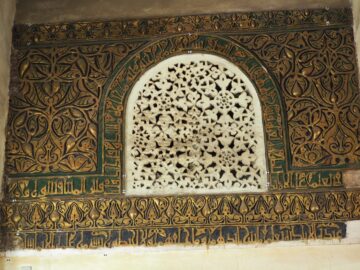
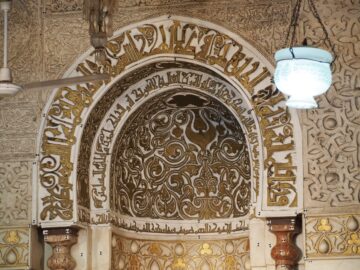
An English- and Arabic-search database launched in 2017, The Monumental Inscriptions of Historic Cairo is an expansive resource, currently documenting 3271 inscriptions from 509 monuments, 3395 bibliographic references from 63 sources, 12,107 photographs, and 1425 drawings.
2. Jean-Michel Mouton and Philippe Racinet. Surt: histoire et archéologie d’une ville médiévale libyenne. Les nouvelles de l’archéologie (123), 2011. DOI: https://doi.org/10.4000/nda.1469
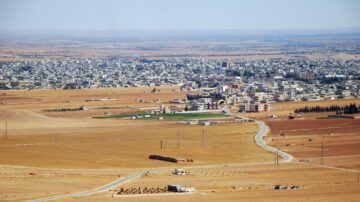
This article is devoted to the mediaeval city of Surt in the centre of coastal Libya and once at the heart of the Fatimid empire there. Over more than the last fifty years, ongoing excavations and studies have aimed to uncover and understand its rich historical legacy. Surt experienced multiple periods of prosperity when it functioned as a stopover connecting the Maghreb to the Mashreq. During the first century of the Fatimid dynasty (10th century CE), the city witnessed its first spurt of development and prosperity, as documented by Arab geographers Ibn Hawqal and al-Bakri. Surt served as a significant trading centre at the intersection of caravan routes, including the trans-Saharan and pilgrimage routes. It also maintained trade relations with the Muslim Western Mediterranean, Sousse in Ifriqiyya, and the ports of Sicily.
3. Thierry Zarcone. Shrines (Qadamgah) and Relics Dedicated to Imam ʿAli ibn Abi Talib in the Turkic and Indo-Persian Areas. Kyoto Bulletin of Islamic Area Studies (13), March 2020, pp. 31-49.
This article is an in-depth exploration of unusual shrines known as qadamgahs or qadamjays (stepping places) in the veneration of key holy figures in Turkic and Indo-Persian regions. Neither mosques nor mausolea, these shrines are linked to beliefs that holy figures such as the Prophet Muhammad, the Imam ʿAli and other relations or descendants, visited, rested, or prayed at in these places. The article also discusses mythical stories of Imam ʿAli’s travels outside of Arabia, and the foot and other imprints he, his mule, and other Shiʿa imams left behind. Interestingly, these accounts are recorded by both Sunni and Shiʿi oral and written traditions across theTurkic and Indo-Persian contexts that are the focus of this article. Finally, the article also discusses sites and shrines dedicated to ʿAli’s sword, Dhulfiqar.
CRediTs
Sorbon Mavlonazarov (Data Curation, Writing – Original Draft); Fayaz S. Alibhai (Writing – Review & Editing) for Ismaili Heritage, The Institute of Ismaili Studies © 2015-2026.
Ismaili Heritage uses the CRediT author statement.
About
Ismaili Heritage (IH) is a tripartite collaboration between IIS (London), the Aga Khan Trust for Culture (Geneva), and the Department of Jamati Institutions (Lisbon). It aims to document, protect, conserve, and celebrate the built and associated tangible heritage of the global Shia Ismaili Muslims.