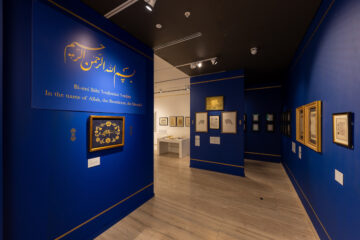
Bishnav az nai chun hikoiat mekunad,
Az judoiho shikoiat mekunad
Listen to how the nāy (flute) tells its tale,
Lamenting its separation (from the Beloved). Jalal al-Din Rumi
Central Asia extends north to south from Kazakhstan to Afghanistan, and west to east from Turkmenistan to western China. For centuries, communities have been connected through travel, trade, scholarship and cultural exchange. As a crossroads of the Silk Roads, the region has brought diverse peoples and traditions into dialogue, shaping its languages, beliefs, customs and artistic practices.
The linguistic, religious and cultural diversity of the region is vividly expressed through the performing arts of Tajik, Kyrgyz, Uzbek, Turkmen, Kazakh, Uyghur, and other ethnic groups and communities. Distinctive traditions exist within countries and regions, shaped by shared histories and landscapes. These varied forms of performance reflect the rich cultural heritage of Central Asia and the identities of its diverse communities.
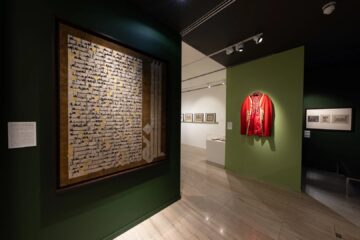
Performing Arts of Central Asia explores this heritage through music, dance, material culture, visual art and artefacts. Musical instruments, costumes, textiles, headwear, jewellery, photographs, film and audiovisual presentations reveal how sound, movement and design come together in performance. The exhibition evokes the environments in which these traditions are performed and transmitted. It celebrates performance as a living cultural heritage that continues to evolve through change and artistic innovation.
Music, dance and material culture
Across Central Asia the performing arts are integral to celebrations, ritual gatherings, devotional practices and communal life. They preserve collective memory, strengthen social bonds and communicate histories and values across generations. Music also occupies an important place within the region’s rich intellectual and literary heritage. Scholars such as Abu Nasr al-Farabi and Ibn Sina regarded music as a science to be studied through theory and mastered through practice. Within Sufi traditions, music, poetry and movement offer paths towards spiritual refinement.
The region’s musical heritage encompasses musical traditions such as shashmaqom, maddoh and qasidaA polythematic poem originating in pre-Islamic Arabia. It has come to refer to any poem of a certain length in Arabic, Persian and Turkish literatures, often including the eulogy of… More, alongside folk music and dance. The exhibition showcases various musical instruments, such as the nai and surnai, setar, dutar, rubab, tanbur, qashqar rubab and doira/daf. Many are played across linguistic boundaries and communities have developed specific repertoires, tonal qualities and various performance styles. Turkic and Persian languages further enrich these traditions, giving each performance its poetic and musical character.
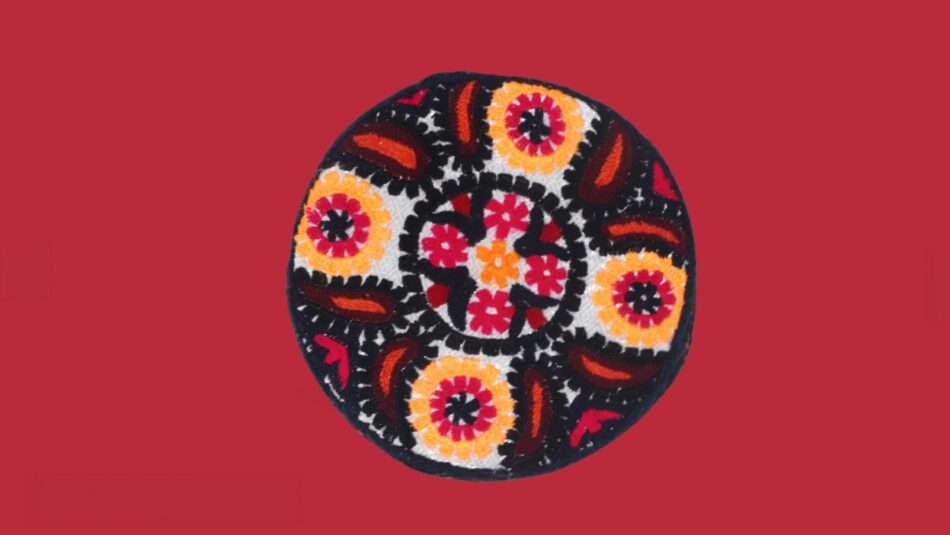
Material culture plays an integral role in Central Asian performing arts, with embroidered garments, traditional robes, textiles, headwear and jewellery reflecting the identities and creativity of the region’s diverse communities. Colours, patterns, materials and techniques convey meanings and embody skills passed down through generations. Alongside musical instruments and visual records, these objects demonstrate how craft, costume and performance combine to create resonant and memorable experiences.
Photographs and archival images
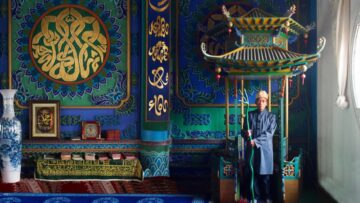
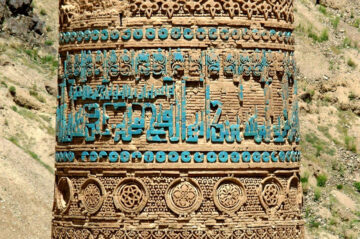
A selection of photographs by travel photographer Christopher Wilton-Steer places the exhibition’s themes within the landscapes and communities of Central Asia. Created during his 2019 journey along the Silk Road, the photographs form part of The Silk Road: A Living History, a project supported by the Aga Khan Foundation. The photographs connect the exhibits with the people and places among which the region’s musical, textile and performance traditions continue to be practised.
The exhibition also includes prints from the Turkestan Album, known as the ‘Kaufman Album’, documenting musical performances of Central Asia during the initial decades of Russian rule in the region. Commissioned by Governor-General Konstantin von Kaufman and compiled by Aleksandr Kun in 1871–1872, the album includes posed photographs of musicians, celebrations and dance. These photographs are displayed alongside other historical and contemporary photographs, paintings and images to show how these traditions were recorded and evolved over time.
Organisers and lenders
The exhibition ‘Performing Arts of Central Asia’ is organised jointly by the Aga Khan Centre Gallery and the Central Asian Studies Unit of The Institute of Ismaili Studies. The organisers would like to express their sincere gratitude to all the contributors and partners who have generously provided items for the exhibition.
This exhibition has been made possible through generous loans and contributions from notable private collections, the embassies of several Central-Asian countries, the Aga Khan Music Programme, donors, partners and individual lenders. Together, their objects, photographs, films and archival materials illuminate the breadth of Central Asia’s performing arts and musical traditions in both contemporary and historical contexts.