
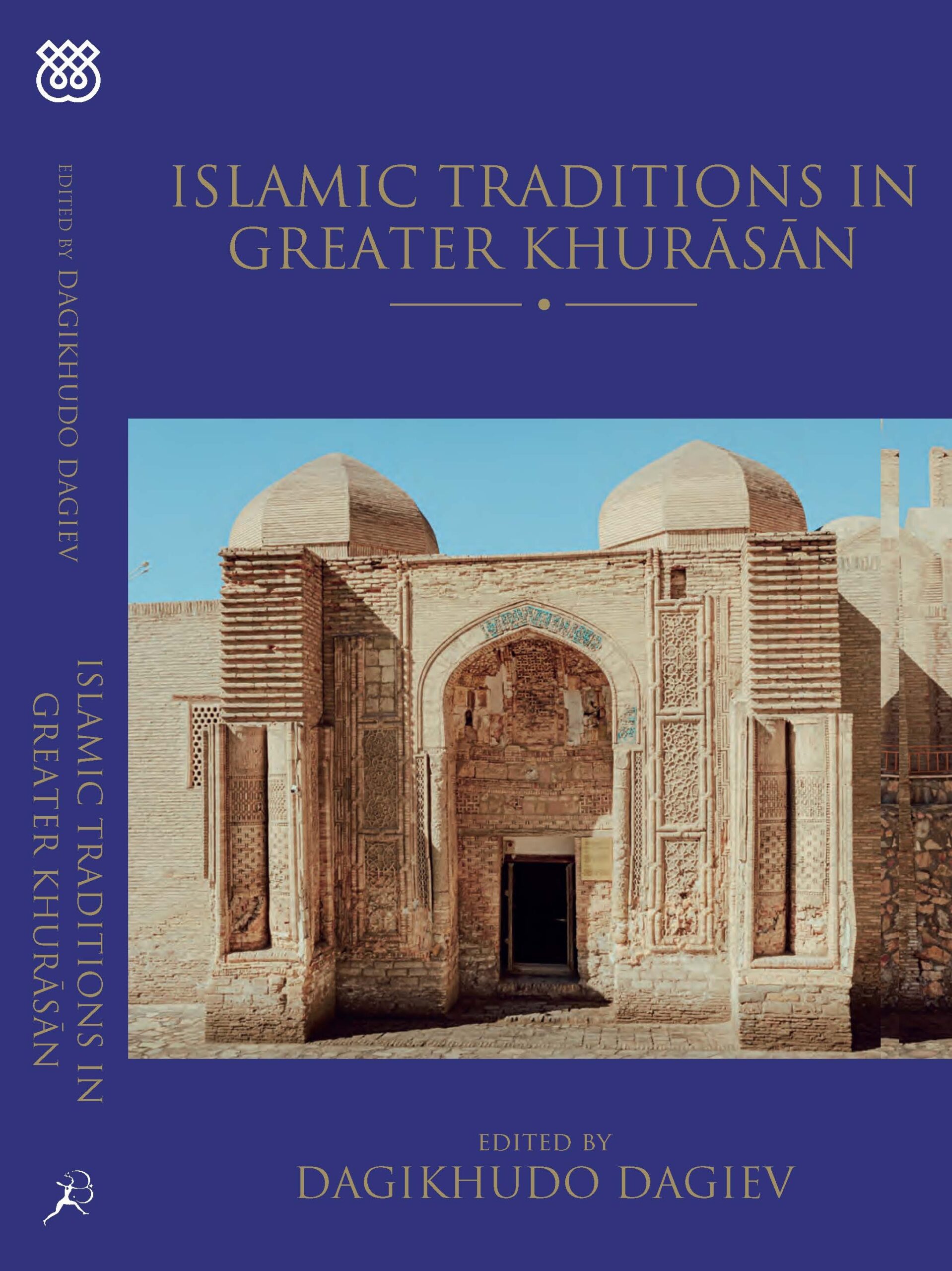
Forthcoming November 2026
This book will also be available OPEN ACCESS to download or read online for free.
This edited volume offers a focused exploration of the historical, intellectual, and cultural intersections between Sufism and Ismailism across the region known historically as ‘Greater Khurāsān’. Bringing together specialists in Sufi studies, Islamic philosophy, and Ismaili history, it illuminates the shared spaces, networks, and discourses through which these traditions have evolved from the medieval period to the present. Part One situates major Sufi figures and orders within their regional contexts, introducing newly discovered sources and re-examining the legacies of thinkers such as Ibrāhīm Qavghānī and Najm al-Dīn Kubrā, alongside contemporary Sufi revivals. Part Two investigates Sufi–Ismaili cultural interactions, from devotional dance and music to the shifting meanings of shrines in modern Tajikistan. Part Three reassesses key Ismaili narratives, offering new perspectives on the Nizārī daʿwaLit. ‘summons’, ‘mission’ or invitation to Islam. Amongst Shi’i Muslims, it was the invitation to adopt the cause of the Imamat. It also refers more specifically to the hierarchy of…, its diverse regional expressions, and the effects of communal schisms. Part Four turns to philosophical and theological debates, reconsidering influential authors of the 10th–13th centuries and probing the reception and reframing of Avicennism within Nizārī thought. Part Five highlights Persian and Sufi terminology as cultural vehicles, examining their cognitive, lexical, and scholarly significance. Together, these chapters reveal Greater Khurāsān as a dynamic intellectual crossroads and provide new frameworks for understanding the intertwined development of Sufi and Ismaili traditions. The volume will appeal especially to scholars of Islamic studies, Persianate cultures, and the wider humanities.
Introduction
PART ONE: SUFISM IN THE HISTORICAL AND CULTURAL CONTEXT
- Devin DeWeese — The Treatise of Ibrāhīm Qavghānī: A Newly Found Source on the Yasawī Sufi Tradition from the 16th or Early 17th Century
- Toby Mayer — The Mystic as Theurgist? A Theme in the Sufism of Najm al-Dīn Kubrā
- Alexander Papas — A Sufi Revival in Contemporary Khurāsān-i Raḍavī: The Transregional Networks of the Naqshbandiyya, the Qādiriyya, and the Chishtiyya
PART TWO: SUFI–ISMAILI CULTURAL INTERACTIONS
- Otambek Mastibekov — Spiritual Dance of the Badakhshānī IsmailisAdherents of a branch of Shi’i Islam that considers Ismail, the eldest son of the Shi’i Imam Jaʿfar al-Ṣādiq (d. 765), as his successor. through Rūmī’s Poetry
- Chorshanbe Goibnazarov — Mubārak-i Wakhānī is a Sufi-Ismaili Musician from Badakhshān
- Abdulmamad Iloliev — ‘Sacred Spaces’ Turned into Museums: Transformation of Shrine Culture in Tajikistan
PART THREE: STUDY OF THE ISMAILI SOURCES AND RE-INTERPRETATION OF THE [DAʿWA] NARRATIVES
- Daniel Beben — Nāṣir-i Khusraw and Ḥasan-i Ṣabbāḥ: Their Relationship and the Varieties of the Nizārī Daʿwa in Badakhshān
- Karim Javan — Ismaili Daʿwa in Khurāsān during the Anjudān Revival
- Nourmamadcho Nourmamadchoev — Schisms and their Effect on the Ismaili Communities of Badakhshān
PART FOUR: PHILOSOPHICAL AND THEOLOGICAL DEBATES RELATED TO ISMAILI DOCTRINES
- Paul Walker — Some Notes on Major 10th Century Ismailli Authors from Khurāsān and the East: al-Nasafī, al-Sijistānī, and Abū Tammām
- Maxime Delpierre — The Nizārī Reception of Avicennism: Naṣīr al-Dīn al-Ṭūsī between Avicennism and Ismailism
- Daryoush Mohammad Poor — Misrepresentations of Nizārī Ismaili Doctrines in Qājār Literature
PART FIVE: THE PERSIAN AND SUFI TERMINOLOGY AS CULTURAL VEHICLES IN THE KHURĀSĀNIAN LAND
- Leyli Dodykhudoeva — The Persian Discourse of Nāṣir-i Khusraw as a Cultural Code for Badakhshān: Cognitive and Lexical Perspective
- Dagikhudo Dagiev — The Study of Sufism and Sufi Literature in Bertel’s’s Work
“A valuable contribution to our understanding of Khurasan’s place in the development of Islamic thought and culture. This volume brings together new insights on Ismailism, Sufism, Persianate culture, and the intellectual history of the Islamic East.”
– Mohammad Amir Hakimi Parsa, University of St Andrews
Dagikhudo Dagiev is a Senior Research Associate at the Institute of Ismaili Studies in London, UK. His research interests include Central Asian Ismailis, with a focus on the historical and cultural context of KhurasanThe northeastern region of early Islamic Persia, immediately south of Transoxania and west of Badakhshan. More, as well as the history of Islam and the social and political development of the entire region. He has previously published Regime Transition in Central Asia (2014), and Central Asian Ismailis (2022); co-edited a volume with Carole Faucher, Identity, History and Trans-Nationality in Central Asia (2019); and edited the volume The History of the Tajiks: Iranic Peoples of Greater Khurasan (forthcoming, 2027).