The Ismaili Special Collections Unit of The Institute of Ismaili Studies (IIS) hosted a screening of HunDan, the first Burushaski-language feature film from Hunza at the Aga KhanA title granted by the Shah of Persia to the then Ismaili Imam in 1818 and inherited by each of his successors to the Imamate. Centre in London.
“For Mother Earth, humans are just another species.” With these words, Karamat Ali, writer, director and producer of HunDan: An Echo of a Dirge, concluded the conversation at an evening devoted to memory, stories and nature, held at the Aga Khan Centre, London, on 4 November 2026.
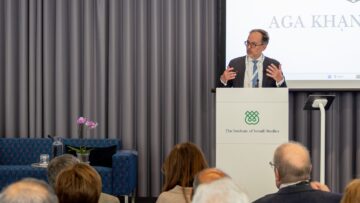
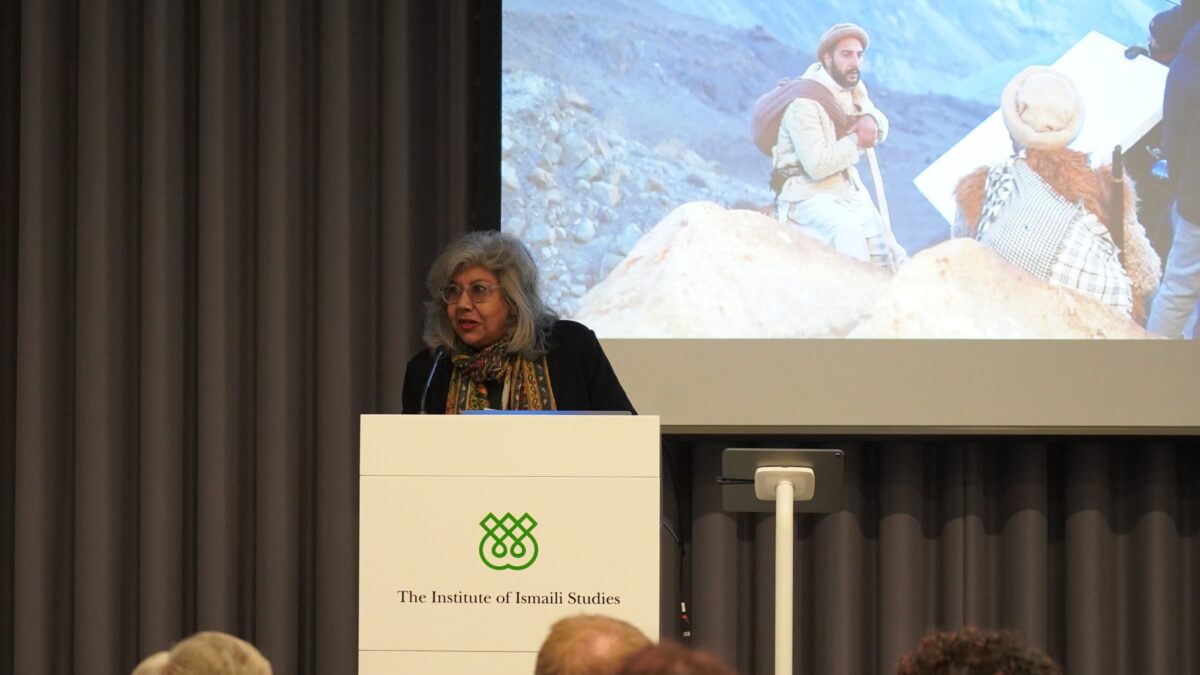
Professor Zayn Kassam, Director of IIS, opened the event by reflecting on the title, which means “wood and stone” in Burushaski, she noted that these materials belong not only to the landscape of Hunza but to the homes and gathering places in which generations have lived and told stories. She spoke of how stories in the mountain societies of Hunza and the wider region have long travelled through voices rather than books, and what it means to hear Burushaski on screen, both for its speakers and for younger generations in the diaspora. Referring to the work of the Ismaili Special Collections Unit (ISCU) in heritage stewardship, including the Oral History Project, she said:
This evening reminds us that heritage is not only something we look after in an archive. It is also something people live, question, create and pass on.
A film rooted in oral tradition
HunDan is the first feature film made in Burushaski, a language UNESCO lists as endangered. Its story draws on a folk tale told in Hunza and shared across the mountain communities of Gilgit-Baltistan and Chitral, handed down orally from one generation to the next. Through allegory and regional symbolism, the film conveys a message about conservation and the interdependence of human and animal life.
Karamat, a native of Altit in Hunza, first heard the story as a child, as did many of his generation, and its telling, he has said, stayed with him into adulthood. HunDan is his debut feature. Produced by Rockwood Productions in association with HumFilms, it premiered in Islamabad, and the Pakistan Oscar Selection Committee later selected it as the country’s official entry for Best International Feature Film at the 98th Academy Awards.
In conversation
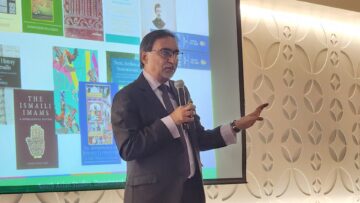
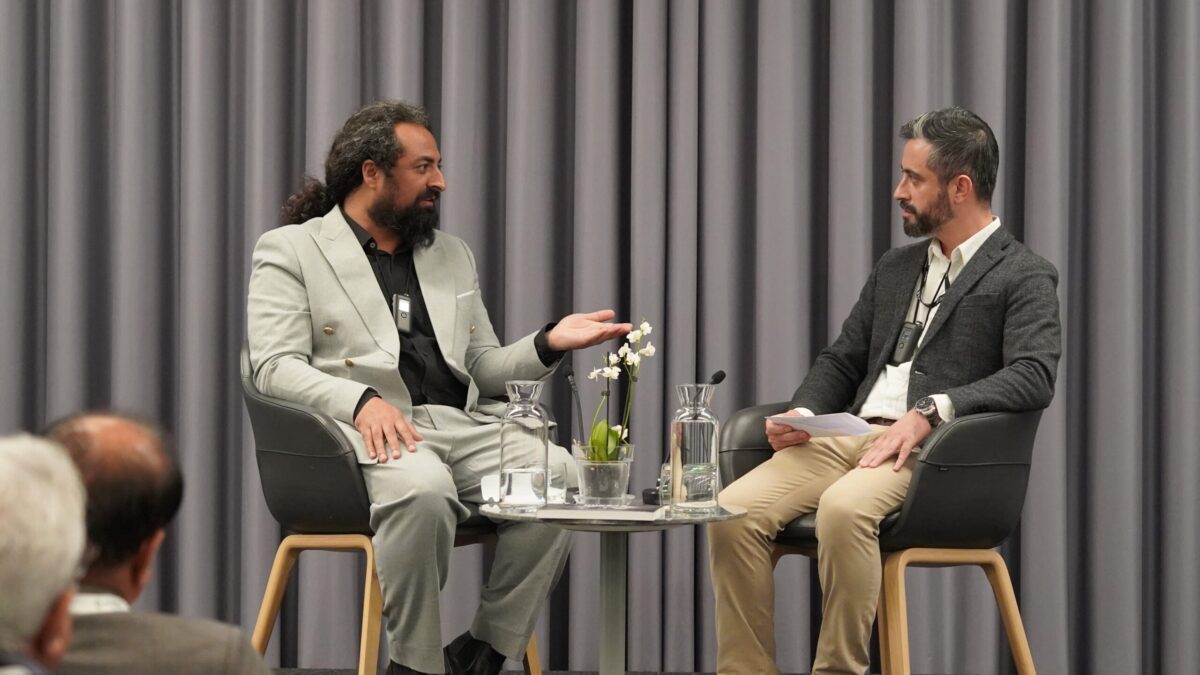
After the screening, Rizwan Karim, Oral History Coordinator at the ISCU, moderated a conversation with Karamat. Both Karamat and Rizwan grew up in Hunza in the 1990s, when winter evenings were given over to storytelling. They discussed the challenges of adapting an oral story into a screenplay in Burushaski, a language with no standardised script and no established screenwriting tradition. Karamat also described the 17-year journey that took HunDan from oral folklore to script, production and finally the screen.
The film’s ecological argument ran through the discussion, from the customary practices in Hunza that once restrained human excess, including prohibitions on hunting nursing animals, to the mountains’ present use for tourism, mountaineering and mining. Karamat described HunDan as both a film of mourning and a warning, a theme he returned to when asked what he hoped audiences would take away, in the remark quoted above.
A diverse audience
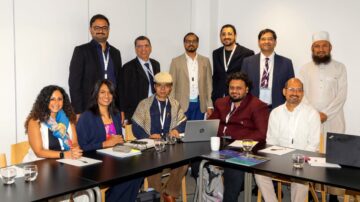
The screening attracted an audience of more than 100 people to the Aga Khan Centre, a hub of academic and cultural activity in London. Guests included Mr Haseeb Bin Aziz, Deputy High Commissioner of Pakistan, and representatives of the Hunza Chamber of Commerce and Industry and leaders from the tourism sector, alongside members of international media and academia and a large number from the Gilgit-Baltistan and Chitral diaspora in the United Kingdom.