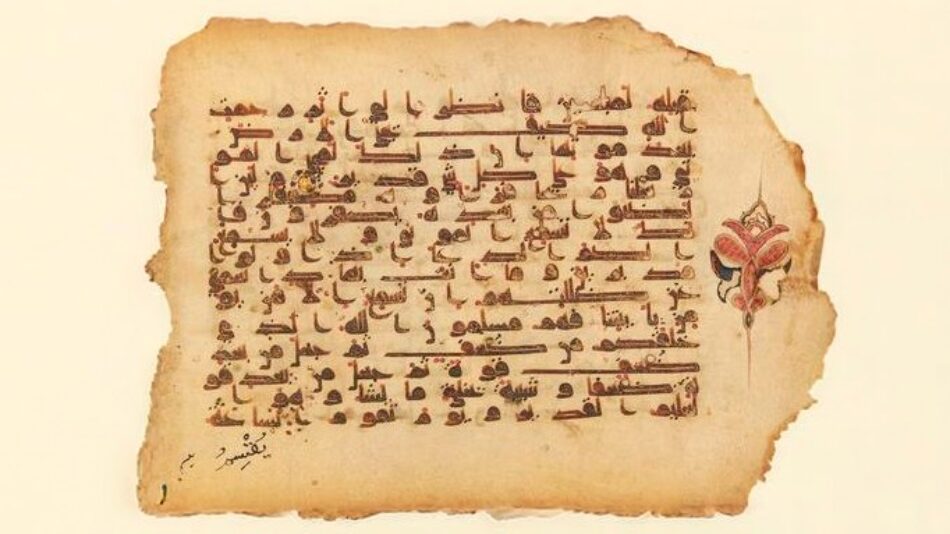
“The Qur’anMuslims believe that the Holy Qur’an contains divine revelations to the Prophet Muhammed received in Mecca and Medina over a period of 23 years in the early 7th century CE. More Through the Ages” is a multi-author, multi-volume project that maps out the reception history of the Qur’an through six periods or “Ages” of roughly three centuries each, and across various areas and disciplines (see list below).
In this project, the reception of the Qur’an is understood to refer to a spectrum of aspects from interpretation to application, adaptation, appropriation, performance, use and instrumentalisation that the Qur’an has been subject to, as well as to how Muslims of various persuasions and fields, and others, have transmitted, experienced, conceptualised, responded to, and been inspired by the Qur’an.
Some of the aims of the project are:
highlight the diversity of approaches to the Qur’an;
trace the live-cycle of concepts and dogmas related to the Qur’an, from their inception to their development and, often, their end, contextualising them.
allow readers and students to examine the reception of the Qur’an in two ways:
one the one hand, synchronically and comparatively, i.e. in one period but across different areas and disciplines, which are usually not considered together, and
on the other hand, diachronically, i.e. from the point of view of one area only but comparing the different periods.
provide educational materials, including essays, charts and speaker interviews
The thirteen areas covered are:
Written reception
Material reception
Lived reception
Liturgical reception
Political reception
Legal reception
Theological reception
Mystical/esoteric reception
Interpreted reception
Literary reception
Philosophical reception
Translated reception
Non-Muslim reception
In this project “reception” is understood to refer to a spectrum of aspects from interpretation to application, adaptation. appropriation, performance, use and instrumentation that the Qur’an has been subject to, as well as to how Muslims of various persuasions and fields and others have responded to it.
A series of workshops will be organised for each respective period. The present workshop corresponds to The Age of Foundations (7th-10th centuries).