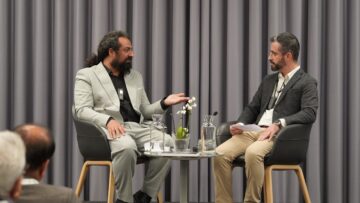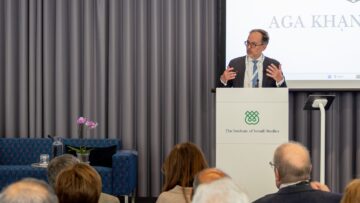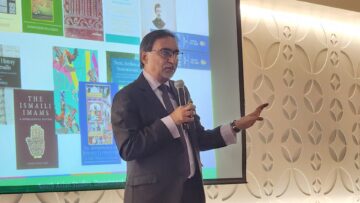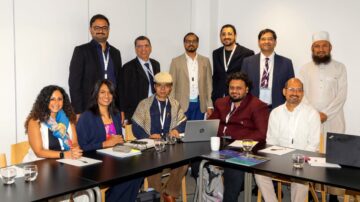

The Institute of Ismaili Studies (IIS), in collaboration with the Aga Khan Music Programme (AKMP) and the Aga Khan Trust for Culture (AKTC), hosted a lecture-recital on Hareep on Thursday 5 November 2026 at the Aga KhanA title granted by the Shah of Persia to the then Ismaili Imam in 1818 and inherited by each of his successors to the Imamate. Centre, London. It brought together three master musicians from the Hunza Valley in conversation with researchers, Dr Anna Schmid and Dr Colin Huehns. The evening also launched the digitised edition of Dr Colin Huehns’s dissertation, Music of Northern Pakistan (1991).
A tradition held in memory
Hareep is the indigenous ensemble music of Hunza and the surrounding regions of Gilgit-Baltistan and Chitral. It is performed along with ceremonial dances at royal occasions, and its melodies once accompanied soldiers to battle and marked their return. Hareep is also played during polo matches, weddings, and seasonal festivals, and is mandatory for shamanic rituals.
For generations, musicians of the Bericho (skilled person) community have sustained Hareep passing their knowledge from one generation to the next through oral instruction, apprenticeship and performance. Hareep’s history is preserved in the memories, performances, and embodied knowledge of the musicians themselves.
Honouring the bearers of knowledge
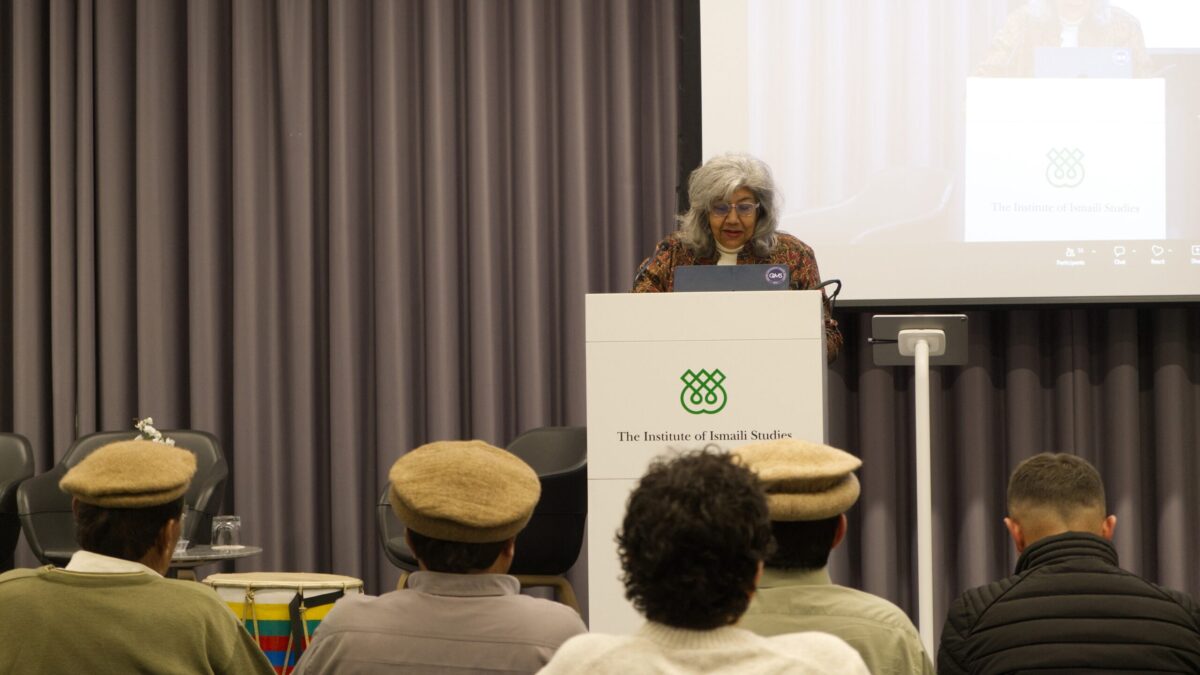
Professor Zayn Kassam, Director of IIS opened the evening and paid tribute to the Bericho musicians, saying that they “have carried their art forward with skill, creativity and dignity.”
Professor Kassam described the evening as a way of attending to
knowledge held in voices, practices, and memories.
She also thanked Dr Walid Ghali and the Aga Khan Library for making Dr Huehns’s work digitally accessible.
The paradox of Hareep
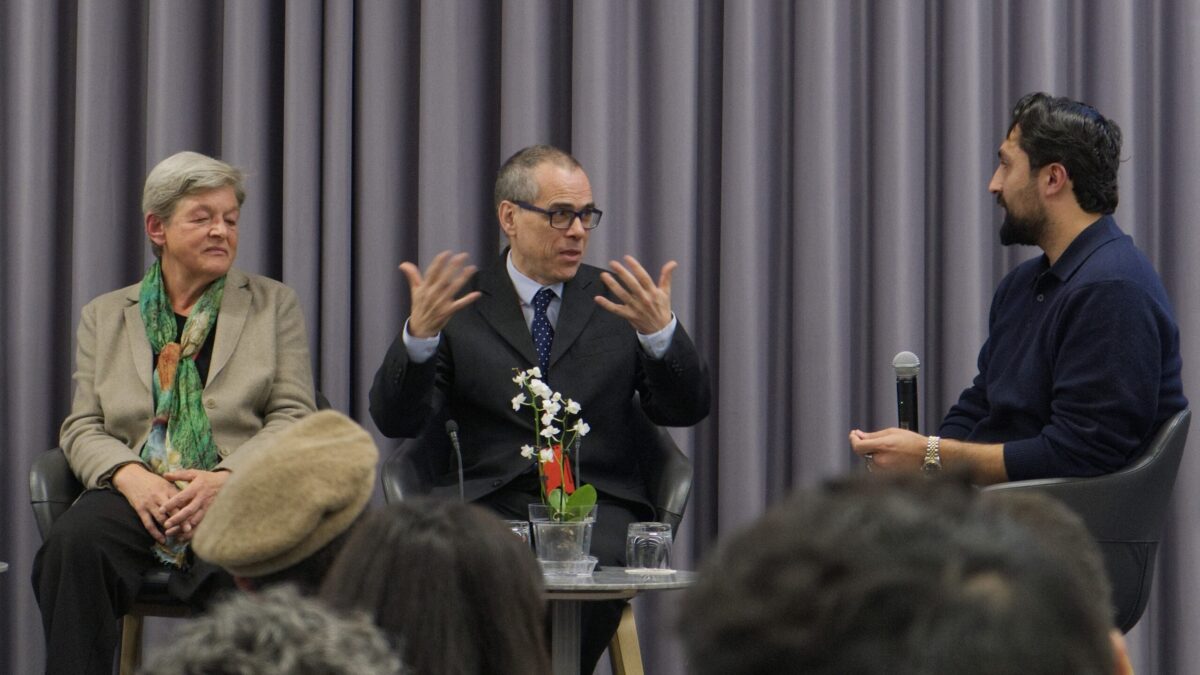
Saad Barcha, a 2025 graduate of the Graduate Programme in Islamic Studies and Humanities (GPISH) from Hunza who is now a Farhad Daftary Doctoral Scholar and DPhil candidate in Music at the University of Oxford, moderated the evening and opened with an overview of the tradition and its history.
Hareep has long occupied a central place in Hunza’s social life, yet the musicians who sustained it historically belonged to the lowest ranks of society. Under the princely state, which ended in 1974, social standing determined who could dance to particular melodies and in what order, while having a melody dedicated to someone was considered a great honour. The musicians, known as Bericho, also faced social stigma, and Saad explained that he uses the name with their consent as part of his efforts to reclaim its original meaning.
Following the end of princely rule, new educational and employment opportunities opened up for Bericho families, but fewer young people took up music.
Over the past two decades, Hareep has experienced a revival, supported by recognition from His Late Highness Aga Khan IV, cultural initiatives of the Aga Khan Trust for Culture and a younger generation of musicians.
Among them is the folk fusion band Hunza Folk co founded by Khalid Ansari (GPISH 24) and Najeeb Jan in 2010 which has helped popularise informal bazm gatherings bringing together music, poetry and conversation. Yet this renewed interest has not necessarily improved the circumstances of the musicians themselves. As Saad cautioned, a tradition can gain prestige “while its original custodians remain economically insecure or socially marginalised”. His doctoral research seeks to preserve the repertoires, oral histories and knowledge associated with individual melodies, much of which is now held by a small number of senior musicians. Bringing these musicians to London was also an opportunity to build trust and offer something tangible in return for sharing their knowledge.
Fieldwork from the late 1980s
Dr Huehns first travelled to Hunza in 1986, aged 19, while studying at the University of Cambridge. A lecturer had given him a tape recorder and asked him to find music. Within minutes of arriving in Mominabad, he heard a musician playing the tutek. “I was amazed”, he recalled. “I mean, this is terribly skilful music”. He later returned for doctoral fieldwork, recording 53 cassettes and 20 reel-to-reel tapes, before spending around 18 months transcribing the music by ear. Comparing his recordings to a cross-section of a stone, he explained that they captured the tradition at a particular moment but could not show what came before or after. Saad’s research, he suggested, could now help reveal how the tradition had developed since then.
Dr Anna Schmid, former Director of the Museum der Kulturen Basel, studied at the South Asia Institute in Heidelberg and conducted fieldwork with the Bericho community between 1988 and 1990. Her findings were published in Die Dom zwischen sozialer Ohnmacht und kultureller Macht: Interethnische Beziehungen in Nordpakistan, which remains a key study of the community. Noticing that earlier publications referred to musicians only in passing, she began examining their position in Hunza’s society and encountered the same contradiction highlighted by Saad. Although people repeatedly told her that Hunza needed music, the musicians themselves faced considerable stigma.
You have to make the difference, I think, between music and musicians, she explained. That’s where the stigma comes in.
The end of royal patronage had also left many families facing difficult choices between pursuing music and education, while tourism provided some income but not enough to make a living. The evening also brought a personal reunion, as Dr Schmid met Ustad Baso again, nearly 40 years after they first knew each other in Hunza.
The musicians in their own words
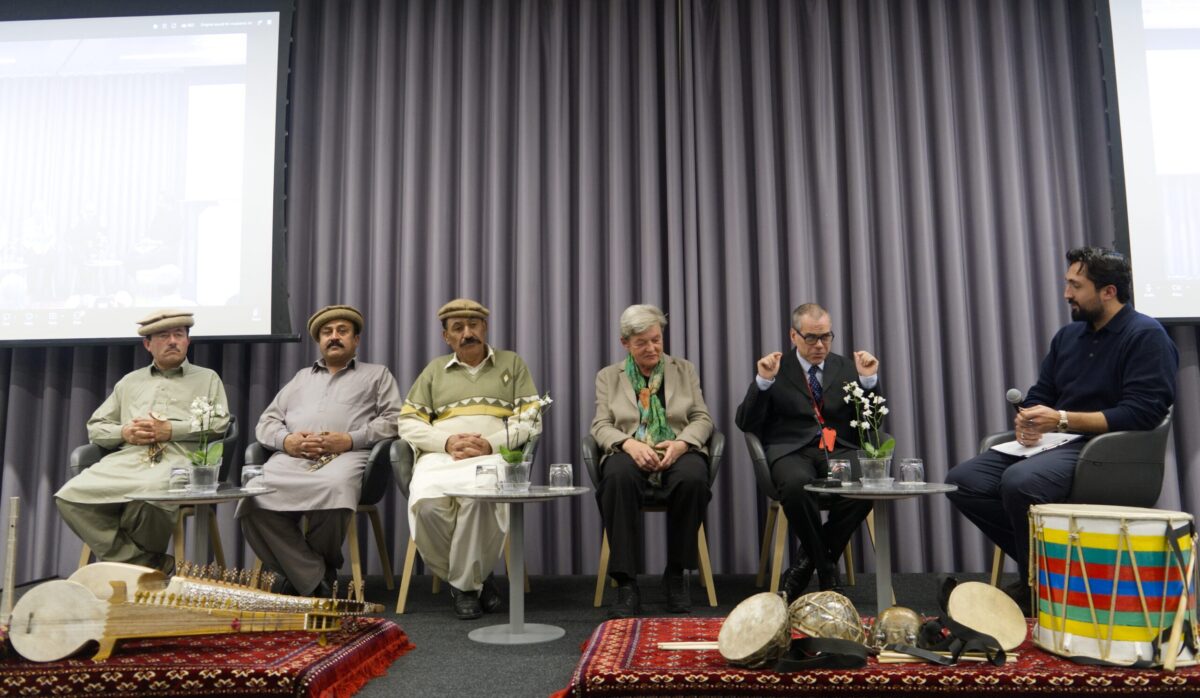
The three master musicians spoke in Burushaski, and Saad translated their responses into English.
Ustad Baz (Baso) is the senior musician of the group. He comes from a lineage of dadang (cylindrical drum) players and learned from his father, Rajab Ali, who was a renowned musician. Ustad Baso spoke about the hardships of his early training, and about his pride in his Bericho identity.
I learnt from the old masters by following them wherever they were playing, and sometimes I hid so that I could listen and learn. There was poverty and hunger, and our predecessors suffered a great deal to keep the music alive.
…With the passing of the older generation, the tradition was on the verge of extinction. But in 1996, when Aga Khan IV visited Hunza and his helicopter landed in Mominabad, young people began to learn the craft as well. Our place is now called Mominabad. It was previously called Berishal. I am proud to be a Beritz, as my Imam has called us one jamaat. If someone forgets their identity and ancestry, then it is not good. I am proud to be a beritz, and this is my identity. I am grateful that I am able to come to IIS and speak about my craft. This in itself is an honouring moment for me.”
Ustad Shams Uddin (Shamsulo) comes from a family of suranai (a loud outdoor wind instrument) players. As a young man, he saw the hardships his elders faced as musicians and chose other work instead. He drove a tractor and worked alongside masons as a labourer. Ustad Baso persuaded him to return to the music. Today, Ustad Shams Uddin is widely regarded as the master suranai player of the region and treats his music as a form of devotion.
At that time, I was heartbroken because we were looked down upon by the people of Hunza. People wouldn’t even share meals with the Bericho.
…We were frustrated and decided not to pursue the craft, because we saw the condition and the oppression our ancestors faced. My ancestors come from Ladakh, and this is our family craft. I learnt it in Hunza, and Ustad Baso convinced me to take it up again. I was driving a tractor at the time. I now consider this craft worship, as my whole family lives off the income from it. I thank God that I am able to come to IIS London and perform in front of you.”
Ustad Abdul Karim is regarded as one of the first Burusho musicians to undertake formal training under a Bericho master. His family, however, opposed his choice because of the stigma attached to the profession. He learnt from the old master musicians in person, and from earlier generations by listening to their recordings.
There was a time when the craft of music was limited to the people of Mominabad. I felt that when Bericho played anywhere, they were not respected.
…I loved the skill and often wondered whether it could diminish after them. I was curious and became interested. I learnt from Ustad Kalb Ali, Ustad Ameero and Ustad Gouhar Ali, may their souls rest in peace. I was also inspired by Ustad Safaro and Ustad Muhammad Ali. I thank Mir Ghazanfar, because he gave me recordings from the 1940s to the 1980s, and I learnt from those recordings. I never had to face hardships as my family was well off, but I learnt despite bias from my family. They discouraged it because my ancestors were viziers, and they looked down on the craft and on being a Beritz. By the grace of God, today I am able to play 2,000–2,500 tunes from Gilgit-Baltistan. I learnt these from the recordings of old masters, and I can play anywhere.”
Melodies of Hareep
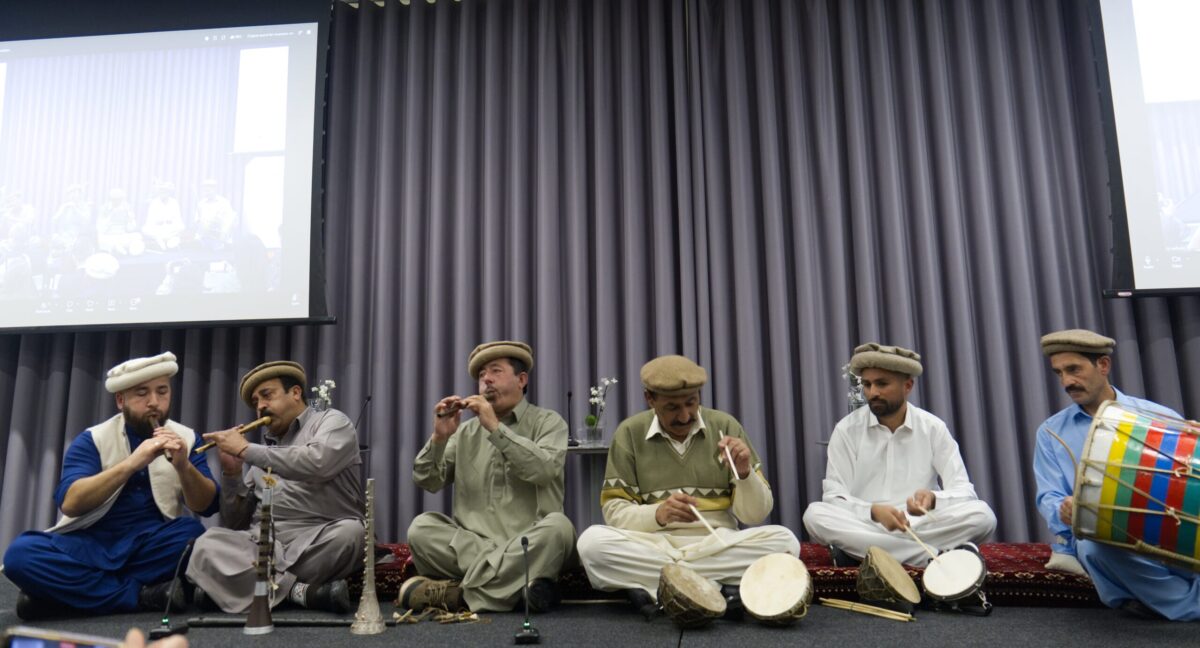
The evening closed with a short performance with Zahid Hussain who played dadang, Ustaad Baso and Waji Ullah Baig were on damal (kettle drum), Abdul Karim, Abdul Muneem and Shams Uddin played tutek (lute) and suranai.
The first melody, Tughra, has roots in Persian poetry in praise of Imam ʿAlī, attributed to Nāṣir-i Khusraw. Musicians play this melody at community celebrations and at the end of weddings, as a prayer for the couple. Saad added that musicians who feel badly treated at a wedding leave without playing the melody. The second piece, saat e dhani, is one of the earliest melodies played at a tamasha, a traditional musical gathering. The ensemble then moved from the tutek, a flute for intimate indoor settings, to the suranai, a louder outdoor instrument. They then played wazir Houlo e dhani and Abdul Muneem gave a short demonstration of the folk dance.
An archive opened to the world
The digitised edition of Music of Northern Pakistan is now available through the Aga Khan Library Digital Collections. The collection has three parts: the thesis, a book of musical transcriptions, and a catalogue of fieldwork recordings. The catalogue lists each recording with the names of the musicians and the melodies.
Recognising the custodians of a living tradition
By bringing together master musicians, younger performers and researchers for the first time, the evening highlighted the importance of Hareep as a living tradition sustained through shared memories, relationships and the knowledge of those who continue to practise it. Supported by members of the Gilgit-Baltistan diaspora alongside the partner institutions, the event also drew attention to a wider challenge.
As Hareep gains recognition and cultural prestige, the question that remains is how can the musicians who have preserved it for generations receive the recognition and support they deserve?