
How can countries with different legal traditions cooperate effectively while respecting their distinct histories, values and institutions? This question was at the heart of a lecture by Dr Christophe Bernasconi, Secretary General of the Hague Conference on Private International Law (HCCH), at the Aga KhanA title granted by the Shah of Persia to the then Ismaili Imam in 1818 and inherited by each of his successors to the Imamate. Centre.
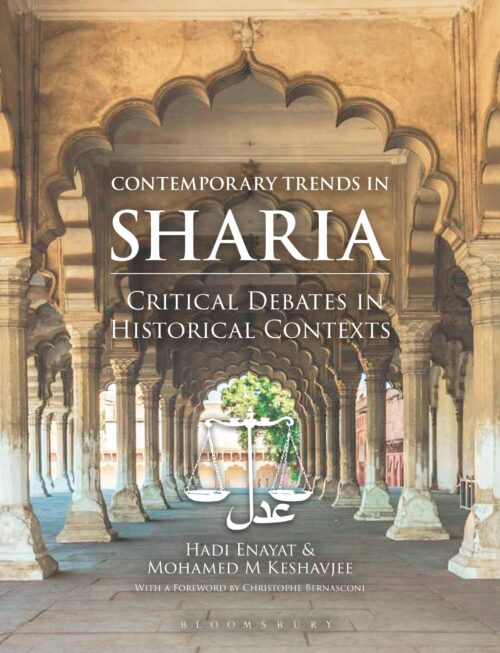
The Institute of Ismaili Studies (IIS) welcomed Dr Bernasconi on 13 October 2026 for a lecture entitled Towards a New Global Multilateralism: Greater Inclusivity and Mutual Respect. The event accompanied the publication of Contemporary Trends in Sharia: Critical Debates in Historical Contexts, a new IIS book co-authored by Dr Hadi Enayat and Dr Mohamed M. Keshavjee, for which Dr Bernasconi contributed the foreword.
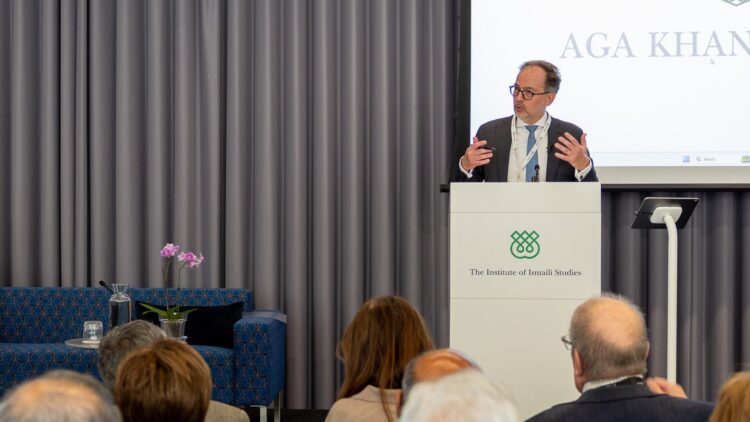
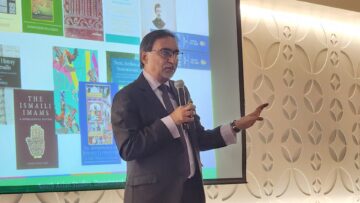
Dr Christophe Bernasconi, Secretary General of the Hague Conference on Private International Law (HCCH)
About the lecture
Drawing on nearly three decades of experience at the HCCH, Dr Bernasconi explored how international cooperation can be strengthened through a deeper understanding of different legal and intellectual traditions. He explained that private international law helps legal systems work together across borders, providing common rules for matters involving families, businesses and legal decisions without requiring countries to adopt identical laws.
At a time of growing geopolitical tensions and pressure on international institutions, he called for a more inclusive and practical approach to multilateralism, one in which countries and traditions participate on equal terms in developing shared solutions. He argued that meaningful cooperation depends not on eliminating differences, but on understanding them and finding common ground.
Opening the event, Professor Zayn Kassam, Director of IIS, reflected on the challenges of cooperation in an increasingly interconnected world, where people’s lives frequently cross national, cultural and legal boundaries. She drew a parallel between the HCCH’s efforts to build bridges between legal systems and IIS’ commitment to advancing understanding across religious and intellectual traditions. Recalling the vision of the Institute’s founder, His Highness Aga Khan IV, she emphasised that the wellbeing of Ismaili communities is closely connected to that of the wider societies in which they live. She highlighted the importance of scholarship, dialogue and mutual respect in fostering cooperation across differences, noting that meaningful engagement requires an understanding of the histories, values and traditions that shape different societies.
Understanding Islamic legal traditions
A central theme of the lecture was the importance of understanding legal traditions in their historical and social contexts. Reflecting on the book, Dr Bernasconi highlighted the distinction between sharia as a broad ethical and religious framework, fiqhThe science of Islamic jurisprudence. as the human endeavour to interpret and apply it, and contemporary state law. He emphasised the diversity of Islamic jurisprudence and its capacity to respond to changing circumstances through reasoning from within the tradition.
The book examines contemporary debates surrounding Islamic law, including constitutionalism, human rights, gender justice, religious freedom, criminal justice and biomedical ethics. Dr Bernasconi drew particular attention to its treatment of gender justice, highlighting how Muslim women scholars and activists have drawn on Islamic intellectual traditions to challenge domestic violence and advance women’s rights. He cited the work of Sisters in Islam in Malaysia as an example of reform emerging from within a religious tradition while engaging with international human rights principles. Such examples, he argued, demonstrate that respect for cultural and religious traditions need not come at the expense of fundamental rights.
Dr Bernasconi also explored the concept of maqāṣid al-sharīʿa, the higher purposes of Islamic law, which include the protection of life, intellect and human wellbeing. Drawing a parallel with international law, he suggested that effective multilateralism must likewise remain focused on its fundamental purposes, including human dignity, peaceful coexistence and cooperation across borders, while allowing institutions and practices to evolve.
Building Cooperation Across Difference
The practical importance of this approach was illustrated through the HCCH’s work in international family law. Dr Bernasconi discussed the Malta Process, which brings together countries with different legal traditions, including those influenced by sharia, to strengthen cooperation in cross-border child protection matters. Such initiatives demonstrate how shared commitments, including the best interests of children, can provide a basis for cooperation even where legal systems differ.
He also referred to the book’s discussion of mediation within Ismaili communities, where approaches developed in one cultural setting were adapted through dialogue to reflect different understandings of family relationships and reconciliation. The example illustrated how engagement between traditions can generate more effective solutions rather than requiring one system to adopt another’s assumptions.
Shaping a more inclusive international system
Dr Bernasconi argued that genuine inclusion requires more than bringing a greater number of countries into international institutions. Countries across Africa, Asia, the Middle East and other regions must have an equal voice in identifying shared challenges and developing the rules intended to address them. He emphasised that cooperation must also deliver practical results. Whether enabling authorities to protect children across borders, helping families navigate different legal systems or facilitating international commerce, the value of multilateralism ultimately lies in its ability to improve people’s lives.
Returning to Contemporary Trends in Sharia, Dr Bernasconi reflected on the continuing evolution of Islamic jurisprudence and international multilateralism. Both, he suggested, must remain grounded in fundamental principles while adapting to changing circumstances. Greater inclusivity, mutual respect and a willingness to learn across traditions are essential to sustaining meaningful cooperation. The lecture formed part of the day’s activities marking the publication of Contemporary Trends in Sharia, ahead of an evening book launch at the Ismaili Centre, London. The book offers a critical examination of contemporary interpretations of sharia, challenging misconceptions and exploring how Islamic legal and ethical traditions continue to engage with the demands of modern life.
روندهای معاصر در شریعت
Critical Debates in Historical Contexts
Find out more about Contemporary Trends in Sharia: Critical Debates in Historical Contexts, which is also available to read online as an open-access publication.
اطّلاعات بیشتر