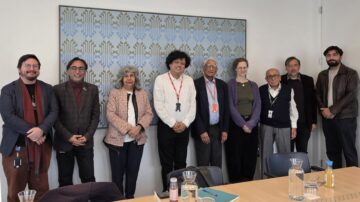

L'Institut d'études ismaéliennes (IIS) a organisé une conférence intitulée Digital Futures : The Digital Humanities in Islamic Studies les 28 et 29 mai 2026 à l'Aga Khan Un titre accordé par le Shah de Perse à l'imam ismaélien de l'époque en 1818 et hérité par chacun de ses successeurs à l'imamat. Centre, Londres. Organisée par l’Unité des collections spéciales ismaéliennes (ISCU), cette conférence de deux jours, également diffusée en ligne, a réuni des chercheurs, des archivistes, des enseignants et des spécialistes des technologies du monde entier afin d’examiner comment les méthodes numériques redéfinissent l’étude des traditions islamiques, et ce que cette évolution implique pour les institutions, les communautés et les systèmes de connaissance concernés.
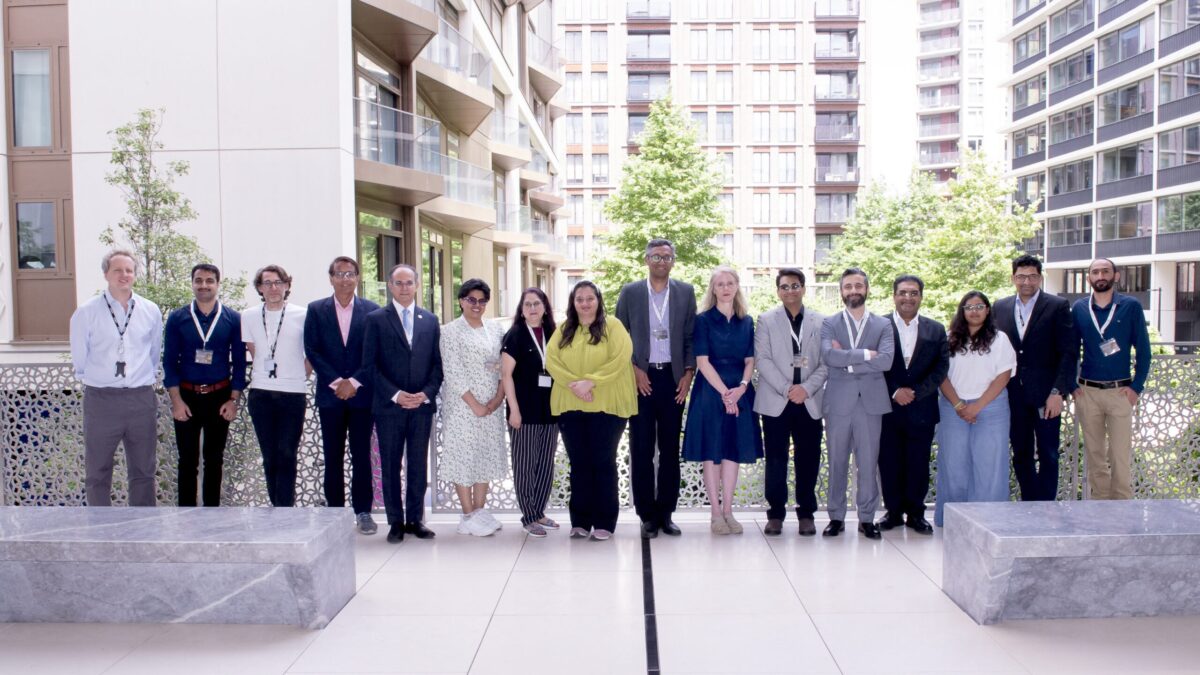
Au cours de la dernière décennie, les méthodes des sciences humaines numériques – qu’il s’agisse de la numérisation à grande échelle, de l’analyse informatique des textes, de la visualisation de réseaux ou de l’intelligence artificielle (IA) générative – ont pris une place centrale dans la manière dont les connaissances sont produites, sélectionnées et partagées. Dans le domaine des études islamiques, ces évolutions ouvrent de nouvelles perspectives pour l'étude des collections de manuscrits, des témoignages oraux, des archives multilingues et des pratiques quotidiennes des communautés musulmanes contemporaines. Elles soulèvent également des questions urgentes concernant l'autorité, la médiation, l'éthique et l'accès. Cette conférence avait pour objectif d'aborder ces questions en instaurant un dialogue approfondi entre la recherche empirique, les réflexions méthodologiques et les pratiques institutionnelles.
Préserver et accéder au patrimoine islamique à l'ère numérique
La conférence s'est ouverte dans la matinée du 28 mai par une table ronde consacrée aux archives, à la culture matérielle et à la conservation, présidée par le Dr Alex Henley de l'IIS. Les communications se sont appuyées sur les travaux de l'Unité des collections spéciales ismaéliennes (ISCU) pour examiner comment les outils numériques transforment l'accès aux collections patrimoniales. Naureen Ali a examiné comment les normes IIIF (International Image Interoperability Framework) peuvent améliorer la visibilité des collections de manuscrits et favoriser leur diffusion à plus grande échelle. Mashal Gilani s'est penchée sur une exposition virtuelle d'archives photographiques et sur ce qu'elle révèle au sujet du patrimoine numérique, de l'autorité religieuse et de l'appartenance communautaire. Rizwan Karim s'est appuyé sur le projet d'histoire orale de l'ISCU pour montrer comment la technologie de reconnaissance vocale automatique (ASR) peut introduire des biais linguistiques, faussant ainsi les témoignages multilingues et marginalisant les voix mêmes que les archives visent à préserver.
Une deuxième table ronde, consacrée à l'IA, à l'herméneutique et à l'innovation pédagogique, a élargi ces débats aux questions liées à la recherche et à l'enseignement. Le Dr Daryoush Mohammad Poor a examiné le risque de mimétisme méthodologique dans la recherche basée sur l'IA, en proposant un modèle d'"enquête générative" qui préserve la rigueur épistémique. Le Dr Najam Abbas a examiné comment les outils de narration numérique peuvent susciter l'intérêt des jeunes publics pour le patrimoine intellectuel ismaélien, tandis que Farah Naz, de l'Université Aga Khan, s'est penchée sur la manière dont la formation continue des enseignants en sciences humaines peut s'adapter à l'évolution des pratiques, passant de l'étude des objets à la conception à l'aide d'algorithmes.
Discours d'ouverture
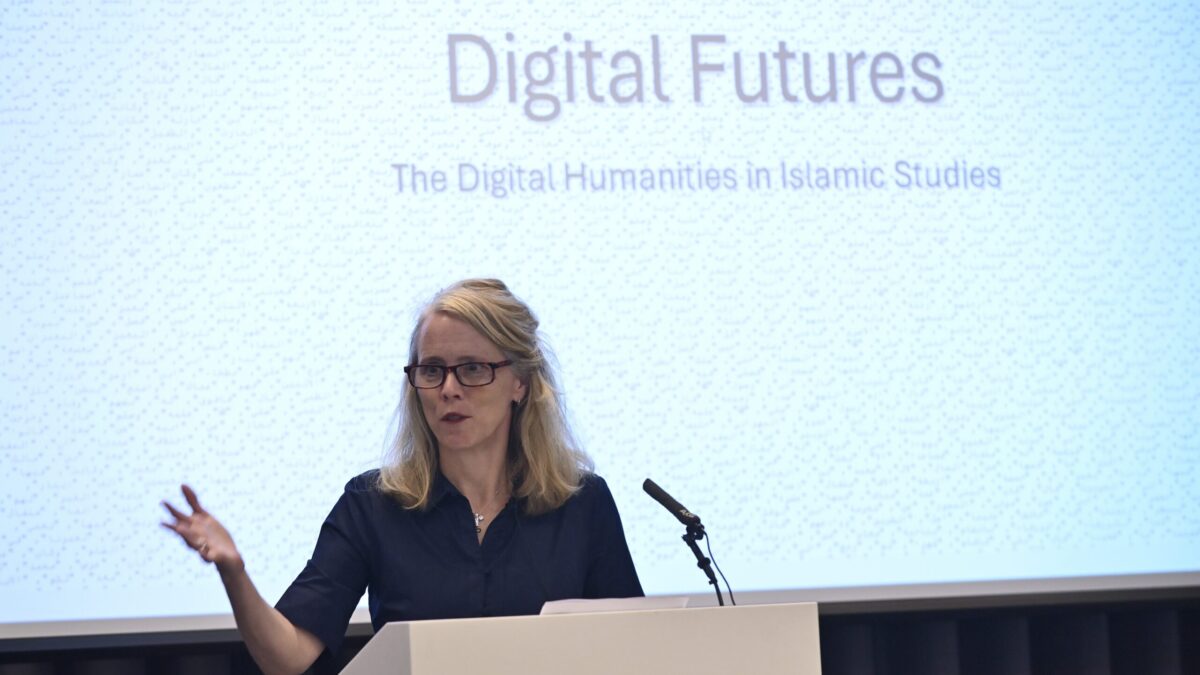
Le discours d'ouverture a été prononcé par Sarah Savant, professeure d'histoire et directrice fondatrice du Centre des sciences humaines numériques de l'Université Aga Khan (AKU). Le professeur Savant dirige le projet KITAB (Connaissances, technologies de l'information et le livre arabe) ainsi que le projet KITAB-Transform du Conseil européen de la recherche. Au cours de sa conférence en deux parties, elle a passé en revue les travaux actuels et émergents dans le domaine des sciences humaines numériques, en accordant une attention toute particulière aux études islamiques, et a présenté des études de cas illustrant les nouvelles formes de savoir que ces méthodes permettent de développer. Elle a fait valoir qu’une grande partie des travaux de recherche les plus solides en sciences humaines numériques étend les méthodes humanistes traditionnelles à une échelle qu’aucun chercheur ne pourrait atteindre à lui seul. Elle s'est également penchée sur la recherche assistée par l'IA, en soulignant à quel point les chercheurs, sensibles aux schémas récurrents dans différentes langues et cultures, sont bien placés pour aborder aussi bien des questions familières que des questions totalement nouvelles.
Tout au long de son intervention, la professeure Savant a exhorté son auditoire à considérer les méthodes numériques non pas comme une rupture avec la recherche en sciences humaines, mais comme son prolongement. « Si vous avez consulté le catalogue d’une bibliothèque, saisi une expression dans Google ou cherché un mot dans un dictionnaire en ligne, vous avez déjà utilisé des outils numériques », a-t-elle fait remarquer. « La question n’est donc pas de savoir si nous utilisons des méthodes numériques, voire l’IA, mais comment nous les utilisons – et dans quelle mesure nous comprenons celles sur lesquelles nous nous appuyons déjà. » Cette mise en perspective a donné le ton de la conversation qui a suivi, en situant l’IA dans un large éventail d’outils sur lesquels les sciences humaines s’appuient discrètement depuis des décennies.
Si vous avez consulté le catalogue d’une bibliothèque, saisi une expression dans Google ou cherché un mot dans un dictionnaire en ligne, vous avez déjà utilisé des outils numériques. La question n’est donc pas de savoir si nous utilisons des méthodes numériques, voire l’IA, mais comment nous les utilisons – et dans quelle mesure nous comprenons celles sur lesquelles nous nous appuyons déjà.
Plateformes numériques, identité et raisonnement éthique
La troisième table ronde de la première journée, présidée par le Dr Daryoush Poor, s'est penchée sur les publics para-institutionnels et l'autorité algorithmique, en examinant comment les plateformes numériques redéfinissent la vie religieuse et la mémoire collective ismaéliennes en dehors des canaux institutionnels formels. Muhammad Ali Sohail a analysé les contenus visuels générés par l'IA sur des pages Instagram ismaéliennes gérées de manière indépendante, affirmant que les outils d'IA générative créent une nouvelle infrastructure d'identité numérique au sein de laquelle des acteurs non institutionnels peuvent produire des contenus visuels faisant autorité. Mubashir Artas a étudié la manière dont les systèmes de grands modèles linguistiques (LLM) s’imposent progressivement comme des médiateurs moraux auprès des jeunes ismailisAdhérents d’une branche de l’islam chiite qui considère Ismail, le fils aîné de l’imam chiite Jaʿfar al-Ṣādiq (mort en 765), comme son successeur., tandis que le professeur Karim H. Karim, de l’université Carleton, a replacé ces évolutions dans le cadre plus large des traditions de l’éthique islamique.
La deuxième journée a débuté par une table ronde sur la mémoire, la communauté et la religion numérique, animée par le Dr David Bennett de l'IIS. Nurain Lakhani a étudié comment la culture des mèmes numériques sur des plateformes telles qu’Instagram, TikTok et Reddit sert d’espace où les normes communautaires ismaéliennes sont traitées avec humour. Mohsin Ali Baig a examiné les limites éthiques qui se dessinent autour de Jalebi, une application de rencontres ismaélienne, à travers des discussions menées par les utilisateurs sur Reddit. Muhammad Salim s'est appuyé sur l'ethnographie virtuelle pour montrer comment les plateformes numériques contribuent à préserver l'identité transnationale du Réseau des étudiants ismaéliens au Royaume-Uni.
Programmes scolaires, gouvernance et avenirs décoloniaux
La dernière table ronde, présidée par le Dr Roy Wilson, a abordé les questions de gouvernance, de programmes scolaires et de critique décoloniale. Mehrullah Hussaini a analysé les cadres de gouvernance de l'IA dans l'enseignement supérieur des pays à majorité musulmane ainsi que leurs implications pour l'Afghanistan, appelant à l'adoption d'approches politiques qui intègrent les valeurs islamiques aux principes d'intégrité académique. Abidah Alidina a proposé le concept de "vision à deux yeux" (Etuaptmumk), un cadre pédagogique mi’kmaq (un peuple autochtone des Premières Nations d’Amérique du Nord), comme prisme transformateur pour repenser les études islamiques numériques, en mettant en avant la responsabilité relationnelle et la conscience du territoire comme alternatives aux modèles technocratiques dominants. Alnoor Nathani et Shameer Ali Prasla ont présenté la plateforme pédagogique numérique de l’IIS, un portail éducatif multilingue qui élargit l’accès mondial au programme Taʿlim de l’IIS aux élèves, enseignants et membres de la communauté à travers le monde.
La conférence «Digital Futures » a réaffirmé l’engagement de longue date de l’IIS en faveur d’une exploration responsable des traditions intellectuelles ismaéliennes et, plus largement, islamiques. En réunissant des participants allant des doctorants aux chercheurs chevronnés, en passant par les archivistes, les enseignants et les spécialistes des technologies, elle a créé un forum propice à des échanges approfondis sur ce que le tournant numérique signifie pour ce domaine, sur ses possibilités, ses risques, ainsi que sur les communautés dont le patrimoine et les savoirs sont en jeu.