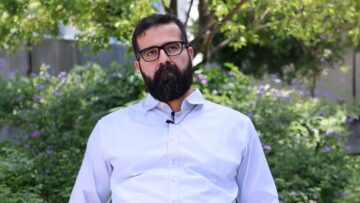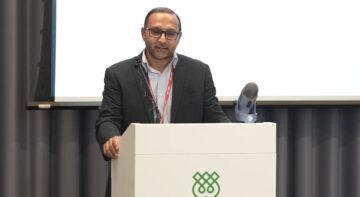
Professor William Rory Dickson introduces key ideas in Sufi philosophy, drawing on his book Dissolving into Being. Recorded at the Aga KhanA title granted by the Shah of Persia to the then Ismaili Imam in 1818 and inherited by each of his successors to the Imamate. Centre on 24 September 2025, the lecture explores Ibn ʿArabi’s thought through accessible explanations of unity, perception, and the nature of reality.
About the lecture
In this lecture, Professor Dickson explains the need for accessible introductions to Sufi philosophy, particularly the works of Ibn ʿArabi, which remain less widely understood than Sufi poetry. He situates Sufism within a wider global context, noting its relative underrepresentation in Western spiritual discourse and the misconceptions this can produce.
The session explores central metaphysical ideas, including the Sufi understanding of the foundational Muslim declaration of monotheism, lā ilāha illā Allāh as a statement about reality itself. Through clear analogies such as light passing through a prism Dickson explains how unity appears as multiplicity while remaining fundamentally one. He also examines how human perception shapes belief and highlights Ibn ʿArabi’s openness to diverse interpretations of the divine.
Key themes discussed
- Accessible introduction to Sufi philosophy and Ibn ʿArabi’s thought
- The limited presence of Sufism in Western spiritual discourse
- The Sufi interpretation of lā ilāha illā Allāh as ultimate reality
- Unity and multiplicity explained through the prism analogy
- The Fuṣūṣ al-ḥikam (Gemstones of Wisdom) and prophetic wisdom
- Human perception as a “self-shaped window” shaping belief
- Beliefs as forms that structure how the Real is understood
- Ibn ʿArabi’s emphasis on plurality and the limits of exclusive belief
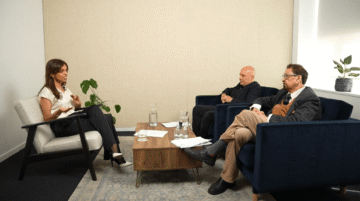
- Discussion on theology, belief, and inclusive views on gender