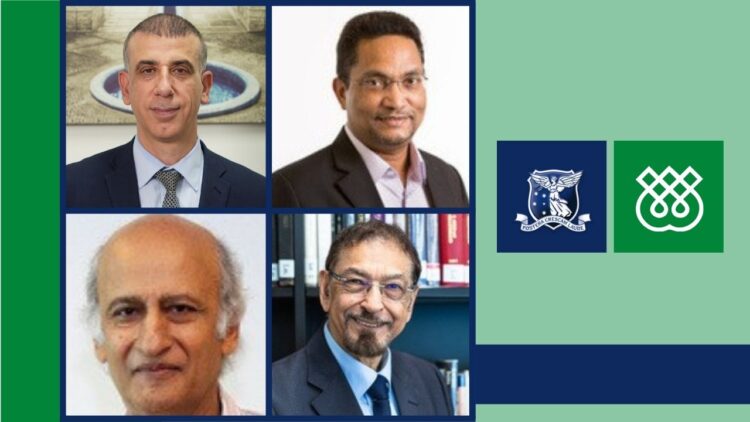
The Institute of Ismaili Studies (IIS), in collaboration with the University of Melbourne, hosted a Voices of Contemporary Islamic Thought webinar examining how Muslim traditions can respond to climate change and environmental crisis. Chaired by Professor Abdullah Saeed and moderated by Dr Muhammad Keshavjee, the session features Professor Mehmet Ozalp, with summary reflections by Dr Salim Kassim-Lakha. The discussion explores stewardship, trust, moral accountability, and the relationship between faith, ethics, and environmental action in contemporary Muslim contexts.
In this conversation, Professor Ozalp argues that environmental care is not external to Islam or a modern addition to religious thought. Drawing on Qur’anic concepts such as khilafah and amanah, he presents human beings as morally accountable stewards rather than unrestricted owners of the Earth. The session connects classical Islamic literature, historical conservation practices, and present-day challenges, including consumerism, policy failure, deforestation, and climate injustice. It also considers the role of indigenous knowledge, civil society, education, and emerging technologies, such as artificial intelligence, in shaping a more responsible environmental future.
Key themes discussed
- Islamic environmental ethics as a long-standing part of Muslim thought
- Khilafah and amanah as foundations for stewardship and accountability
- Moderation, avoiding waste, and respect for ecosystems
- Classical Islamic literature and teachings on animals and the natural world
- Historical Muslim practices of conservation and animal welfare
- The gap between ethical principles and policy implementation
- Al-Mizan and contemporary Islamic environmental thought
- Indonesia as a case study of faith-based environmental action
- Indigenous perspectives on land, life, and interconnectedness
- The ethical opportunities and environmental costs of AI
This webinar presents environmental care as integral to Islamic belief and practice. Professor Ozalp shows how Islamic teachings frame the Earth as a trust, calling for restraint, responsibility, and action rather than exploitation. The conversation moves from Qur’anic foundations to practical examples, including protected zones, tree planting, animal welfare, and recent religious rulings against deforestation and destructive fishing practices. It also addresses the pressures of consumerism and development, and the need for stronger policy, education, and collaboration across religious and civic communities. The session closes by underlining a clear message: protecting the environment is not optional, but a moral and shared human responsibility.