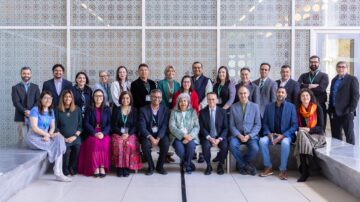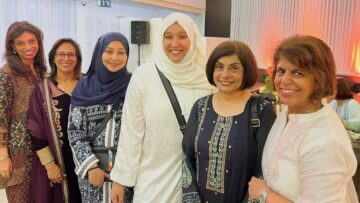

Professor Zayn Kassam, Director of The Institute of Ismaili Studies (IIS), undertook a heritage stewardship journey across Pakistan this summer, accompanying the Ismaili Special Collections Unit (ISCU) team. The visit strengthened relationships with strategic partners, supported ongoing preservation work, and reinforced IIS’ commitment to the cultural and intellectual heritage of one of the largest and most diverse Ismaili constituencies.
Strengthening heritage partnerships
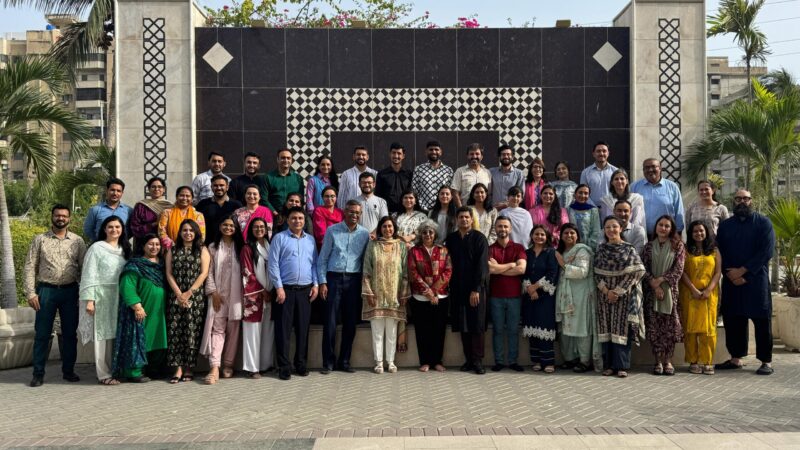
Her visit began in Karachi and focused on institutional engagement, curriculum development, and heritage preservation. Professor Kassam met with National ITREB Pakistan’s leadership, including Rubina Sorathia, Honorary Secretary, and Aziz Kabani, Executive Officer, with Aly Yusuf, Chair, joining online. Discussions centred on curriculum, teacher training, heritage materials, and the Oral History Project.
She also met Nizar Mewawala, President of the National Council for Pakistan, to discuss future collaboration, including the engagement of IIS alumni and preparations for the Institute’s 50th anniversary. At the newly renovated ITREB Pakistan Library, the team presented a curated selection of manuscripts for her review.
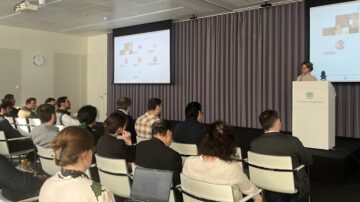
In an unplanned stop, Prof Kassam addressed the STEP Continuing Education Programme, encouraging STEP-trained teachers working in diverse educational contexts across the country to think about ways in which the secondary curriculum could help students to address contextual issues and challenges.
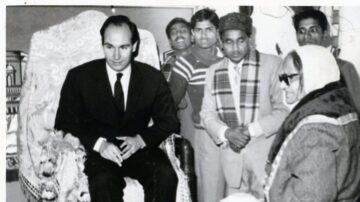
She also visited Laasi Colony, one of Karachi’s earliest Ismaili settlements, and the Mewa Shah Cemetery, where she paid respects at the resting place of Sayyida Imam Begum, a renowned female ginan composer. An evening visit to Kharadar Jamatkhana led to a personal discovery: a rare photograph of her grandfather, Varas-then-Count Kassam Jivraj, taken during Imam Sultan Mahomed Shah’s Diamond Jubilee in Dar-es-Salaam in 1946.
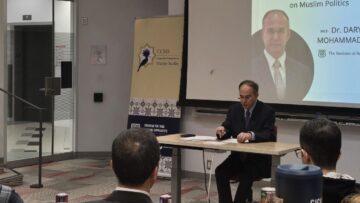
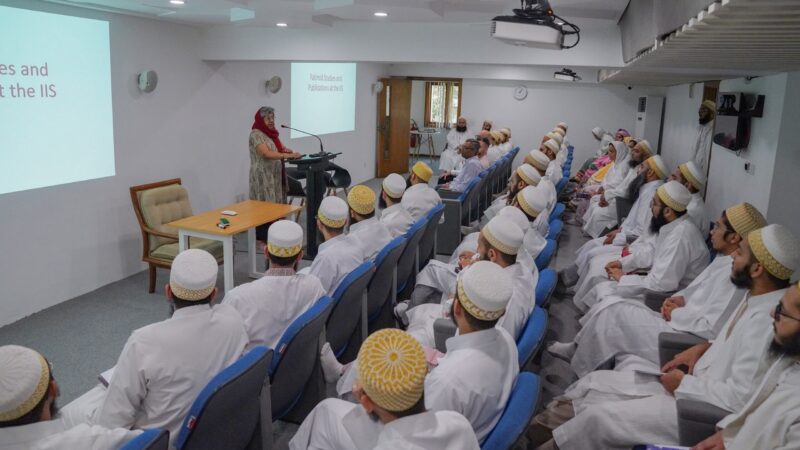
As part of the outreach component, the delegation visited Aljamea-tus-Saifiyah, the principal educational institution of the Dawoodi BohraIndian community of Mustaʿli Ismailis, now found primarily in the Indo-Pakistan subcontinent, Yemen, Egypt and other parts of the world. community. After touring its Fatimid-inspired campus and library, Professor Kassam and Dr Wafi Momin (Head of ISCU), addressed faculty and students on the shared intellectual heritage between the two traditions and explored future avenues for collaboration, particularly in manuscript preservation. The Karachi leg concluded with a visit to the Aga Khan University, guided by IIS alumna Rukhsana Ali, now a faculty member there.
Securing archival and oral history access
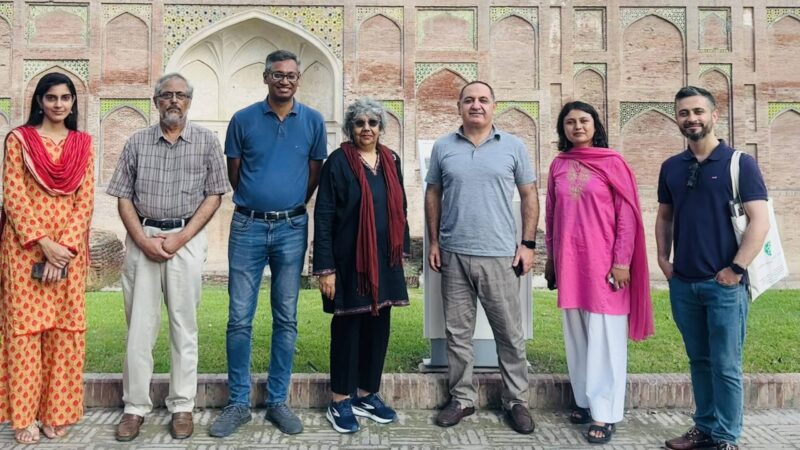
From Karachi, the delegation travelled to Lahore, where Professor Kassam met with local leadership to discuss strengthening Religious Education, improving educator training, and developing accessible knowledge resources to support the Jamat’s learning needs. She also visited heritage conservation projects of the Aga KhanA title granted by the Shah of Persia to the then Ismaili Imam in 1818 and inherited by each of his successors to the Imamate. Trust for Culture (AKTC), coordinated by Wajahat Ali, Director of Conservation, across sections of the Walled City of Lahore with architect Salma from Hunza, including the Zenana (Moti) Mosque. These discussions opened new opportunities for collaboration between IIS and AKTC.
After a brief stop in Islamabad, the delegation travelled north towards Gilgit-Baltistan (GB). When the weather-dependent flight to Gilgit was cancelled, the team secured seats on a departing flight to Skardu and completed the rest of the journey by road.
From Gilgit, they travelled to Chatorkhand in Ghizer to meet Syed Jalal Shah, son of the late Pir Mukhi Karam Ali Shah, and viewed the family’s historic archive. The Ismaili Special Collections Unit has completed some digitisation work of this collection already. Following this meeting with Professor Kassam, the family agreed to continue digitising the remaining material. As a gesture of hospitality, Shamim Zaman, wife of the late Pir Karam Ali Shah, presented the Director with a traditional chogha.
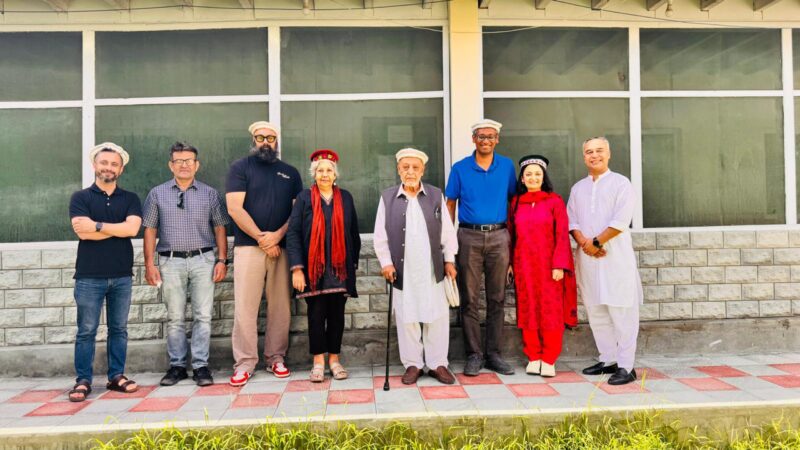
Back in Gilgit, Professor Kassam met Vazir Fida Ali Esar, the most senior ITREB scholar, and Dr Aziz Dinar, who shared insights on the history of Ismailism in the region, institutional developments, and contemporary challenges. In keeping with local tradition, ITREB Gilgit presented her with an embroidered Tajik hat.
Connecting with community leaders and archives
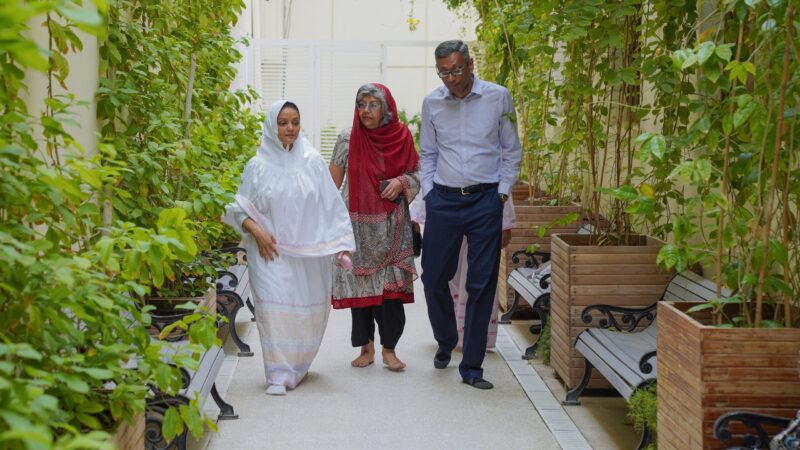
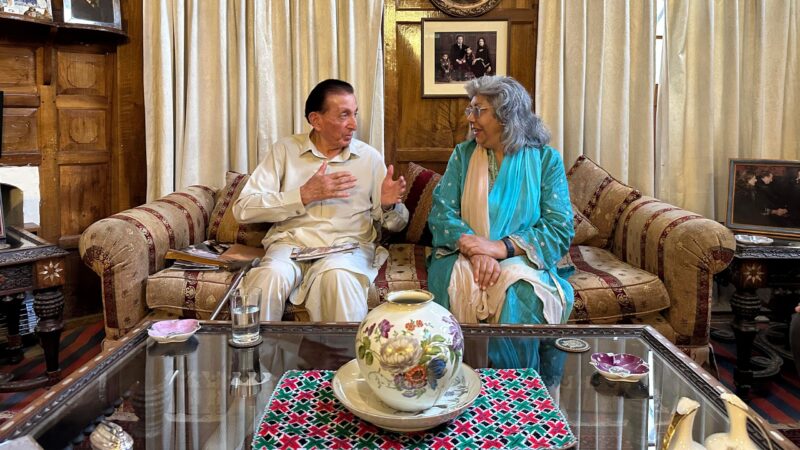
The final stage of the journey brought the Director to Hunza, where she met Mir Ghazanfar Ali Khan and Rani Ghazanfar in the historic room built for the 49th Imam, Shah Karim Shah, during his first visit to Hunza in 1960. The Mir reflected on his experiences working with His Highness Aga Khan IV and on the service of his late father, Mir Jamal Khan, to the last two Imams and to the Jamats of Hunza, Ghizer, Chitral, and Central Asia. The family agreed to grant access to the Mir family archive, while oral history interviews with both the Mir and Rani were conducted following the meeting with the Director.
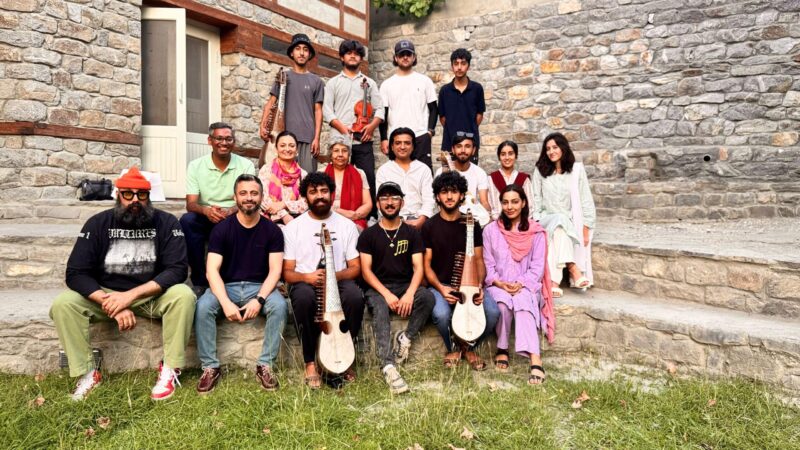
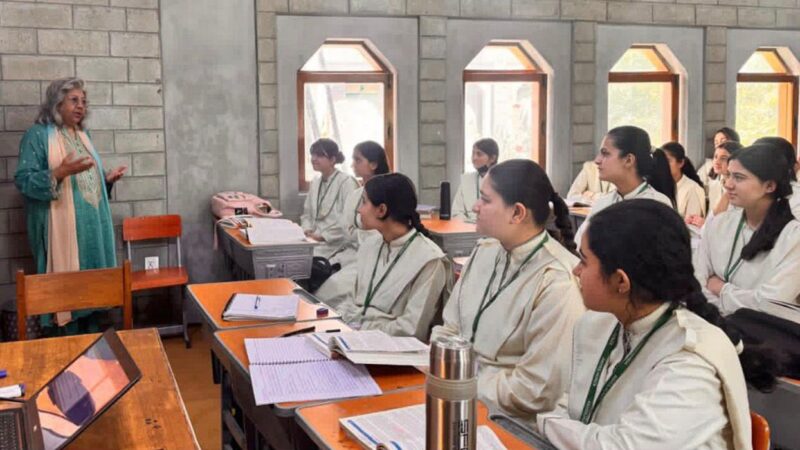
In Hunza, Professor Kassam visited Baltit Fort in Karimabad, restored in 1996 by AKTC, and the resting place of Mir Shah Salim Khan II in Gulmit, recognised as the first Ismaili in the region. In Gulmit, she received a freshly published copy of Walks in My Backyard by renowned mountaineer Col (Retd) Sher Khan. She also visited the community-run Al-Amyn Model School in Gulmit, the Leif Larsen Music School in Altit, and the Aga Khan Higher Secondary School for Girls in Karimabad. As an alumna of the Aga Khan Schools, the Director shared reflections on education, aspiration, and service with students and faculty.
On the return journey from Gojal to Karimabad, she paused along the shores of Attabad Lake, which she described as the ‘Lake of Tears’, formed in 2010 after a glacial lake outburst flood that submerged several villages and caused casualties during and after the disaster. In Altit, she received a jar of locally sourced organic honey from Air Commodore (Retd) Naunehal Shah, symbolising the warmth and resilience of the communities she met.
From the coastal plains of Sindh to the peaks of Gilgit-Baltistan, Professor Kassam’s visit reaffirmed IIS’s commitment to heritage preservation, collaboration, and knowledge-sharing. Traversing diverse terrain, the visit strengthened relationships with partners and offered firsthand insight into the region’s environmental vulnerabilities, linking to her academic interests in ecology, gender, and heritage.
This historic visit marks the first time an IIS Director has reached these regions of Pakistan and is expected to open new pathways for future work with communities and institutions across the country.