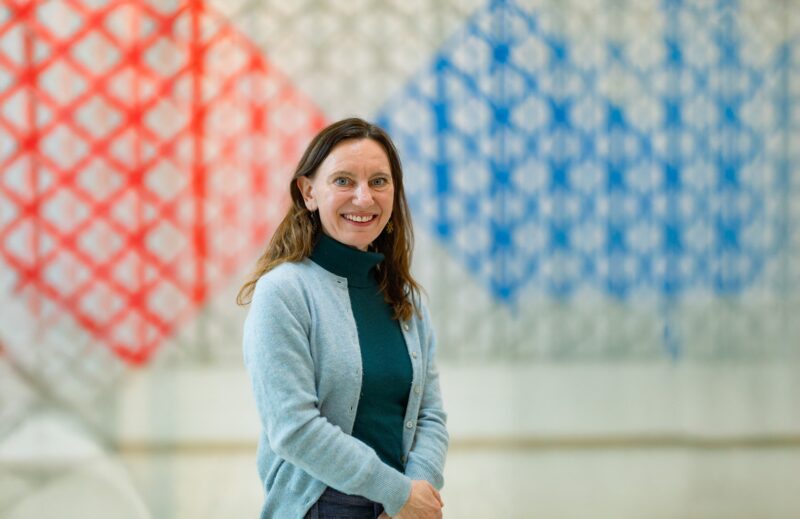
Dr Karen Bauer, Associate Professor in Quranic Studies at The Institute of Ismaili Studies (IIS), completed a lecture tour across the west coast of North America in November 2025. Her visit included a keynote lecture, a public lecture, and a workshop presentation in the United States and Canada. Across three events, she shared new research on the Qur’anMuslims believe that the Holy Qur’an contains divine revelations to the Prophet Muhammed received in Mecca and Medina over a period of 23 years in the early 7th century CE. More, gender, ethics, and moral reasoning with a variety of audiences. The tour reflects the Institute’ commitment to accessible, high-quality scholarship that speaks to diverse publics.
Understanding how the Qur’an spoke to the common people
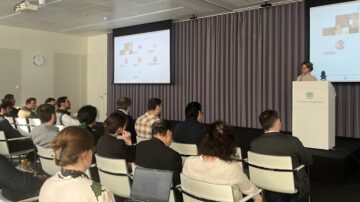
At the International Qur’anic Studies Association (IQSA) Annual Meeting 2025, held from 13 to 16 November on the Loyola Marymount University campus in Los Angeles, Dr Bauer delivered the keynote lecture, ‘How the Qur’an Spoke to the Common People’. She examined how the Qur’an addressed everyday listeners in seventh-century Arabia, many of whom were outside formal centres of learning. She explained how this context shaped the Qur’an’s structure, repetition, and layered messaging for audiences with different levels of knowledge. Her analysis showed how these layers offer moral guidance and deeper reflection depending on how the text is heard and interpreted.
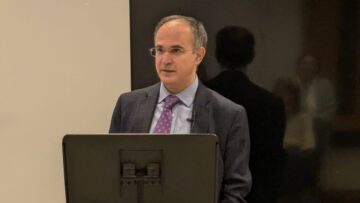
The keynote received strong engagement, and there was a response from Dr Saqib Hussain. Dr Bauer and Dr Hussain hope to publish the lecture and the response in the near future.
Exploring moral and spiritual hierarchy in the Qur’an
During her public lecture at the University of British Columbia on 19 November 2025, Dr Bauer introduced audiences to the Qur’an’s ideas on moral and spiritual hierarchy. She compared Qur’anic ethical concepts with those in Jane Austen’s Sense and Sensibility to make these ideas accessible to listeners with little prior exposure to the text.
She explained how in pre-modern and early modern times, it was common to view intellect, emotion, and moral character as deeply connected. In Qur’anic thought, intellectual insight links closely to empathy, humility, and ethical conduct. This contrasts with modern assumptions about brilliance divorced from moral responsibility.
Discussing modesty and feminist readings of the Qur’an
Dr Bauer also took part in a workshop on modesty and religion, hosted by the University of British Columbia’s philosophy department on 20th November 2025. Her presentation introduced key themes from feminist approaches to the Qur’an and summarised research from Women, Households and the Hereafter in the Qur’an: A Patronage of Piety.
She explained that modesty in the Qur’an is best understood as a moral and spiritual value rooted in humility rather than a strict set of gender-specific rules. She highlighted how the Qur’an’s norms were moderate within their late antique context, and how later interpretations often impose stricter expectations not grounded in the text. The workshop brought together participants from Islamic studies and philosophy to explore modesty as an ethical concept shared across several traditions.
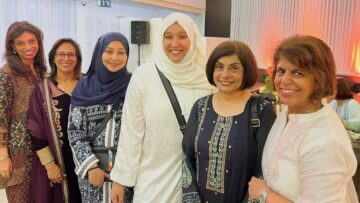
While in Los Angeles, Dr Bauer also spoke to a dinner gathering of IsmailisAdherents of a branch of Shi’i Islam that considers Ismail, the eldest son of the Shi’i Imam Jaʿfar al-Ṣādiq (d. 765), as his successor. from the Greater Los Angeles area. She shared with them her current research interests and its relevance to issues of contemporary relevance. She also discussed with the group the broader scope of the Institute’s research in the field of Qur’anic Studies.
Dr Bauer’s North American tour reflects the Institute’ commitment to sharing scholarship beyond conventional academic circles. Through her various talks, she helped broaden the understanding of Qur’anic interpretation, gender, ethics, and moral reasoning. Her engagements demonstrate how accessible, high-quality research can strengthen both academic discourse and the educational life of the global Ismaili community.