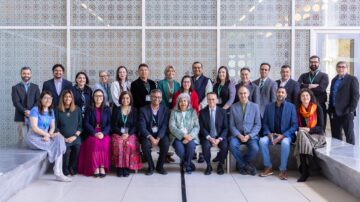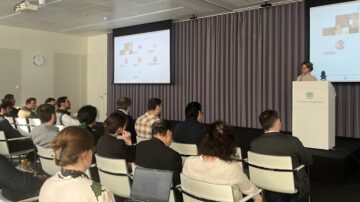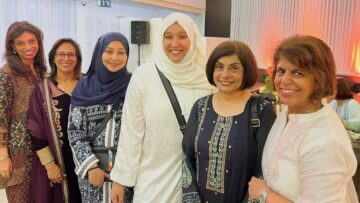

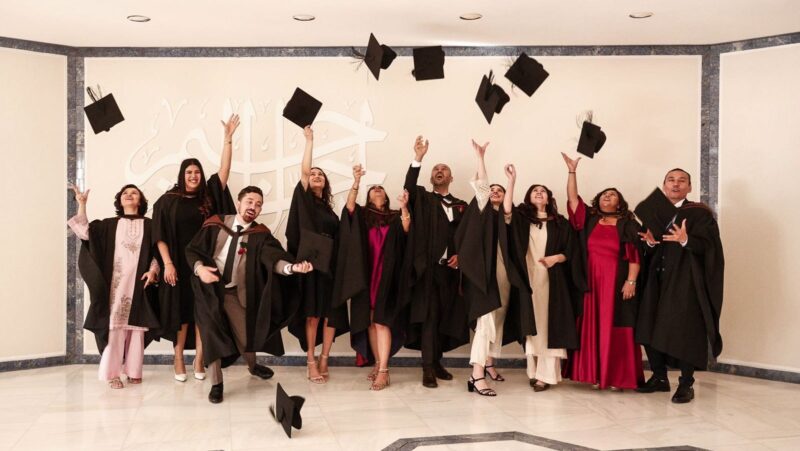
The Institute of Ismaili Studies (IIS) held a graduation ceremony at the Ismaili Centre, London, on 28 March 2026 to celebrate the achievements of the Class of 2026 from the Graduate Programme in Islamic Studies and Humanities (GPISH) and C-16 from the Secondary Teacher Education Programme (STEP). The ceremony brought together graduates, families, faculty, and guests to mark the culmination of years of study and the beginning of new journeys in scholarship, education, and service.
Opening reflections and messages
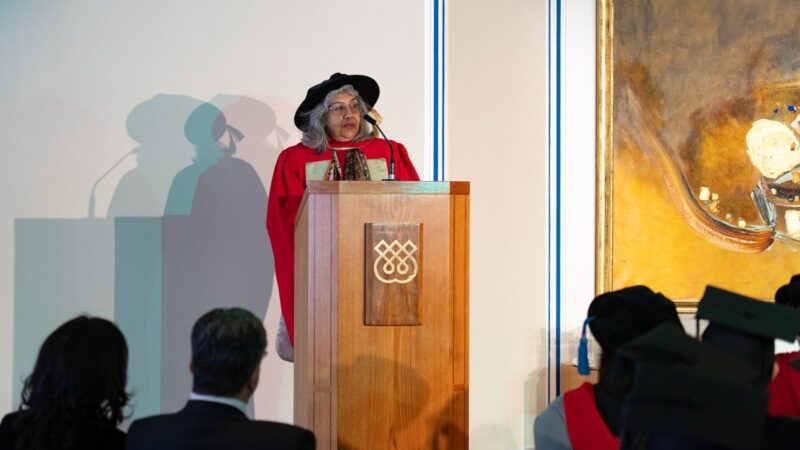
The proceedings opened with a recitation from the Holy Qur’anMuslims believe that the Holy Qur’an contains divine revelations to the Prophet Muhammed received in Mecca and Medina over a period of 23 years in the early 7th century CE. More, followed by a welcome address from the Director, Professor Zayn Kassam.
In her remarks, Professor Kassam underscored The Institute’s commitment to advancing the study of Muslim societies through rigorous scholarship and meaningful engagement with contemporary challenges. This theme resonated throughout the ceremony, as speakers reflected on the responsibility graduates carry as they move into the next stage of their academic and professional lives.
Delivering a congratulatory message, Dr James Caron of SOAS University of London reflected on the intellectual depth of the programmes and the importance of nuanced, critical approaches to the study of Islam. He emphasised that graduates leave not only with knowledge, but also with the capacity to challenge assumptions, foster understanding, and bridge divides in an increasingly complex world.
Sophie Kerslake of the UCL Institute of Education also addressed the gathering, describing graduation as a new beginning. Drawing inspiration from the Irish poet John O’Donohue, she spoke of the transition from student to “teacher-leader” and encouraged graduates to embrace the responsibilities and possibilities that come with leadership and pedagogy.
The commencement address was delivered by Professor Shahzad Bashir of the Aga Khan University Institute for the Study of Muslim Civilisations. In a thought-provoking reflection, he encouraged graduates to carry forward the habits of critical inquiry they had developed while remaining open to learning beyond the classroom.
Presentation of degrees and awards
A central highlight of the ceremony was the presentation of degrees. Graduates of the STEP cohort received the Master of Arts in Muslim Societies and Civilisations and the Postgraduate Diploma in Teaching and Reflective Practice, while GPISH graduates were awarded the Master of Arts in Islamic Studies and Humanities.
Academic excellence was also recognised through the Best Dissertation Prizes. Alina Charania received the award for the STEP programme, while the GPISH prize was jointly awarded to Anila Bano, Kiran, and Rubab Meraj for dissertations of exceptional merit.
Valedictory reflections
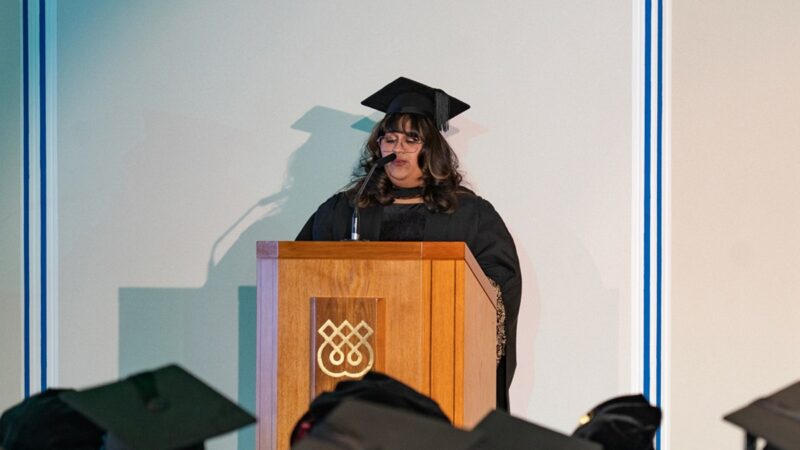
Nabila Esmail, STEP C16 Class of 2025
Valedictory addresses offered personal and collective reflections on the journey to graduation. Nabila Esmail, speaking on behalf of the STEP C16 Class of 2025, situated the class’s journey within a wider institutional and historical moment. Reflecting on the significance of the cohort’s time at The Institute, she noted:
One of the most defining chapters of that journey was the transition we experienced together. We may be one of the only cohorts to have begun our studies under one Imam and to conclude them under the guidance of another. That alone reminds us that our education is part of a living history.
She also reflected on the shared experience that shaped the cohort over the past two years, adding: If these two years have taught us anything, it is about the quiet, consistent work of listening deeply, asking better questions, and carrying knowledge with integrity, humility and purpose. We arrived here as individuals. We leave as a cohort shaped by one another’s stories, laughter, and care.

Sundas Fayyaz, GPISH Class of 2026
Sundas Fayyaz, valedictorian for the GPISH Class of 2026, addressed the gathering remotely and reflected on the shared journey of the past two years. In her remarks, she congratulated her peers on completing
“…this beautiful journey that we began two years ago with so many dreams, hopes, and aspirations”, adding that it proved “that late nights, endless readings, and countless cups of tea and coffee actually do eventually lead somewhere.”
Reflecting on the experience of studying at The Institute, she noted: ” My dear friends, this two-year programme has offered so much more than academic growth. It taught us how to embrace diversity, how to become independent in a foreign country far outside our comfort zones, how to engage with the local communities, and how to build relationships that could last a lifetime. Studying abroad means different things to different people. For some, it is about grades and academic success. For others, it is about exploring cultures and new places. But for me, this experience is about eleven people. My cohort mates, my family beyond family… this is not the end of our story. This is only the beginning of becoming what we were meant to be.”
Personal journeys
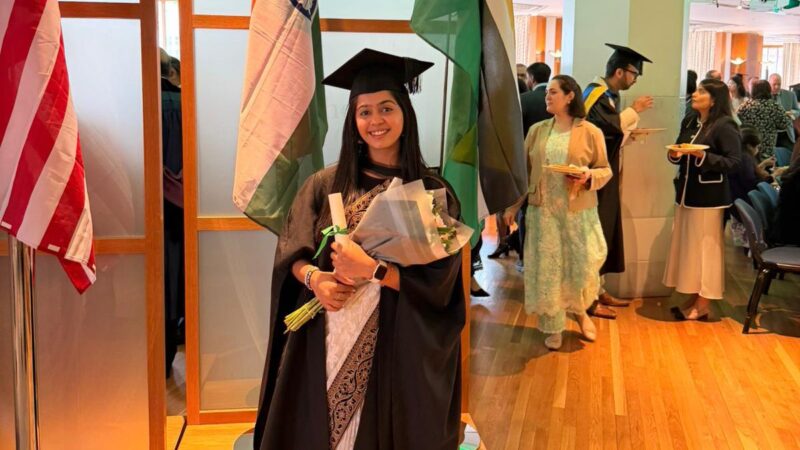
Sara Charania, STEP graduate, Mozambique
Reflecting on the significance of graduating as the first STEP student from Mozambique, Sara Charania shared her experience and message for future applicants:
It is an amazing feeling and it is very overwhelming. It is a big responsibility, and it feels good to be the first graduate of STEP from Mozambique and it is an honour to serve ITREB Mozambique.
We have so many students, we have the Aga KhanA title granted by the Shah of Persia to the then Ismaili Imam in 1818 and inherited by each of his successors to the Imamate. Academies, and it is a growing community. If you are applying from a context which is small and you are the first applicant, take the step – it is worth it. Everything is amazing, the faculty and staff here at IIS are supportive. It was a wonderful 2 years of experience I have had in STEP and Insha-Allah I get to serve in the community for many years to come.
Ahmad Nayyar, STEP graduate, Hunza Valley, Pakistan
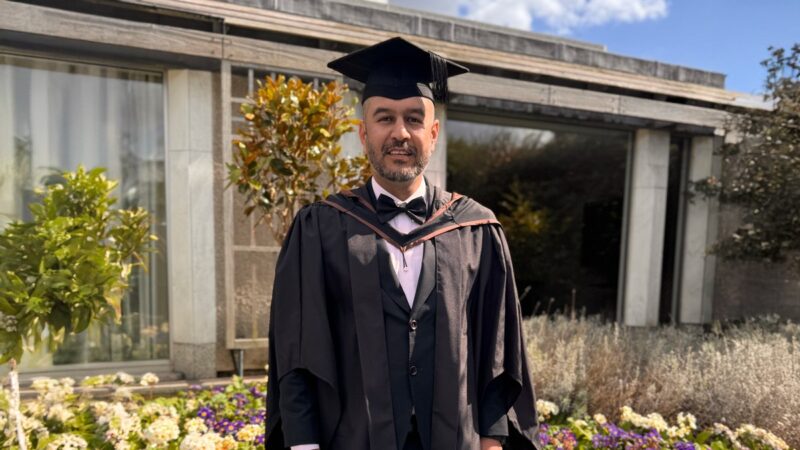
Ahmad Nayyar from Hunza Valley, Pakistan, reflects on his journey as a STEP graduate: I feel immensely proud to be part of Cohort 16 of the Secondary Teacher Education Programme at IIS. Over the past two years, it has been a wonderful journey.
When I look back and think of the journey I took from Pakistan to the UK, I find it truly transformative. During my time as a student, we engaged in critical discussions on faith, ritual and practice, philosophy, Qur’anic studies, and history, and this widened my horizons.
The UCL experience was inspiring, and in addition to teaching at mainstream schools in the UK, both experiences equipped me with unique skills and expertise. Learning is a lifelong journey, and I aspire to continue serving my community and to work towards making a difference through the dissemination of the skills and knowledge I gained during my STEP degree in my home region of the Hunza Valley, Pakistan.
Best Dissertation Award winners reflections
This is the first year that dissertation prizes have been awarded for GPISH and STEP.
The reflections below are from the recipients of the GPISH class of 2026 for the Best Dissertation Prize — Rubab Meraj, Kiran Rehmat and Anila Bano — whose work was recognised for exceptional academic merit.
Rubab Meraj, GPISH Best Dissertation Prize recipient
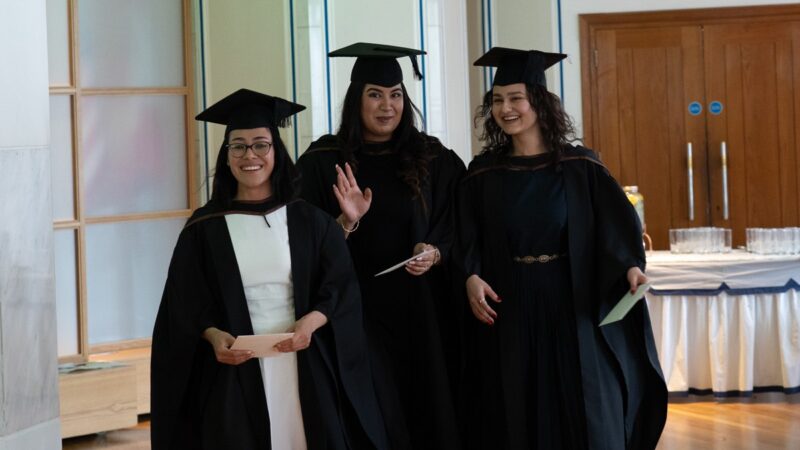
Reflecting on the dissertation journey, Rubab Meraj described it as an opportunity for deep intellectual and personal engagement:
The GPISH dissertation was an inspiring opportunity to deeply immerse in ideas governed by passion, through a critical academic lens with grounding in the human experience.
It was my ‘baby’, as said by my supervisor. The journey was a mixed bag of challenging preconceptions, late night introspections, discourse with peers and creative thinking. It taught me the importance of asserting our place in the production of knowledge, especially that which address our own lived realities in a postcolonial world.
Kiran Rehmat, GPISH Best Dissertation Prize recipient
Kiran Rehmat reflected on the programme as a period of both academic and personal transformation: Right after my undergrad,
GPISH offered me not only academic growth but also a period of real personal transformation, where I learned more about who I am and how I think. Through the program, I developed the ability to refine my ideas and approach problems with a more critical and structured mindset.
I was able to truly put my curiosity to the test. Learning alongside peers from diverse, multidisciplinary backgrounds broadened my perspective and enriched every discussion. Most importantly, the program grounded me in research ethics, which I now carry into my work in social care, where I evaluate health interventions through an ethical lens.
Anila Bano, GPISH Best Dissertation Prize recipient
Reflecting on the meaning of the award and the significance of her research, Anila Bano shared: Receiving this award feels deeply humbling, and it belongs as much to the people of Darkut as it does to me. I remain sincerely grateful to those who welcomed me into their homes with such generosity and trust, sharing stories shaped by sukoon (peace), pareshani (distress), and the quiet persistence of wahum in areas exposed to multiple hazards. Their words remind me that floods are not singular events, but lived and layered realities, reshaping homes, memories, and emotional worlds, held together in the enduring phrase ‘dewushumaan, sey churumbi’: we rebuild again and again.
Rooted in my interdisciplinary journey through the GPISH programme, and my earlier grounding in Psychology and Biology, I have tried to hold together the human and the environmental, the scientific and the lived. What emerged from my dissertation work was not a simple story of vulnerability or strength, but an interweaving of both.
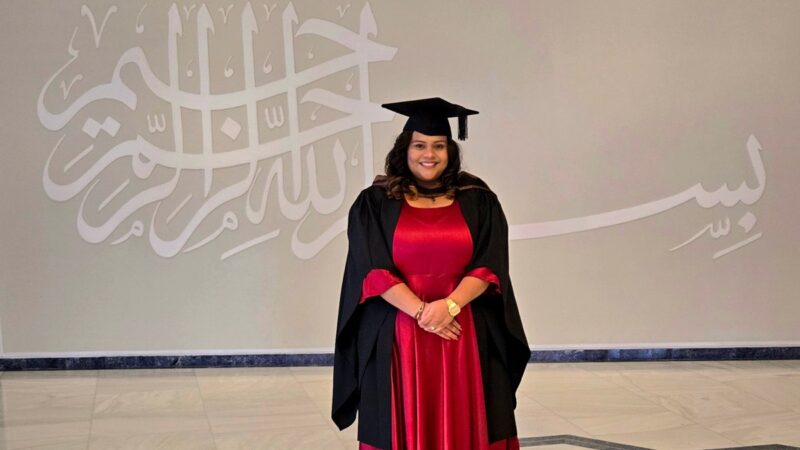
Alina Charania, STEP Best Dissertation Award recipient, India
Alina Rahim Charania from India who was awarded the best Dissertation award for STEP said that:
STEP has been a deeply transformative journey for me. It didn’t just shape me as an educator, but also as a learner, constantly questioning, reflecting, and growing.
The space encouraged me to embrace uncertainty, build meaningful connections, and encounter diversity and understand the true essence of teaching. I leave with not just skills, but a mindset that I know will stay with me for life.
A moment of celebration and new beginnings
The ceremony concluded with a standing ovation for all graduates, followed by a reception where graduates, their families, faculty, and guests continued the celebration.
As the STEP C-16 and GPISH Class of 2026 joins The Institute’s growing alumni community, the event marked not only the culmination of years of study, but also the beginning of new contributions to scholarship, education, and society.
The Institute extends its sincere thanks to Stefan Liszko, IIS Registrar, for serving as Master of Ceremonies with eloquence as well as wit and humour, the Student Services team, led by Kate Holt, the Office of Communications & Development, and the many volunteers from the Ismaili Centre and the student community whose dedication ensured the success of the ceremony.