For some 150 years (909–1050s), Sicily formed a part of the Fatimid empire. Initially a province of the Aghlabid emirate, Sicily fell to the FatimidsMajor Muslim dynasty of Ismaili caliphs in North Africa (from 909) and later in Egypt (973–1171) More upon their conquest of IfriqiyaMediaeval Muslim name for modern-day Tunisia; also the area where the Fatimids founded their state in the early tenth century., and they fought hard to consolidate power on the island, leaving a lasting footprint. It was then ruled through governors, most prominently the Kalbid family, until the political turmoil of the mid-eleventh century, which paved the way for the Norman conquest. Although political dependence on the Fatimids ended, economic and cultural ties – and, not least, the Muslim and Jewish presence in Sicily – persisted under Norman rule, in some respects even intensifying. Yet the role of the Fatimids in the history of Muslim Sicily – itself a marginalised field of study – has remained obscure.
The scarcity of written sources and archaeological remains from the Fatimid period has long posed a major challenge for historians of Muslim Sicily. While there has been no monograph dedicated exclusively to Fatimid Sicily, it remains a relatively rare topic even within the thematic chapters of recent Fatimid-focused collections. This conference invites scholars working in the field to address this gap in light of newly published sources and documents, recently uncovered materials pertaining to Fatimid history, and innovative research approaches that employ digital technologies and other emerging methodologies.
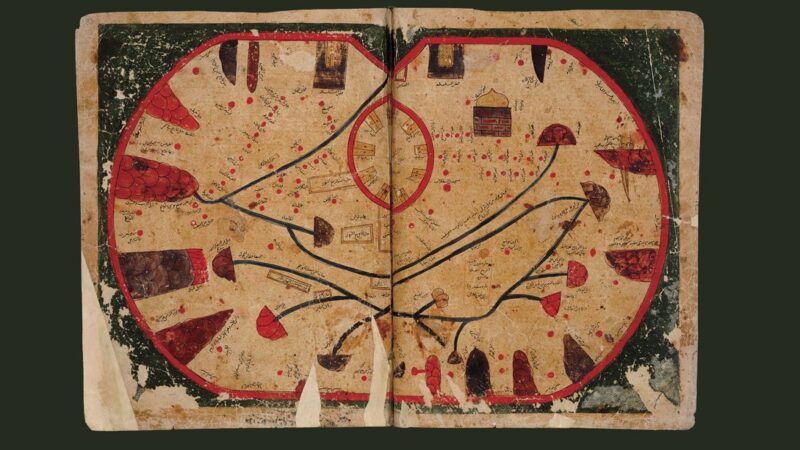
Much of the recent scholarship on Muslim Sicily has been shaped by, and remains in conversation with, the pioneering work of the 19th‑century Sicilian Arabist (and Italian patriot) Michele Amari (1806-1889), especially his Storia dei musulmani di Sicilia (1854–1872) and Biblioteca arabo‑sicula (1857–1889). One of Amari’s most enduring legacies has been the emphasis on the autonomy and independence of the island – an interpretation arising largely from the political concerns of the time rather than from available evidence. By contrast, the edition of Fatimid texts not available to Amari, such as the Kitāb al‑Majālis waʾl‑musāyarāt and Sīrat al‑Ustādh Jawdhar, offer rare internal perspectives on the political and religious dimensions of Fatimid governance in Sicily. Other recently published sources, such as the Gharāʾib al‑funūn (The Book of Curosities, ed. E. Savage-Smith and Y. Rapoport), a pro-Fatimid work concerned with maritime routes and geographical data containing unique maps of Sicily and the Mediterranean, as well as an expanding corpus of Cairo Geniza documents, present Sicily as an integral part of the Fatimid Mediterranean. These sources are further complemented by archaeological findings and new studies on trade and commerce, agriculture, law and administration, numismatics, epigraphy, art and architecture, and literature from the Fatimid period.
Building on these important advances in recent decades, we invite greater focus on Fatimid Sicily, its relations and interdependence with neighbouring regions across the sea, through a multidisciplinary lens.
Conference Objectives
The conference aims to make contributions in the following areas:
- The historiography of Fatimid rule in Sicily
To define and reexamine the ‘Fatimid period’ – from the Fatimid takeover of Sicily in 909 to the disintegration of the Kalbid polity – within the broader history of ‘Arab-Norman’ or ‘Muslim’ Sicily. Currently, scholars suggest varying dates for the end of Fatimid rule in Sicily, as short as 909–944, or 909–969, or longer to include the rule of the Kalbid viceroys (909-1052). This invites a rereading and reassessing of the established narrative, considering the newly edited texts and material evidence, including materials from the better-documented Norman period. - The memory of Muslim rule in Sicily
To probe oral traditions, collective remembrance, and material culture in order to investigate the memory tradition around Fatimid rule in Sicily, which remains obscure, often reduced to caricatured or folkloristic narratives. The relationship between the historiographical tradition and formal narratives on the one hand, and Sicilian memory culture, on the other, remains an underexplored field despite the fact that Norman borrowing from the Fatimids – such as the adoption of the Fatimid language of power – has received scholarly attention thanks to surviving material evidence. Addressing this theme will also open up the way for examining the long-term legacy of Fatimid rule in Sicily, both in subsequent centuries and its contemporary resonances.
Themes
Proposed papers can address any aspect of Fatimid rule in Sicily, the functioning of state and bureaucracy, trade networks, diplomacy and war, symbols and language of Fatimid power, literature, religion, and, in particular, the Ismaʿili Shiʿism and Ismaʿili followers of the Fatimids in connection with Sicily. Particular attention will be paid to the nature of Fatimid rule in Sicily:
- How did the nature of the administration and taxation of the island evolve during the Fatimid period?
- What is ‘Fatimid’ about Fatimid Sicily? What aspects of Fatimid rule, such as religion, ideology, and material culture, were reproduced in Sicily?
- The ‘Arab-Muslim’ facet of Norman rule is traceable to Fatimid Cairo. Did Ifriqiya or Egypt play a similar role for Fatimid Sicily?
- What role did religious affiliation and clan politics play in Sicily under the Fatimid rule?
- What was the nature of the relationship between the Kalbid dynasty and the Fatimid courts in Ifriqiya and Egypt?
Papers can be proposed under themes including, but not limited to:
- Historiography of Fatimid Sicily
- Continuities and ruptures
- Administration of the state
- Fiscal rule, coinage, and taxation
- Cosmopolitanism, social groups and belonging
- Documentary sources and manuscripts from Sicily
- Religious culture in Sicily under Fatimid rule
- Ismaʿili daʿwaLit. ‘summons’, ‘mission’ or invitation to Islam. Amongst Shi’i Muslims, it was the invitation to adopt the cause of the Imamat. It also refers more specifically to the hierarchy of… in Sicily
- Jews and Christians in Fatimid Sicily
- Scholarly culture, religious sciences, and learning
- Opposition to Fatimid rule in Sicily
- Fatimid culture in Norman Sicily
- Relations between Sicily, mainland Italy, Ifriqiya, and Egypt
- Military campaigns, war and peace, rebellions
- Material culture, influence and inspirations
- Memory and folklore related to Fatimid rule
- Linguistic shifts and exchanges over time
- Devotional culture
Submission of abstracts
- Abstracts: 200-300 words in English; Brief Bio: 100-200 words
- Deadline for the submissions: 15 April 2026
- Notification of acceptance will be sent by 25 April 2026
Abstracts should be submitted using the form below. For other inquiries, please do not hesitate to contact us via email: SicilyConference@iis.ac.uk
Conference proceedings will be published in the Shi‘i Heritage Series (SHS) of The Institute of Ismaili Studies.
Conference information
Dates: 19-20 October 2026
Location: The Aga KhanA title granted by the Shah of Persia to the then Ismaili Imam in 1818 and inherited by each of his successors to the Imamate. Centre, 10 Handyside Street, London N1C 4DN, United Kingdom and online.