On International Women’s Day, the Oral History Project (OHP) of The Institute of Ismaili Studies (IIS) reflects on the enduring resilience of women whose lives have sustained families, nurtured communities, and preserved faith across generations. Their stories reveal how households are built not only through stability but through perseverance in times of uncertainty; how care, labour, and moral courage quietly shape social worlds; and how women’s everyday acts of endurance become the foundations upon which communities survive and renew themselves.
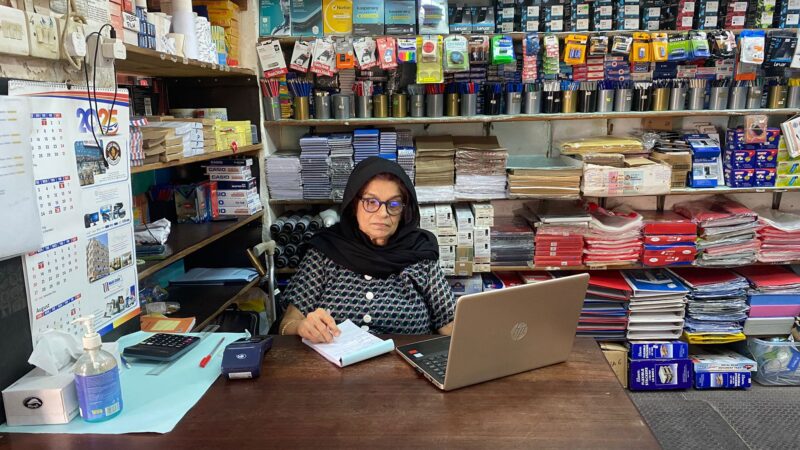
It is within this wider history of strength, struggle, and continuity that the life story of Naseem Mohammed Bhaloo is situated, offering a deeply personal window into the lived experiences through which such resilience takes form.
On 20th October 2024, in her home in Zanzibar, Naseem Mohammed Bhaloo sat down to record her life story for the IIS Oral History Project. The interview was conducted by Karim Ratansi, an octogenarian alumnus of The Institute’s Waezeen and Teacher Training Programme, a former community leader and a lifelong volunteer who has served Ismaili community institutions in Tanzania. Conducted in Kutchi – primarily an oral Indo-Aryan language spoken in Kutch (Katchchh), Gujarat, and among diaspora communities – their conversation reflects the intergenerational ethos of the oral history initiative. More than an individual biography, the interview preserves the lived experience of a generation of Ismaili women who navigated political upheavals, dispossession, migration, faith, and enterprise with remarkable composure.
Born on 3rd July 1952 at the Aga KhanA title granted by the Shah of Persia to the then Ismaili Imam in 1818 and inherited by each of his successors to the Imamate. Maternity Home in Mkunazini in Zanzibar, Naseem grew up in Shangani in a large household with ten siblings. Her father, originally from Beraja in Kutch, had built modest prosperity through trade before the political upheavals of the 1960s. Yet, the comfort of childhood would soon give way to uncertainty.
Political Change, Refuge, and the Jamatkhana
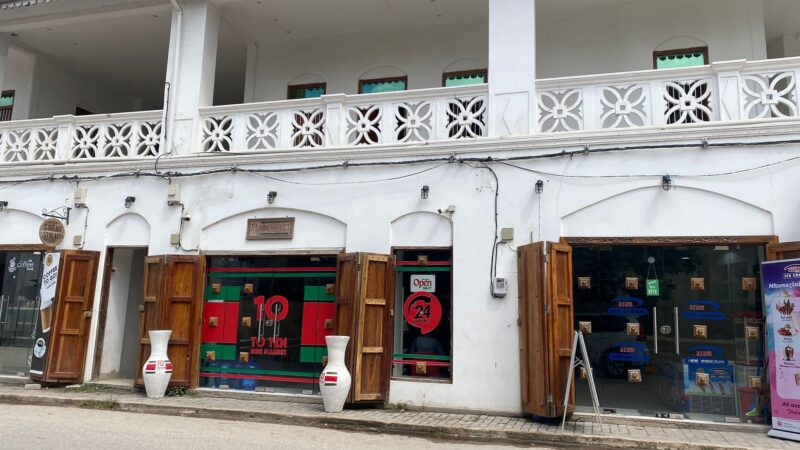
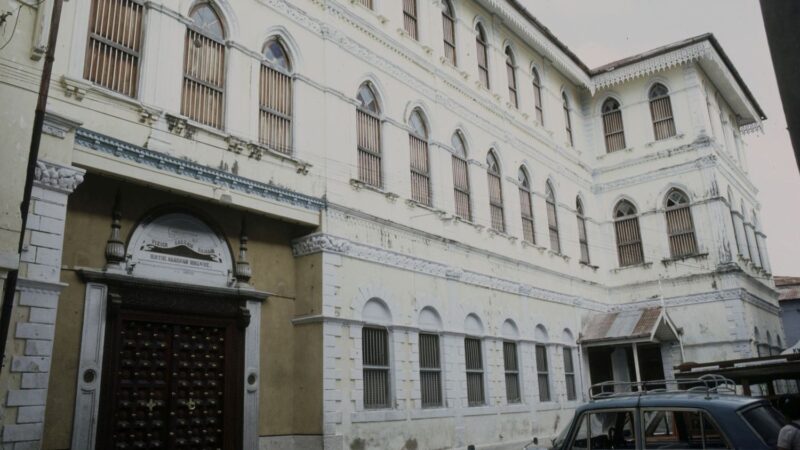
The political changes in Zanzibar in the early 1960s marked a decisive rupture. Naseem recalls the community taking shelter in the Ismaili Jamatkhana, which became both a sanctuary and a survival space. With limited privacy, scarce sanitation, and fear in the air, families slept on floors and relied on shared rations. A local merchant opened his food stocks so that the IsmailisAdherents of a branch of Shi’i Islam that considers Ismail, the eldest son of the Shi’i Imam Jaʿfar al-Ṣādiq (d. 765), as his successor. could be fed during confinement.
Everything had been taken away from us…You get one kilo of rice, one kilo of flour and one kilo of sugar, for the whole family for a week, no potatoes, no bread, no soap.
Naseem’s recollections carefully document how religious practice continued even under such constraints. Congregational prayers were maintained, though with minimal resources and no ceremonial feasting. The Jamatkhana functioned not merely as a place of worship but as a social institution of endurance. For women and girls in particular, it was also a site of protection. Naseem’s father insisted that his unmarried daughters remain there for safety.
Interrupted Education, Assumed Responsibility
Naseem’s education at the Aga Khan schools was cut short in Form Three. When family finances collapsed, her father withdrew her from school so that she could earn an income. At just fifteen years old, she began teaching at the Aga Khan Nursery School in 1967. What began as an economic necessity became a vocation.
I was really scared… if I did not do well, I would have to go back to school… So I kept trying and trying.
She taught for eleven years at the nursery level and later fourteen years in a government school, adapting to new curricula and languages. During a school inspection, without formal teacher training, she impressed inspectors with her preparation and honesty. They said that my work was very good, everything was perfect. Her testimony reveals how women’s educational trajectories were often shaped by family crisis, yet also how these same constraints forged competence, resilience, and authority.
From Classroom to Commerce
In the mid-1980s, with encouragement from community leadership, the family entered the stationery business. When supervision proved essential, Naseem left teaching and eventually resigned after decades of service.
So, I began my life as a shopkeeper.
Her daily routine combined childcare, cooking, teaching support, business management, and evening attendance at Jamatkhana, often on foot with her children. The shop later evolved into a family enterprise, and her sons expanded into printing and tourism ventures. Profits from these ventures supported widows, orphans, and students in need, reflecting an ethic of reciprocal generosity embedded in community life.
Care, Loss, and Steadfastness
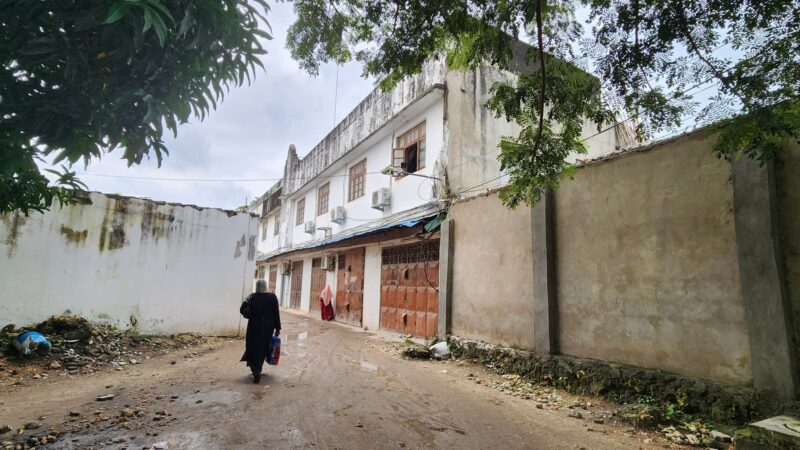
One of the most poignant themes in Naseem’s life story is the repeated proximity to death. She recounts holding her grandmother as she passed away, caring for her father in his final moments, keeping vigil for her sister, and, most recently, losing her husband in June 2025.
How I did all that, I still can’t figure it out.
Such moments are narrated without melodrama. They reflect acceptance grounded in faith. Even after returning exhausted from HajjThe word Hajj usually refers to the annual pilgrimage by Muslims to the Kaʿba in Mecca, also called the Great Pilgrimage, in contrast to the ʿUmra, the Lesser Pilgrimage. More, undertaken shortly after knee surgery, she attended Jamatkhana the same evening for commemoration of ‘Id al-Ghadir.
Looking Forward
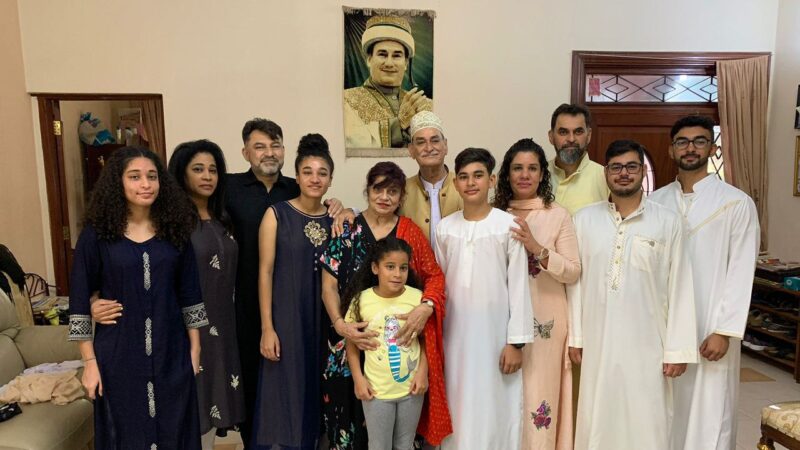
Naseem expresses concern about the future of the small Zanzibari Ismaili community, now numbering fewer than 100 members. She worries about religious continuity amid changing social conditions, and her reflections remind us that resilience does not erase uncertainty; it coexists with it.
Yet her life stands as a testament to women’s often unrecorded leadership in sustaining family, faith, and economy. From ration queues in politically turbulent times to board-level directorship, from adolescent teacher to matriarchal entrepreneur, her journey exemplifies quiet authority shaped by service.
On International Women’s Day, her story invites us to reconsider what triumph looks like. It is found not only in public recognition but in steadfast presence, at the school desk, behind the shop counter, beside a hospital bed, and in an evening walk to a Jamatkhana.
Through the IIS Oral History Project, lives such as that of Naseem Mohammed Bhaloo are preserved from lived memory into the archival record, ensuring that the resilience and contributions of Ismaili women like her survive in the community’s collective historical consciousness.