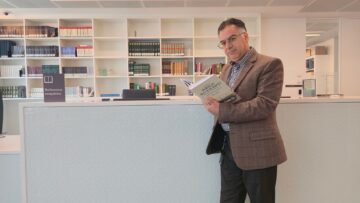
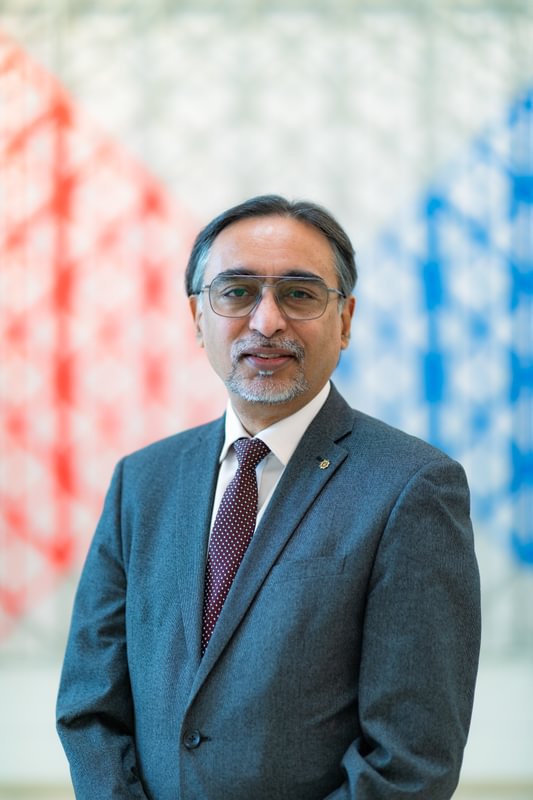
The renowned Hindustani classical vocalist Pandit Sandip Bhattacharjee visited the Aga KhanA title granted by the Shah of Persia to the then Ismaili Imam in 1818 and inherited by each of his successors to the Imamate. Centre at the invitation of IIS’ South Asian Studies (SAS) Unit, on 20 April 2026, as part of its efforts towards greater institutional cooperation and collaboration. Pandit Sandip is regarded as one of the most outstanding contemporary vocalists of the Kirānā gharānā (any of the various specialist schools or methods of classical music or dance) tradition. He was welcomed by Professor Zayn Kassam, IIS Director, and Hussain Jasani, Head of South Asian Studies.
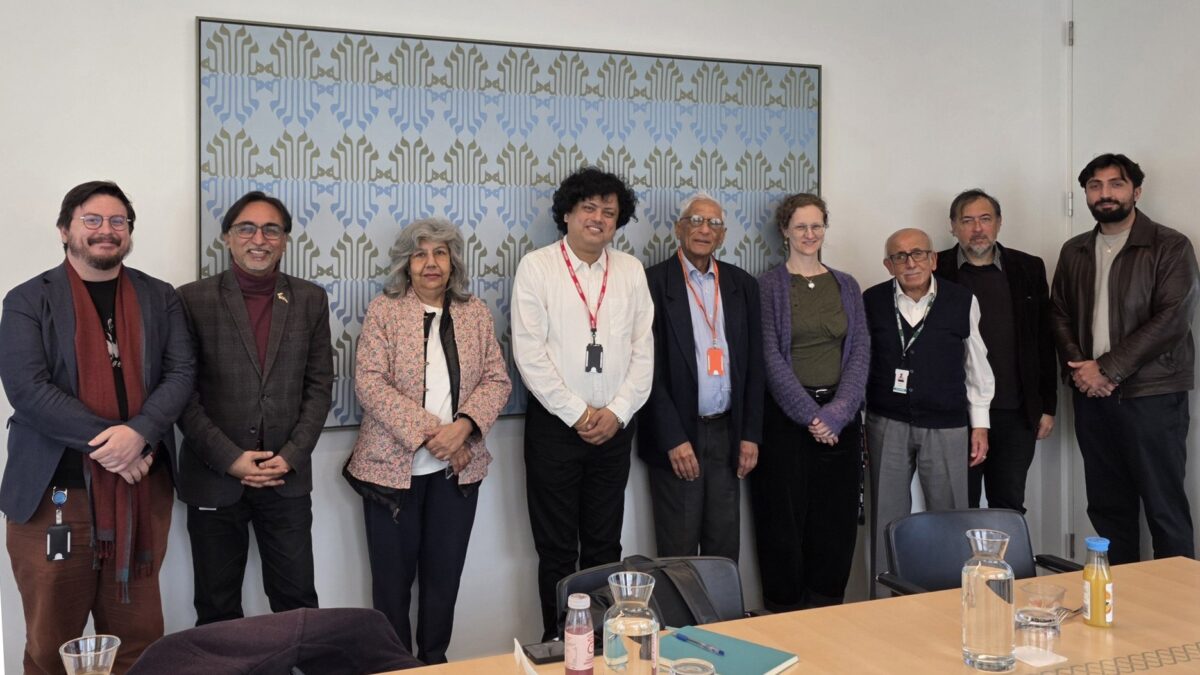
Sandipji was introduced to the gathering by Hussain Jasani, who also welcomed him and the attendees. He highlighted SAS’ commitment to increasing awareness of Hindustani music, especially in the context of its mandate to research the musicology of ginānA Sanskrit word meaning knowledge. In particular, a poetic composition in an Indian language More literature.
During his visit, Pandit Bhattacharjee met IIS staff members interested in Hindustani classical music and representatives of the Association for the Study of Ginans. He shared reflections on musical training, performance traditions, and the enduring legacy of the guru-shishya paramparā (a traditional system of expert-disciple apprenticeship) of traditional musical apprenticeship.
Sandipji also sang a number of compositions highlighting Hindustani rāgas, including those associated with different times of day. At the request of one of the attendees, he also performed malhār (a seasonal rāga associated with the monsoon) and mālkauns (a serious, meditative and melancholy rāga), highlighting the difference between the two.
Sandipji’s visit offered a valuable opportunity for cultural and intellectual exchange, reflecting IIS’ continued engagement with South Asia’s rich artistic and scholarly traditions, specifically its efforts to situate gināns and the Satpanth Ismaili tradition within their broader contexts. SAS also explored the possibility of a select number of IIS staff and students having the opportunity to learn from, and be mentored by, Pandit Bhattacharjee.
About Pandit Sandip Bhattacharjee
Born into a family with deep musical roots, Sandipji was initiated into music at the age of four by his mother, Shrimati Krishna Bhattacharjee, and later continued his tuition under Shrimati Amita Dasgupta. He then received intensive training under the guidance of Ustad Mashkoor Ali Khan and Ustad Mubarak Ali Khan, sons and disciples of the legendary sārangī maestro Padmashri Ustad Shakoor Khan. It was within this traditional pedagogical system, known as the guru-shishya paramparā, that his artistry was nurtured and refined. Belonging to the illustrious Kirānā gharānā tradition of Hindustani classical music, Pandit Sandip is widely recognised for his mastery of khayāl singing, as well as semi-classical forms including thumri, bhajan and ghazal.
Sandipji has performed widely across India and internationally, including in the United States and Europe. His virtuosity, particularly in tāns and sargams, has earned admiration from audiences and fellow musicians alike. Alongside his career as a performer, Pandit Sandip is deeply committed to teaching and mentoring students of Indian classical music. He is the founder and Director of Swar Darbar, an institution dedicated to preserving and advancing the exquisite vocal artistry of Hindustani classical music. He has also served for many years as a faculty member at the American Academy of Indian Classical Music in New York.