
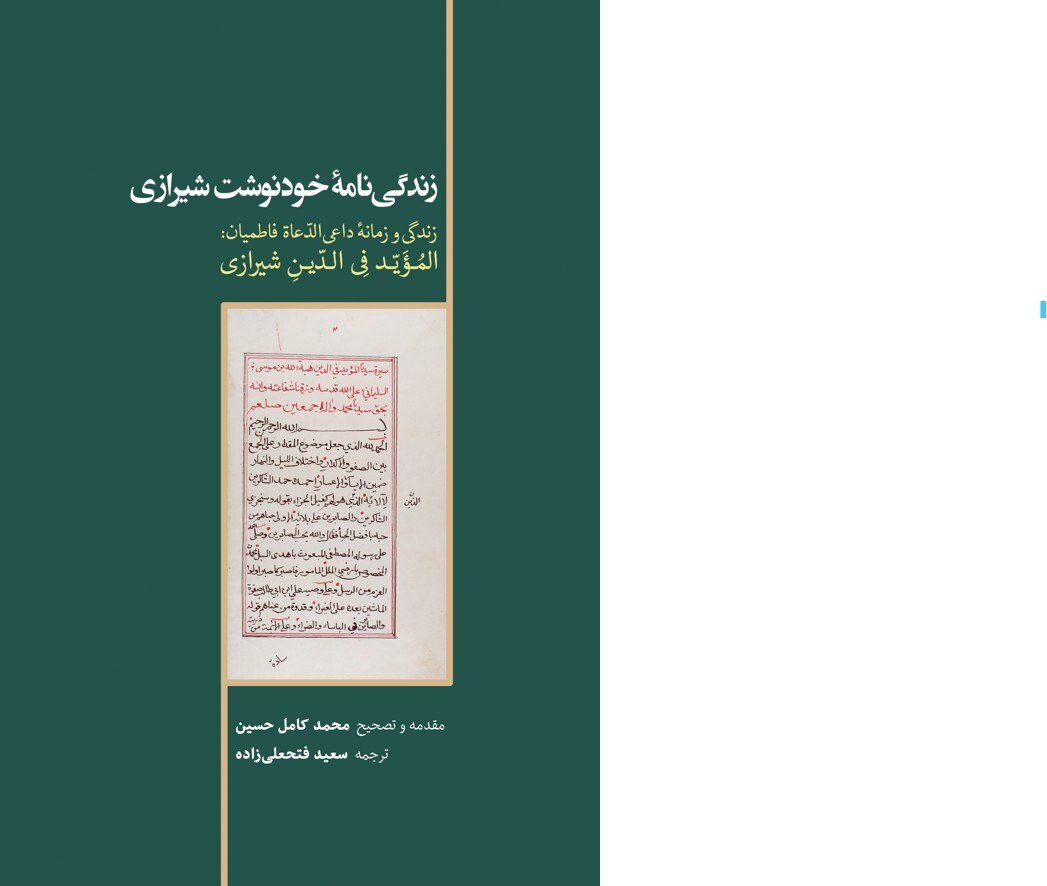
The book of al-Sīra al-Muʾayyidiyya is far more than an ordinary autobiography; it is a unique document and a valuable narrative from the turbulent Islamic history of the 5th/11th century. This work is the autobiography of one of the most distinguished intellectual and political figures of the Islamic world, Hibat Allāh b. Mūsā al-Shīrāzī (known as al-Muʾayyad fī’l-Dīn al-Shīrāzī), a man who originated in the region of Fārs and went on to attain the highest religious office in the Ismaili daʿwaLit. ‘summons’, ‘mission’ or invitation to Islam. Amongst Shi’i Muslims, it was the invitation to adopt the cause of the Imamat. It also refers more specifically to the hierarchy of… organisation – the position of the dāʿī al-duʿātA rank in the Fatimid Ismaili daʿwa for ‘chief dāʿī’. (chief dāʿīLit. ‘summoner,’ a term for missionary amongst various Muslim communities, especially used among the Ismailis before and during the Fatimid period as well as in the Alamut period of Ismaili…) in Fatimid Egypt.
The autobiography recounts al-Muʾayyad’s perilous journey: from his secretive and daring activities in the court of the Daylamite Buyid rulers of Shiraz and his escape from persecution, to his encounters with the complex intrigues of the Fatimid court in Egypt, and finally to his key role in organising a military revolt in Iraq against the Saljuqs and on behalf of the FatimidsMajor Muslim dynasty of Ismaili caliphs in North Africa (from 909) and later in Egypt (973–1171) More, which culminated in the conquest of Baghdad and the temporary overthrow of the Abbasid Caliphate.
The autobiography, originally edited by Mohammad Kamel Hossein in 1949, has been translated into Persian by Saeid Fathalizadeh. The Persian text is an effort to recreate the voice of al-Muʾayyad fī’l-Dīn in a style appropriate to his era, evoking the flavour of classical Persian prose for the modern reader. His autobiography will be of interest appeal to anyone interested in the history of Iran, the Fatimid Caliphate, and the Ismaili Muslims.