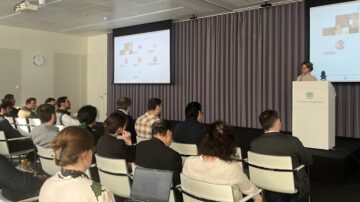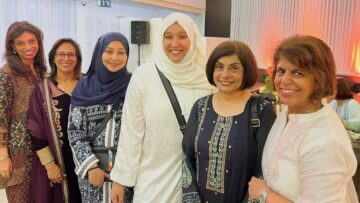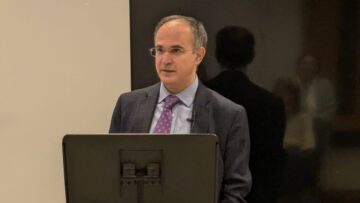

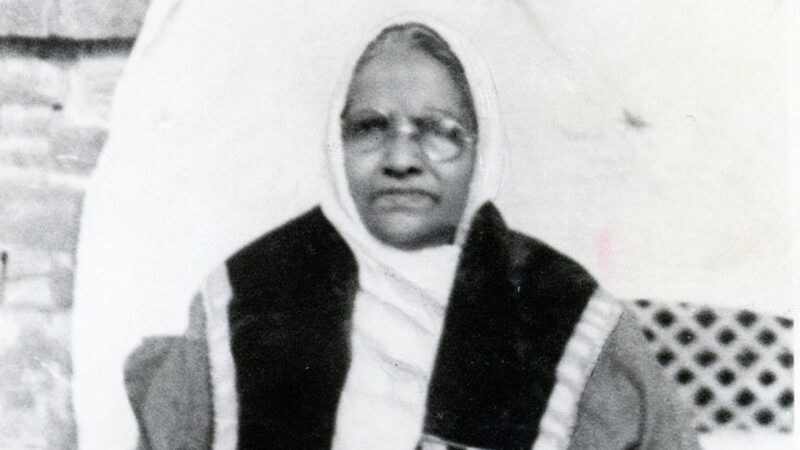
Women’s contributions to community life, the patient work of teaching, organising, and building institutions, often survive more in family memory than in formal historical records. Recognising this gap, the IIS Oral History Project (OHP) strategically focuses on women as a strategic area, consciously seeking to document their voices, experiences, and leadership across global Ismaili communities. By recording life stories that have historically remained marginal to written archives, the project works to ensure that women’s roles in shaping religious, social, and educational life are preserved for future generations. One such account centres on Vazir Saheba Hajjan Ghulam Fatimah of Gujranwala, Pakistan, an educator whose work expanded access to schooling for girls in early twentieth-century Punjab, and whose legacy continues to this day.
A Life Story Preserved: The Memories of Dr Azizuddin Shaikh
In December 2024, the project recorded a life-story interview for the IIS OHP at the Aga KhanA title granted by the Shah of Persia to the then Ismaili Imam in 1818 and inherited by each of his successors to the Imamate. Centre in London with Dr Azizuddin Shaikh, a respected academic and educator. As part of his wider recollections, Azizuddin spoke at length about the woman he and many in his family called Buwa (phuppi): Vazir Saheba Ghulam Fatimah. His memories trace how one woman’s moral clarity and perseverance translated into an enduring educational institution. After losing his mother shortly after birth, Azizuddin was raised by his adoptive parents, Aitmadi Mohammad Ali and Alijahbanoo Inayet Begum, in a home shared with Vazir Saheba Ghulam Fatimah, who became a grandmother figure in his upbringing.
Origins and Early Transformations
Born on 17 July 1889 into a Hindu household in Amritsar, Vazir Saheba Hajjan Ghulam Fatimah was known in her early life as Sobha Devi and had two younger brothers. Family memory situates her upbringing within a social and religious landscape marked by fluid affiliations and gradual transformations, through which she later came to be known as Ghulam Fatimah. It situates her upbringing within this layered context, which later found expression in an open identification with the Ismaili Muslim community and, in time, the family’s relocation to Gujranwala in the present-day Punjab province of Pakistan. Azizuddin recalls a household in which learning was understood not simply as personal advancement but as a responsibility toward others.
Since I became aware of my surroundings and my family, I found Ghulam Fatimah engrossed in schoolwork. And all that is written here was told to me by Ghulam Fatimah herself and others. So, it’s not fiction.
The Socio-Religious Context of Punjab
In the period recalled by family memory, religious life in Punjab was shaped by careful boundaries between communal practice and the wider public sphere. Expressions of faith were often contained within recognised communal spaces rather than articulated publicly, reflecting social norms and historical circumstances of the time. Within this context, education gradually emerged as an essential avenue for sustaining and expressing communal values, particularly for women, alongside evolving forms of organisation and participation encouraged by the 48th Ismaili Imam, His Highness Sir Sultan Mahomed Shah Aga Khan III (1877 – 1957).
A Turning Point: From Mission School to Community Initiative
Early hardship marked her own life. Married as a child, as was common at the time, she did not leave her parents’ home for rukhsati, the customary transition in which a bride formally moves to her husband’s household, until she had reached an appropriate age. Azizuddin recounts that she later learned of her husband’s death and became a widow while still young. She did not remarry. Instead, she pursued education, completing what was then known as an Anglo-Vernacular degree, and began teaching at a Christian mission school in Gujranwala.
It was here that a single incident altered the course of her life. Azizuddin recalls that one of her Muslim students converted to Christianity, an outcome he recalls in the context of the absence of a Muslim school for girls at the time.
While she was teaching there, a Muslim girl became a Christian because of Christian teachings. At the time, there was no Muslim school for girls in the area. She felt this was not right, that there should be a Muslim school for girls.
The Courtyard School: Teaching on Rugs
Together with another woman, Saleha BibiA word of East Turkish origin which means old mother or a grandmother. More, she began teaching in the most modest of settings: a family courtyard. They laid rugs (durries) on the floor as they had little furniture.
They decided that they would start a school. They used the house where our father was living, which had a central courtyard, as many homes did. Rugs were laid out on the floor, and there was barely a single chair.
The founders went door to door across Gujranwala, encouraging families to send their daughters to their school. There were no fees and no salaries; the priority was to create a space for learning. Funds were collected at the same time for school essentials from parents and on special occasions; for example, people donated fitrana (also known as zakat al-fitr, a charitable gift) on ‘Id al-Fitr and sacrificial animals’ hides on ‘Id al-Adha that were sold for cash.
There were no fees, no salaries. It was just rugs … we do not want anything, we do not want any salary. It’s our baby, and we want it to grow.
Institutional Growth and Collective Ownership
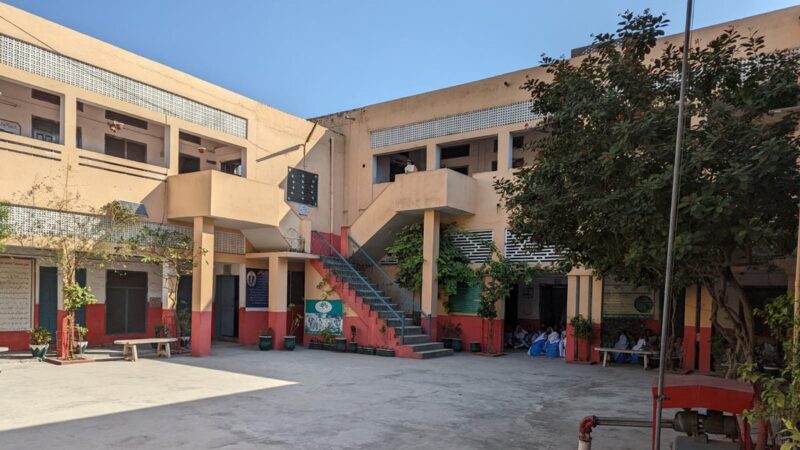
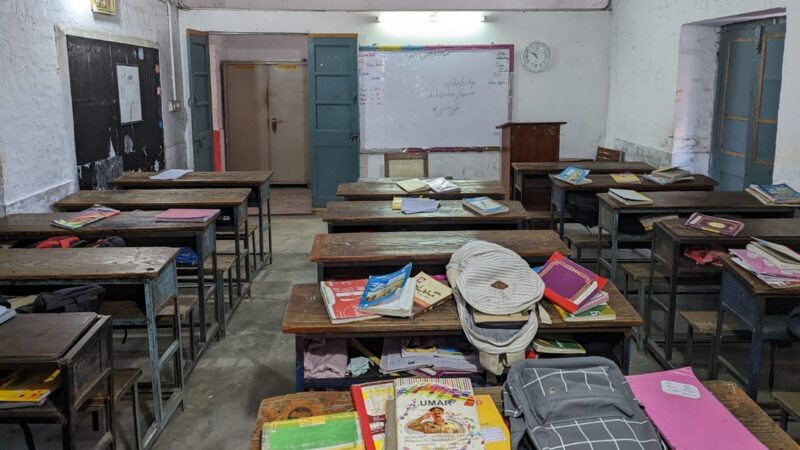
As enrolment increased, the school moved into rented premises. New needs emerged, like rent, supplies, and additional teachers, and families contributed in whatever way they could. Over time, modest fees were introduced to ensure sustainability while remaining accessible. A significant turning point came when a businessman, Chaudhry Fateh Din, donated land and supported the construction of permanent classrooms. What followed was equally substantial: Vazir Saheba did not want the school’s assets tied to personal ownership.
This piece of land will not be in either of their names. They didn’t want anything from it, no ownership, no salary, nothing at all. For them, this was never about personal gain. It was something they felt responsible for, and all they wanted was to see it grow.
Instead, the founders registered the land in the name of a women-led organisation they had established: Anjuman-i Khawateen-i Islam (Association of Muslim Women). The school became known as the Chaudhry Fateh Din Girls’ Islamia High School. Over time, the institution gained official recognition from the Punjab government and received a grant. It expanded into branches and continued operating as a high school well into Azizuddin’s lifetime.
A Life of Service and Devotion
Despite her leadership role, Azizuddin remembers Vazir Saheba as personally austere and disciplined.
She was a very simple lady. Although she controlled one high school and two branches, it didn’t really show. Very firm, but very kind.
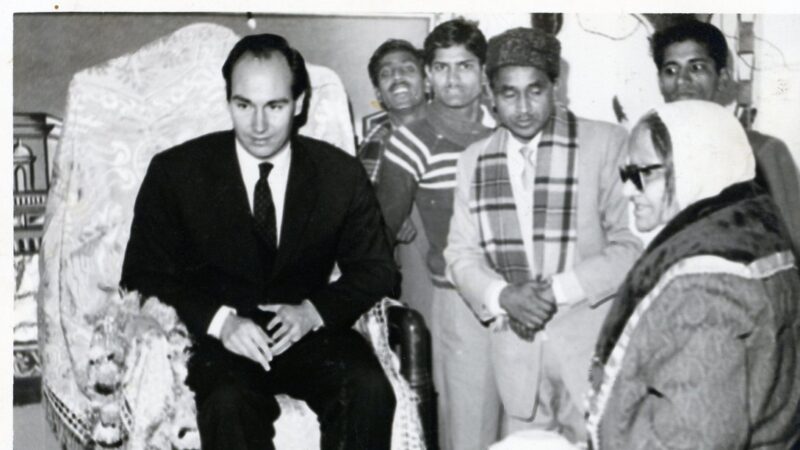
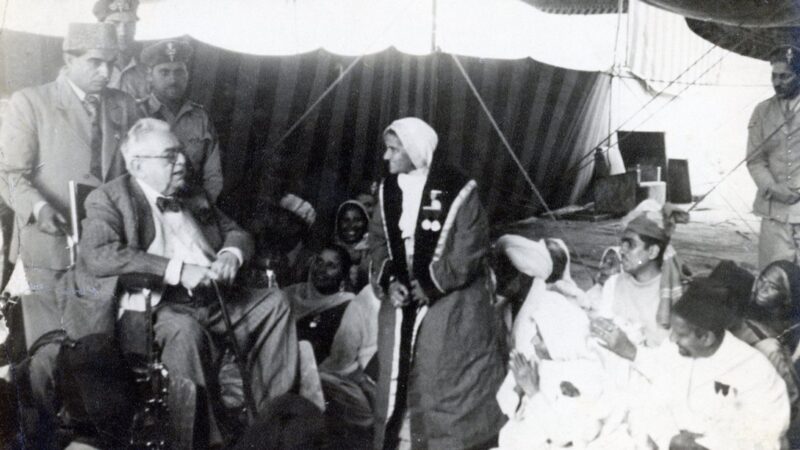
Her service extended beyond formal education. She taught reading the Holy Qur’anMuslims believe that the Holy Qur’an contains divine revelations to the Prophet Muhammed received in Mecca and Medina over a period of 23 years in the early 7th century CE. More to neighbourhood girls and remained deeply engaged with the Ismaili community. Family photographs preserved by Azizuddin show her in the presence of Imam Sultan Mahomed Shah, Aga Khan III, and Imam Karim al-Husayni, Aga Khan IV, reflecting the intertwining of educational service and devotional life. Azizuddin recounts a family tradition, noting that Imam Sultan Mahomed Shah personally commended Vazir Saheba’s contributions during a visit at Kapurthala with special praise. In 1954, she went to Mecca for HajjThe word Hajj usually refers to the annual pilgrimage by Muslims to the Kaʿba in Mecca, also called the Great Pilgrimage, in contrast to the ʿUmra, the Lesser Pilgrimage. More and was therefore known in the community as a hajjan.
A Legacy of Helping Others
This environment shaped Azizuddin’s own childhood. He recalls returning from school to a home where reading and study continued into the evening, and one moment from his youth remains especially vivid: as he was drifting off to sleep, she spoke to him gently but firmly.
Learning didn’t stop when school ended. When I came back from school, reading and studying continued into the evening. Even as I was drifting off to sleep, she would remind me, gently but firmly, that whatever education you get, you should try to help others as well.
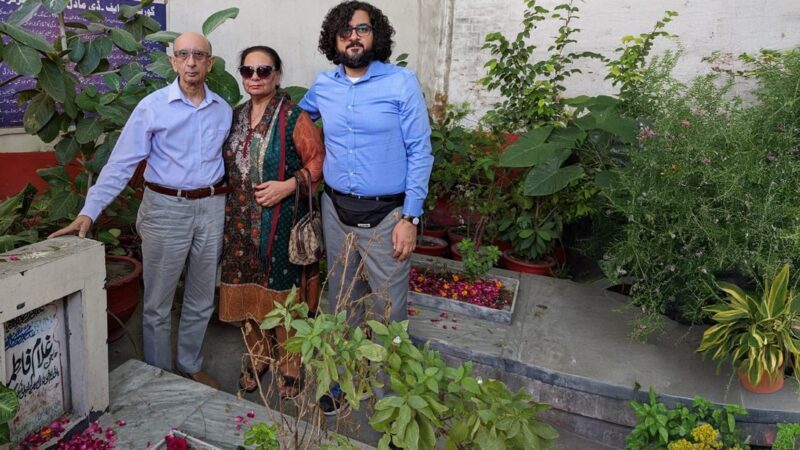
That sentence stayed with him. Years later, after becoming established, Azizuddin sought to honour her words by supporting students in Pakistan through scholarships and educational assistance. Vazir Saheba Hajjan Ghulam Fatimah passed away on 26 August 1967. Azizuddin describes the loss as profound. She was buried in the school yard alongside Saleha Bibi where people visit to pay their respects and offer fateha for their souls.
It was devastating for me … it was as if I’d been orphaned second time around … I can’t describe it. But anyway, life has to go on.
Conclusion: Leadership Through Persistence
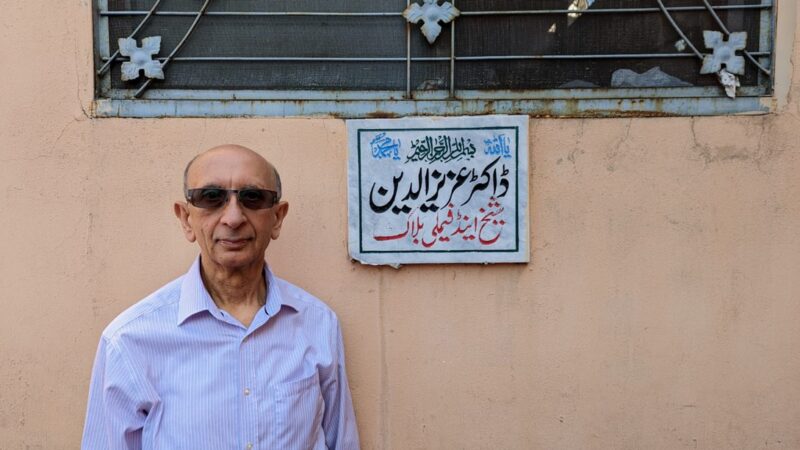
Vazir Saheb Ghulam Fatimah’s legacy endures not only in memory but through continued family engagement with the institution she helped build. Members of her family have remained connected to the school over the years, contributing to its upkeep and development, including the construction of a family block that continues to support its activities. This ongoing involvement reflects an understanding of service as something sustained across generations rather than completed in a single lifetime.
She always used to say that whatever education you get, you should try to help others as well.
As International Women’s History Month invites reflection on women’s leadership in all its forms, Vazir Saheba’s story widens our understanding of what leadership can look like. Her impact was not forged through visibility or authority, but through persistence: leaving secure employment, teaching on rugs in a courtyard, organising women collectively, and building an institution that continues to serve generations. Through the IIS Oral History Project, such lives are preserved not only as memories but as foundations of community history.
This article was co-produced by Rizwan Karim, Oral History Coordinator, and Muhammad Ali, a GPISH graduate (Class of 2024) and an intern at the ISCU, assisting with the Oral History Project and digital humanities initiatives.