The Institute of Ismaili Studies (IIS) hosted Elemental: Ismaili Perspectives on Earth, Water, Air, Fire and Ether. The conference took place at the Aga KhanA title granted by the Shah of Persia to the then Ismaili Imam in 1818 and inherited by each of his successors to the Imamate. Centre, London, on Thursday 26 and Friday 27 March 2026. IIS also webcast the conference online. Professor Zayn Kassam and Dr Wafi Momin convened the programme, bringing together scholars and practitioners from around the world.
Over two days, contributors examined the five classical elements as a cosmological framework. They also treated them as a way of understanding human responsibility towards the natural world. Panels discussed philosophy, jurisprudence, poetry, oral tradition, archaeology, and geography. The case studies covered Fatimid Egypt, medieval Iran, Badakhshan, Chitral, Hunza, SalamiyyaA city in central Syria, which was the residence of several early Ismaili imams in the pre-Fatimid period., and Gilgit-Baltistan.
Two keynote addresses framed the programme. Dr Paul Dhalla spoke on the environment and climate work of the Aga Khan Development Network (AKDNThe Aga Khan Development Network (AKDN) is a contemporary endeavour of the Ismaili Imamat to realise the ethics and social conscience of Islam through institutional action. More). Dr Amyn Sajoo closed with a lecture on ecological aesthetics and lived ethics.
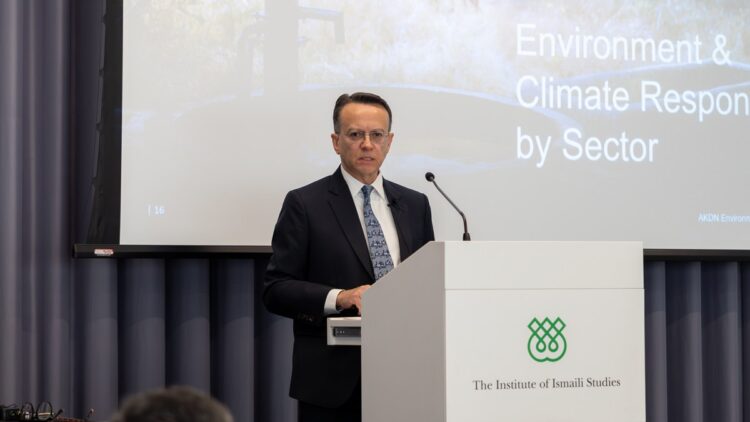
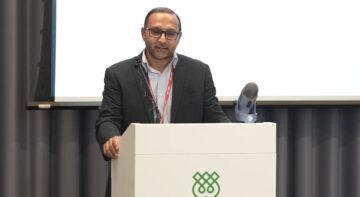
Keynote address by Dr Paul Dhalla | Day 1
Keynote address by Dr Paul Dhalla
AKDN’s Environment and Climate Initiative
Dr Paul Dhalla is Director of Environment, Climate and Sustainability at AKDN. His address set out why the Ismaili Imamat has made environment and climate a priority across AKDN agencies.
Dr Dhalla described the effects of climate change across the regions where AKDN works. These effects include floods, droughts, heatwaves, freshwater depletion, and biodiversity loss. He noted that the poorest communities carry the heaviest burden, with consequences for livelihoods, food security, and health. He then set out the guiding principles behind a system-wide approach that favours practical solutions.
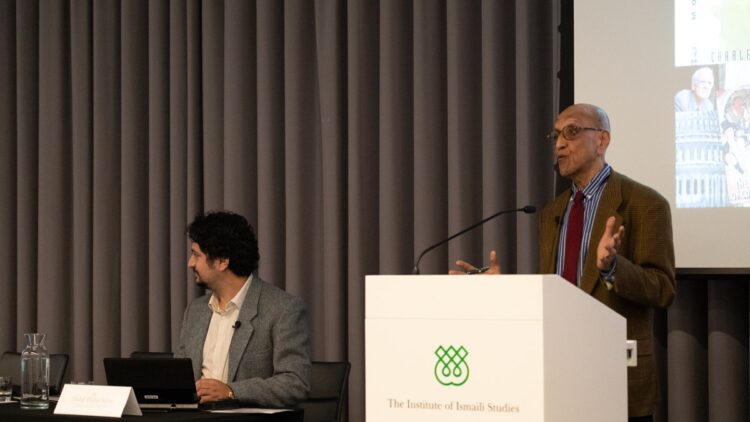
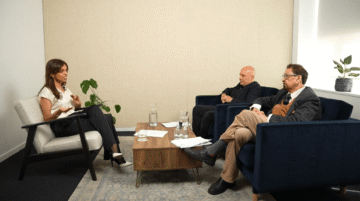
Closing keynote by Dr Amyn Sajoo | Day 2
Closing keynote by Dr Amyn Sajoo
From Ecological Aesthetics to Lived Ethics: Ismaili Pathways
Dr Amyn Sajoo is Scholar-in-Residence at the Centre for Comparative Muslim Studies, Simon Fraser University, Canada. His lecture examined how ethical reasoning, cultural expression and community engagement shape responses to environmental challenges.
Dr Sajoo contrasted a secular framing of climate policy with a faith-inspired one rooted in Qurʾanic and ḥadīthLit. ‘report’ or ‘narrative,’ used for the traditions of the Prophet Muhammad and in Shi‘i Islam also for those of the Imams. teaching and argued for symbiosis rather than opposition. He traced eco-ethics through the Ikhwān al-Ṣafāʾ, gināns, qaṣīdas and farmāns, and through Imamat initiatives in development and culture. The Aga Khan Garden in Edmonton and the courtyard gardens of diaspora Ismaili Centres served as his working examples.
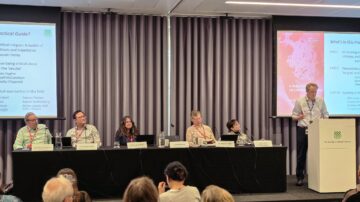
Explore panels and watch sessions
- Turfah and Environmental Memory: A Reflection on Salamiyyan Literature and Stories
Maha Yaziji, IIS, UK - From Rain Amulets to Running Showers: Elemental Crisis and Moral Economy in Hunza
Qudsia Shah, IIS, UK - The Blessings of the Common Land (muzhayo): Conceptions of Earth and Stewardship among the Ismaili Communities of Chitral
Dr Abdul Wahid Khan, University of Oxford, UK
- ʿĀlam-i Ṣaghīr: Nature, Habitat and Human Beings among the Ismailis of Badakhshan
Dr Nourmamadcho Nourmamadchoev, IIS, UK - Sing to the Fish and the Mountains Will Listen: Ecopoetry and the Prophecy of Environmental Loss in Burushaski
Rizwan Karim, IIS, UK - The Sacred Ecology of Water and Soil in Ismaili Jurisprudence: Insights from the Daʿāʾim al-Islām
Dr Morteza Karimi, International Institute for Islamic Studies, Iran - Echoes in Stone: Natural Resource Management in the Ismaili Fortresses of Iran as a Model for Climate Adaptation
Dr Saeed Karbin, University of Aberdeen, UK
- The Ginān Literature and the Elements
Dr Wafi Momin, IIS, UK - Natural Elements and the Alchemy of Knowledge in the Works of Faḍl Allāh Astarābādī (d. 796/1394)
Dr Orkhan Mir-Kasimov, IIS, UK - Elemental Geographies of the Sacred in Nāṣir-i Khusraw’s Safarnāma
Dr Muntazir Ali, University of North Carolina at Greensboro, USA
- The Concepts of Aether or Quinta Essentia from the Greek Heritage to the Islamic Context: The Cosmological Views of the Ikhwān al-Ṣafāʾ, Abū Yaʿqūb al-Sijistānī and Ḥamīd al-Dīn al-Kirmānī
Dr Maria De Cillis, IIS, UK - Ether as Spirit/Space that ‘Holds’
Alia Parveen, Currim Suteria, Indus Valley School of Art and Architecture, Pakistan - Neoplatonic Nature: Ismaili Philosophical Views of the Elements
Dr Khalil Andani, Augustana College, USA
- Ismaili Perspectives on Earth, Water, Air, Fire and Ether in the Ginān Tradition
Majida Thobani, Association for the Study of Ginans, UK - Mapping the Ismaili Social Landscape: Environmental Narratives from Alamūt to Anjudān
Dr Karim Javan, IIS, UK - The Integration of Traditional Ecological Knowledge with Ismaili Religious Education in Gilgit-Baltistan, Pakistan: A Pedagogical Approach to Environmental Stewardship
Nazira BibiA word of East Turkish origin which means old mother or a grandmother. More, Ismaili Tariqa and Religious Education Board for Pakistan - Bridging and Understanding the Interaction between Environmental Geography and Ismaili Demographics
Dr Siddique Ullah Baig, COMSATS University Islamabad, Pakistan