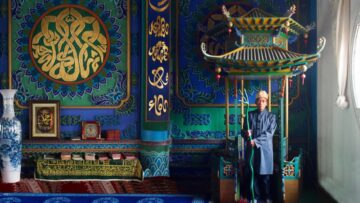
This hybrid lecture will take place at 4.00pm GMT, in person at the Aga KhanA title granted by the Shah of Persia to the then Ismaili Imam in 1818 and inherited by each of his successors to the Imamate. Centre and online.
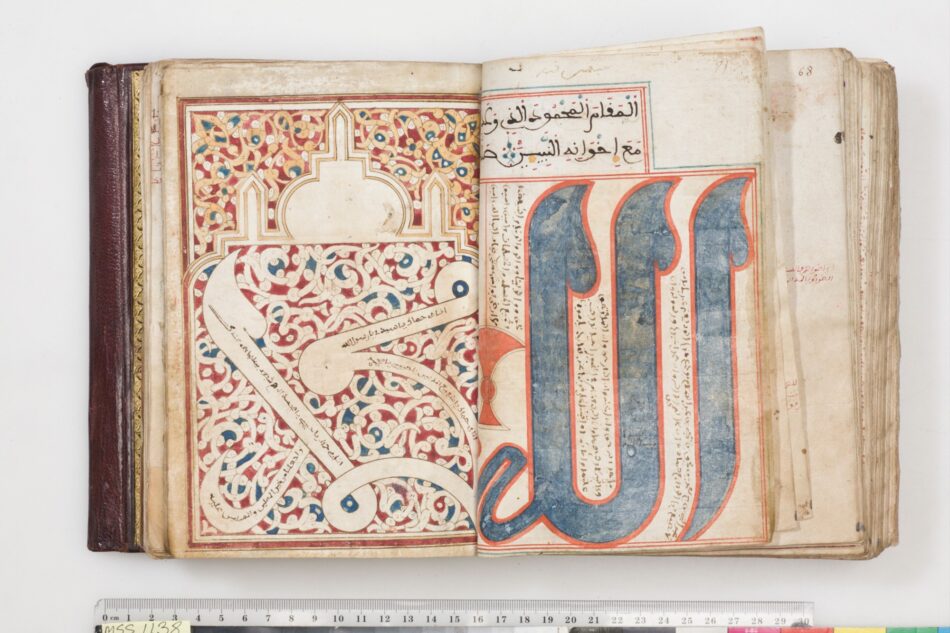
From the eighteenth to the early twentieth century, Morocco produced a remarkable body of calligraphic works. This still understudied corpus reveals deep connections between calligraphic practice, royal patronage, devotion to the Prophet and the circulation of esoteric teachings, including newly formulated ones.
This lecture traces the development of esoteric calligraphy through a series of case studies. Beginning with the monumental Dhakhīrat al-muḥtāj of Shaykh Muʿṭā al-Sharqī (d. 1766), it explores the works of Aḥmad al-Rifāʿī al-Ribāṭī (d. 1840–41) and the Qurʾan copied by Qandūsī (d. 1861), before turning to the large painted calligraphic panels that became increasingly widespread in Morocco in the early twentieth century.
These examples illuminate the relationships between calligraphic forms, esoteric conceptions and devotional practices across two centuries of Moroccan history. They show how calligraphy gave material and visual expression to religious ideas and devotion to the Prophet.
Image credit: A page from the Dalā’il al-khayrāt of al-Jazūlī, copied by Muḥammad b. ‘Abd al-Qādir al-Tādilī al-Ribāṭī in 1838. Frm the Khalili collection (ms 1138, fol. 71b-72a)
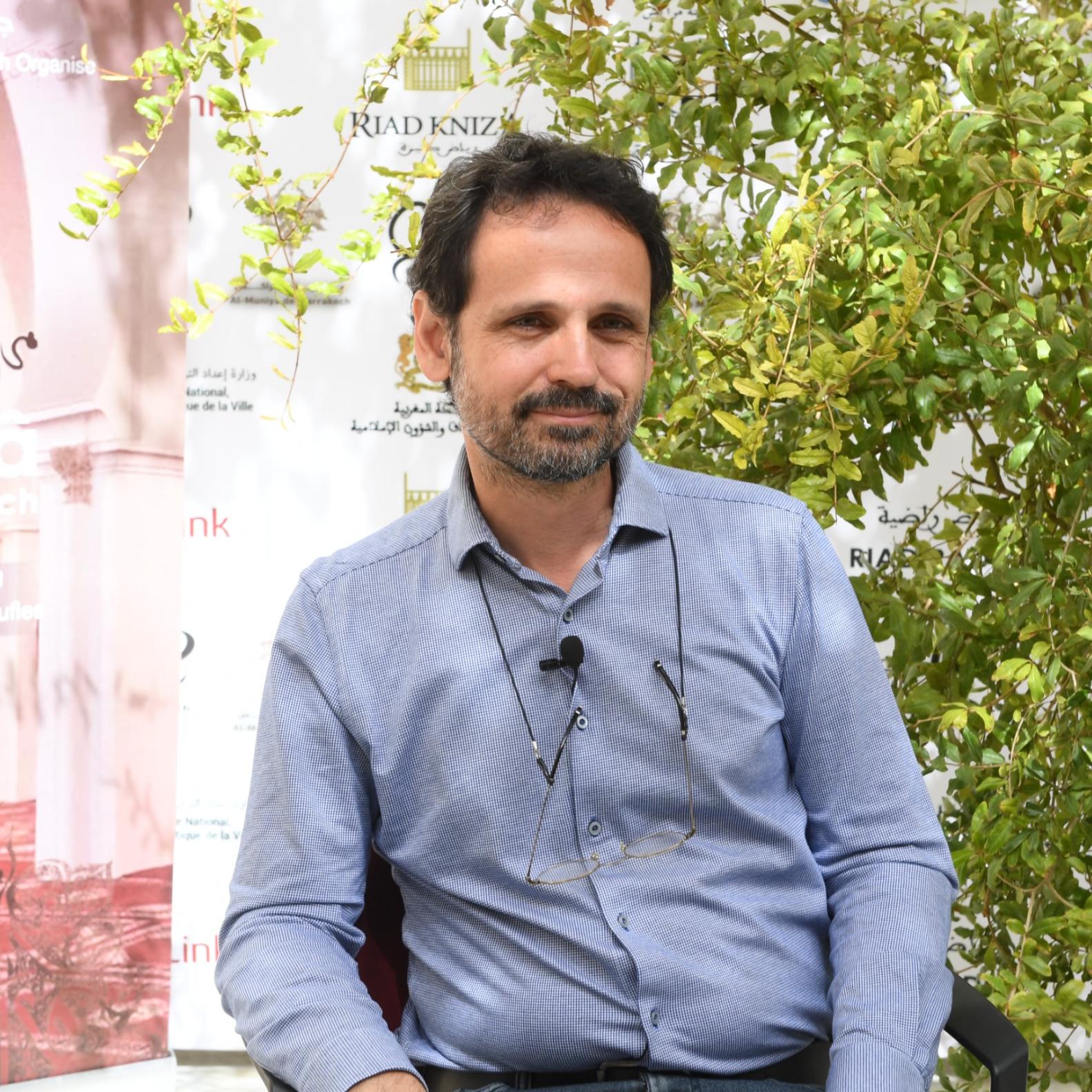
Francesco Chiabotti
Professor of Islamic Studies
Francesco Chiabotti is Professor of Islamic Studies at INALCO (National Institute for Oriental Languages and Civilizations) and a member of CERMOM (Centre for Middle Eastern and Mediterranean Studies and Research). He previously taught medieval history at Aix-Marseille University and subsequently worked as a research assistant at the University of Tübingen. His doctoral dissertation examined the life and works of the Sufi master and theologian al-Qushayrī (d. 1072), after which he participated in the Franco-German PROPHET project. He coordinates “MAG-Renew: Spiritual Renewals and Artistic Expressions in Nineteenth-Century Morocco. Perspectives from Islamic Studies, Literature and Aesthetics,” funded by the French Institute of Islamic Studies. His research interests include the calligrapher and Sufi master al-Qandūsī (d. 1861 in Fez). Together with Bilal Orfali and Ramzi Baalbaki, he recently published Poetry and Spiritual Insights. A Study and Edition of Kitāb al-Shawāhid wa-l-Amthāl by Abū Naṣr al-Qushayrī (d. 514/1120) (Beirut: American University of Beirut Press, 2025).