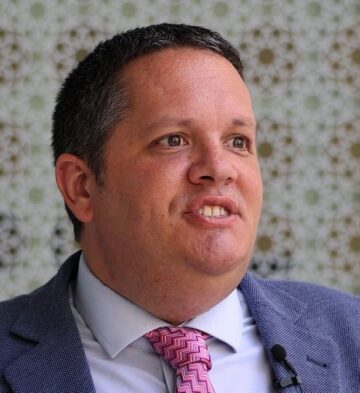
Dr Hasan Al-Khoee, Research Associate at The Institute of Ismaili Studies (IIS) answers the question: How do historians know “what really happened” in the past?
He starts with a basic distinction that the past is everything that has ever happened, but history is what we say about the past based on surviving evidence. Using examples from early Islamic texts, he explains how historians work with fragments. They ask what the evidence can tell us, what it cannot, and what meaning we can responsibly draw from it.
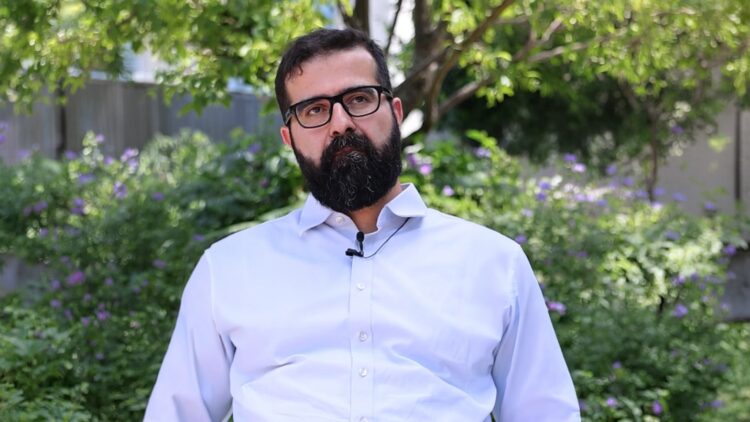
Dr Hasan Al-Khoee, Research Associate at IIS
Here are some additional resources to learn more:
Beginner: Arnold, John H. History: A Very Short Introduction. Oxford: Oxford University Press, 2000.
Intermediate: Carr, E. H. What Is History? Introduction by Richard J. Evans. London: Penguin, 2018.
Advanced: Tosh, John. The Pursuit of History: Aims, Methods and New Directions in the Study of History. 7th ed. Abingdon: Routledge, 2021.
About the series
Questions & Reflections explores questions about Ismaili and Muslim history, faith, doctrine and practice through the lens of IIS scholarship. Drawing on the expertise of IIS scholars and research, each video takes a question and offers a short, scholarly response. From translations of the Qur’anMuslims believe that the Holy Qur’an contains divine revelations to the Prophet Muhammed received in Mecca and Medina over a period of 23 years in the early 7th century CE. More and the history of the Ismaili Imamat to religious authority, cultural traditions and the diversity of Muslim practice, the series invites viewers to explore the histories, ideas and contexts that have shaped Muslim and Ismaili traditions across time.