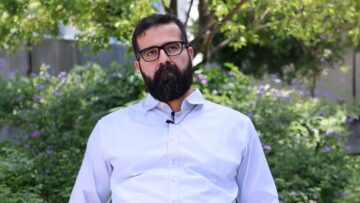
Dr Stephen Burge, Senior Research Associate at The Institute of Ismaili Studies (IIS) addresses the question of why there are so many different translations of the Qur’anMuslims believe that the Holy Qur’an contains divine revelations to the Prophet Muhammed received in Mecca and Medina over a period of 23 years in the early 7th century CE. More and offers guidance on choosing a translation that best suits the reader’s interests, needs, and purpose.
Here are some additional resources to learn more:
- Translations of the Qur’an: GloQur – a European research project that explored the translation of the Qur’an. It includes blog posts on Qur’an translations and other resources.
- Omar Ali-de-Unzaga, ‘A Thousand (and One) Interpretations of the Qur’an’ – online lecture.
- Stefan Wild, ‘The Qur’an Today: Translating the Translatable’, in Stephen Burge, The Meaning of the Word: Lexicology and Qur’anic Exegesis (Oxford: Oxford University Press, in association with The Institute of Ismaili Studies, 2015), pp. 421–446.
About the series
Questions & Reflections explores questions about Ismaili and Muslim history, faith, doctrine and practice through the lens of IIS scholarship. Drawing on the expertise of IIS scholars and research, each video takes a question and offers a short, scholarly response. From translations of the Qur’an and the history of the Ismaili Imamat to religious authority, cultural traditions and the diversity of Muslim practice, the series invites viewers to explore the histories, ideas and contexts that have shaped Muslim and Ismaili traditions across time.