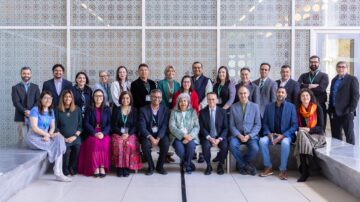
On Friday 26 September 2025, The Institute of Ismaili Studies (IIS) and the Aga KhanA title granted by the Shah of Persia to the then Ismaili Imam in 1818 and inherited by each of his successors to the Imamate. University’s Institute for the Study of Muslim Civilisations (AKU-ISMC) held their third annual Graduate Conference at the Aga Khan Centre in London. Across five panels, graduate researchers from the GPISH and STEP programmes and AKU-ISMC examined how intellectual inquiry, creative expression and ethical frameworks shape the futures of Muslim societies — from people’s action committees in Gilgit-Baltistan and digital daʿwaLit. ‘summons’, ‘mission’ or invitation to Islam. Amongst Shi’i Muslims, it was the invitation to adopt the cause of the Imamat. It also refers more specifically to the hierarchy of… in Pakistan to Mughal court politics, the didactic poetry of Nasir-i Khusraw and the AlamutFortress of the Nizari Ismailis in northern Iran, which fell to the Mongols in 654 AH/1256 CE. of a video game.
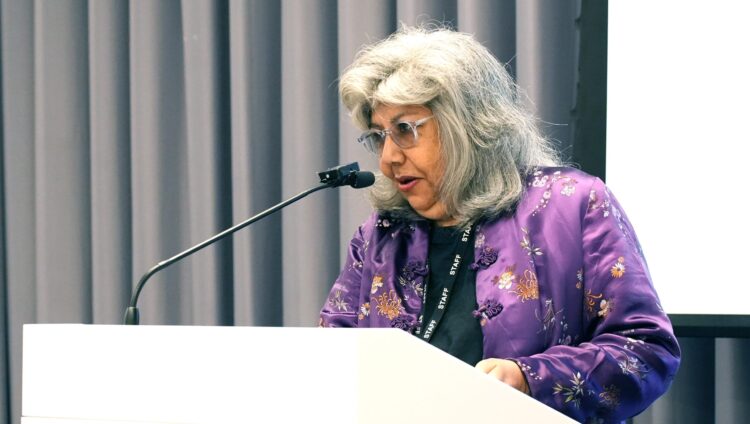
Welcome address | Professor Zayn Kassam
Conference Panels
- Theorizing Democracy with People’s Action Committees in Gilgit-Baltistan and Azad Jammu & Kashmir
Haider Ali (AKU-ISMC 2026) - The Position of the Ismaili Imamat in International Diplomacy: Present and Future
Moiz Rajwani (GPISH 2026) - Social Integration During the Pandemic: Examining the Experience of First-Generation Syrian Migrants during COVID-19 in Sweden
Noor Mansour (GPISH 2026)
- Carving Futures from the Past: The Role of Architecture in Expressing and Shaping Identity
Gulguncha Lalbekova (GPISH 2025) - Preservation as Dispossession: Leif Larsen Music Center and Authorized Heritage Discourse
Saad Barcha (GPISH 2025) - The House of Wisdom and the Alamut Fortress in Assassin’s Creed Mirage
Mohsin Ali Baig (GPISH 2027)
- The Art of Power: Rethinking Gendered Sovereignty, Aesthetic Agency, and Political Authority Through Mughal Empress Nur Jahan’s Strategic Reign
Ameeqa Qureshi (GPISH 2027) - Imagining Inclusive Futures: Intersectionality and Queer Muslim Youth in Educational Curricula
Nabila Esmail (STEP 2025)
- Unveiling Hidden Religious Education in Afghanistan’s Language Subjects
Mehrullah Hussaini (STEP 2024) - Digital Daʿwa and the Ethics of Becoming: Platformed Piety and the Case of Youth Clubs
Kiran Rehmat (GPISH 2026) - How Can Existentialist Ideas About Meaning and Purpose in Life Be Incorporated Into Religious Education for Ismaili Youth?
Imad Ali Khan (STEP 2026)
- The Transition of Ismaili Doctrine from Neoplatonic Metaphysics to Contemporary Ethical Pragmatism
Mubashir Shah-Artas (GPISH 2027) - From Pirs to Institutions: Navigating Identity and Tension in Transnational Ismailism in Afghanistan
Nazeer Rasouli (GPISH 2026) - Poetry as Pedagogy: The Art of Revolution Through Words of Wisdom
Saeedeh Kardan (GPISH 2025)
Now in its third year, the Graduate Conference gives aspiring researchers a shared platform to present work in progress and test ideas across disciplines. The 2025 edition drew on history, education, anthropology, political theory and the arts, reflecting the breadth of enquiry within the two institutes and the questions shaping Muslim societies today.
The 2026 conference, Muslim Lives in Transition: Continuity and Change in Contemporary Times, takes place on 28 September at the Aga Khan Centre and online. Registration is now open.