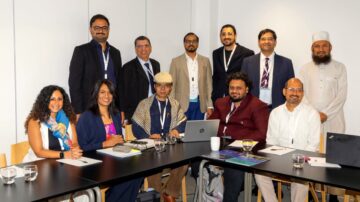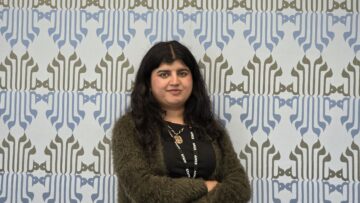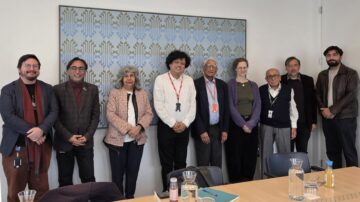
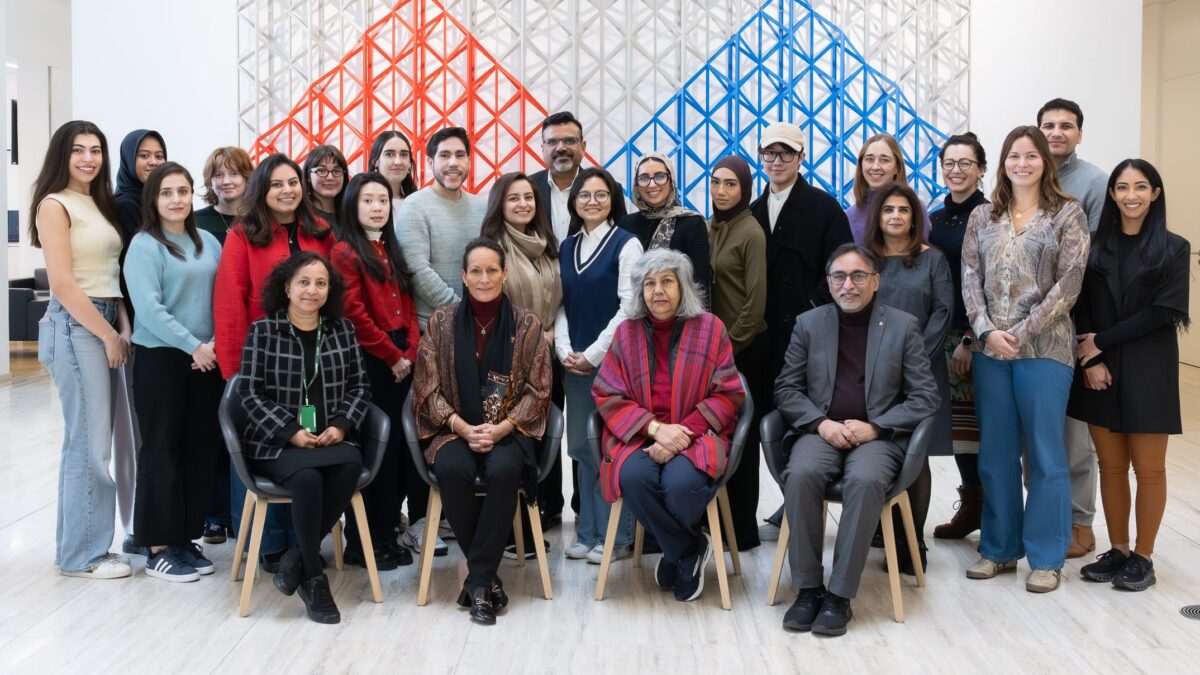
The Institute of Ismaili Studies (IIS) hosted a module from the UCL Institute of Education (UCL IoE), bringing together an international cohort of students to explore how education can respond to some of the most pressing global challenges of our time. IIS made an intellectually rich contribution, enabling students to engage more deeply and immersively with education in Muslim contexts. Titled Contemporary Global Challenges in Education & Justice: Case Studies from Muslim Contexts, the 10-week module, led by Dr Laila Kadiwal, Associate Professor at UCL IoE and an IIS alumna, ran from 13 January to 24 March 2026 and engaged 22 UCL IoE Master’s students from 17 countries.
The programme encourages students to critically examine the interconnected forces shaping contemporary global challenges, including climate injustice, migration, inequality, conflict and peace building, and gender justice. Rather than approaching these issues as distant or abstract, the module invites participants to reflect on how global histories and structures shape the lives of communities across the world, including their own. Through discussions of education in diverse Muslim societies, students explore how educational systems can both reproduce and challenge inequalities.
The module foregrounds relational, reparative, and intersectional approaches to knowledge, encouraging students to question dominant narratives and engage with multiple intellectual traditions and forms of learning through seminars, workshops, field visits, and case studies.
The module reflects a growing academic partnership between the UCL Institute of Education and The Institute of Ismaili Studies. Under the direction and leadership of Professor Zayn Kassam, Director, Hussain Jasani, Head of the South Asian Studies Unit at IIS, has been collaborating with UCL-IoE colleagues since 2023. Most sessions in both the 2025 and the 2026 programme were held at the Aga KhanA title granted by the Shah of Persia to the then Ismaili Imam in 1818 and inherited by each of his successors to the Imamate. Centre, providing a vibrant setting for interdisciplinary learning and discussion.
A highlight of the module was a session on the work of the Aga Khan Development NetworkThe Aga Khan Development Network (AKDN) is a contemporary endeavour of the Ismaili Imamat to realise the ethics and social conscience of Islam through institutional action. More, delivered on 17 February 2026 by Princess Zahra Aga Khan.
During her session, she discussed how AKDN addresses contemporary global challenges across the regions where it works. She emphasised the Network’s long-term partnership with local communities, noting that AKDN continues its programmes and projects even when political conditions deteriorate, or other organisations withdraw, as seen in contexts such as Syria and Afghanistan. The AKDN session also included reflections from a student, Sara Boyden (Princess Zahra’s daughter), who shared insights drawn from her observations of AKDN initiatives, and offered students a “curb-side view” of development work on the ground. Students received the talk very positively. One of the participants wrote:
It was a privilege to hear Princess Zahra’s inspiring talk about the AKDN and her experiences, as well as to hear Sara speak about her exposure to the work of the Foundation.
Another participant shared: Honestly, for me personally, there was so much to learn about the institutions from Princess Zahra. It was so nice to hear her in the context of development.
She had amazing examples of localised, community focused work—how much focus can be put on community and how lasting the effects are. It spoke to my own work where localisation is an issue, and it was the opposite of my findings with other organisations I have researched. She embodied so much ethics and values.
The combined expertise of the UCL IoE and IIS helped create a rich learning environment in which students could critically engage with the complex relationships between education, justice, and global change, while imagining more inclusive and peaceful futures. Multiple individuals associated with IIS contributed to the programme. Hussain Jasani, Head of South Asian Studies Unit, delivered the session on Diversity in the Muslim World and challenged conventional assumptions about what it means to be Muslim. Professor Farid Panjwani, Dean of the Institute for Educational Development, an IIS alumnus and former Governor, delivered a session on the historical traditions of education in the Arab Muslim textual context, and Dr Nourmamadcho Nourmamadchoev, Research Associate and Projects Coordinator for Ismaili Special Collections, and Rizwan Karim, Oral History Project Coordinator organised a display of objects from the IIS Special Collections and presented work from the IIS Oral History Project.
Colleagues from the Aga Khan Library, Events, Security, IT and Communications have all contributed to the success of the programme. Together with colleagues from the UCL Institute of Education, their contributions helped create an intellectually rich learning environment that encourages students to critically engage with the complex relationships between education, justice, and global change while imagining more inclusive and peaceful futures.