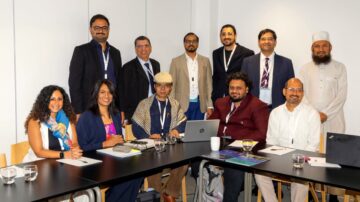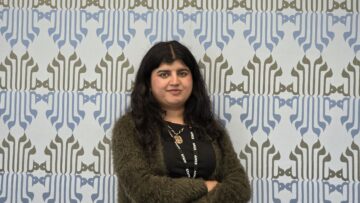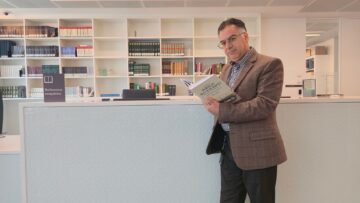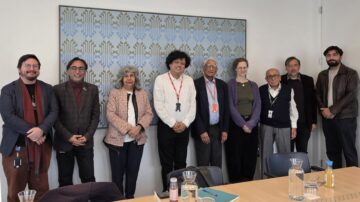

The Institute of Ismaili Studies hosted the launch of A Practical Guide to Critical Religion on Tuesday 29th April 2026 at the Aga Khan Centre, London. Six pioneering scholars shared their reflections on a methodological revolution sometimes known as “Critical Religion,” engaging in a panel discussion on how categories such as “religion” and “the secular” shape public life, governance, and scholarship. A recording of the discussion will be available on the IIS YouTube channel.
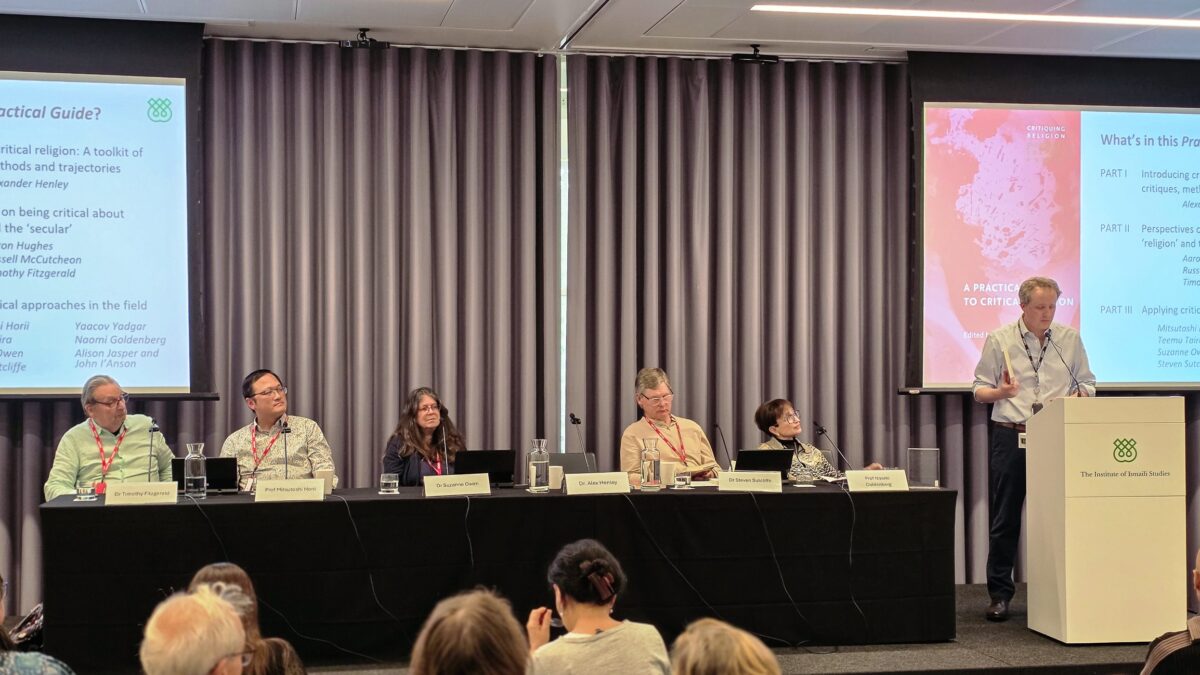
Edited by IIS faculty member Dr Alex Henley and published by Bloomsbury Academic Press, the volume brings together contributions from 12 scholars from across religious studies, anthropology, sociology, political science, modern history, and education. Designed as an accessible entry point into the growing transdisciplinary field of “Critical Religion,” the book asks a deceptively simple but far-reaching question: what happens when we stop treating “religion” as an obvious, universal category and instead investigate how that label is constructed, used, and contested?
About the event
Opening the event, Dr Henley welcomed participants to a conversation that was both theoretically ambitious and practically grounded. He described the volume as an attempt to make critical theory on the concept of “religion” more accessible, including to those who may be sceptical of ideas that can feel rather abstractly meta-theoretical. This practical guide is not so much a theory textbook as it is a guide to theory-informed practice — not only for specialists in religious studies but for anyone working with categories such as “religion” or “faith” and their so-called “secular” opposites, including “politics” and “culture.”
A central theme of his introductory presentation was that words do important work in the world. Categories such as “religion” and “the secular,” he noted, often appear neutral, but in practice they classify people, traditions, and institutions in ways that can legitimise or de-legitimise, empower or marginalise. For that reason, Critical Religion scholars often place terms such as “religion” in quotation marks as a reminder that these are historically produced and powerfully consequential categories rather than transparent descriptions of reality.
Speaking in the context of an institution devoted to Islamic studies, Dr Henley drew attention to a familiar saying in many Muslim settings: “Islam is not merely a religion, but a way of life.” Taking that intuition seriously, he suggested, opens onto larger questions about whether the category “religion” adequately captures Muslim traditions, practices, and forms of life in all their complexity. Such questions are especially relevant for students of Islam, for whom modern Western distinctions between “religious” and “secular” may obscure more than they reveal.
This concern with cross-cultural understanding lies at the heart of A Practical Guide to Critical Religion. The volume offers a window into a scholarly movement that challenges the assumption that religion is a discrete thing that can be straightforwardly identified across cultures and historical periods. It invites readers to examine the changing uses and effects of the terms through which social worlds are organised. The aim is not simply deconstruction for its own sake, but more careful, reflexive, and productive scholarship.
The event’s discussion resonated with IIS’ ethos of encouraging critical yet empathetic approaches to the study of Islam that are methodologically rigorous, transdisciplinary, and globally attentive to Muslims’ diverse and changing historical contexts. A Practical Guide to Critical Religion speaks directly to this commitment by asking students and scholars to think carefully about the conceptual tools through which societies, traditions, and histories are described, both in academic analysis and in public discourse.
Outline of the book
The book is organised in three parts.
Part I offers Dr Henley’s own introduction to “Critical Religion,” outlining what is at stake in questioning the category “religion” and presenting a toolkit of potential approaches for readers new to the field.
Part II brings together reflections from three leading scholars associated with this intellectual shift — Aaron Hughes, Russell McCutcheon, and Timothy Fitzgerald — who give their own perspectives on what it means to be critical about categories and why it matters.
Part III presents seven case studies that show critical approaches in action. Drawn from diverse disciplines and fields of study, these cases range fromEast and West Asia to Europe and North America, and engage themes including governance, minority politics, indigeneity, education, gender, and public life. Together they demonstrate how critical theory can be applied to generate new insights in empirical research and in teaching.
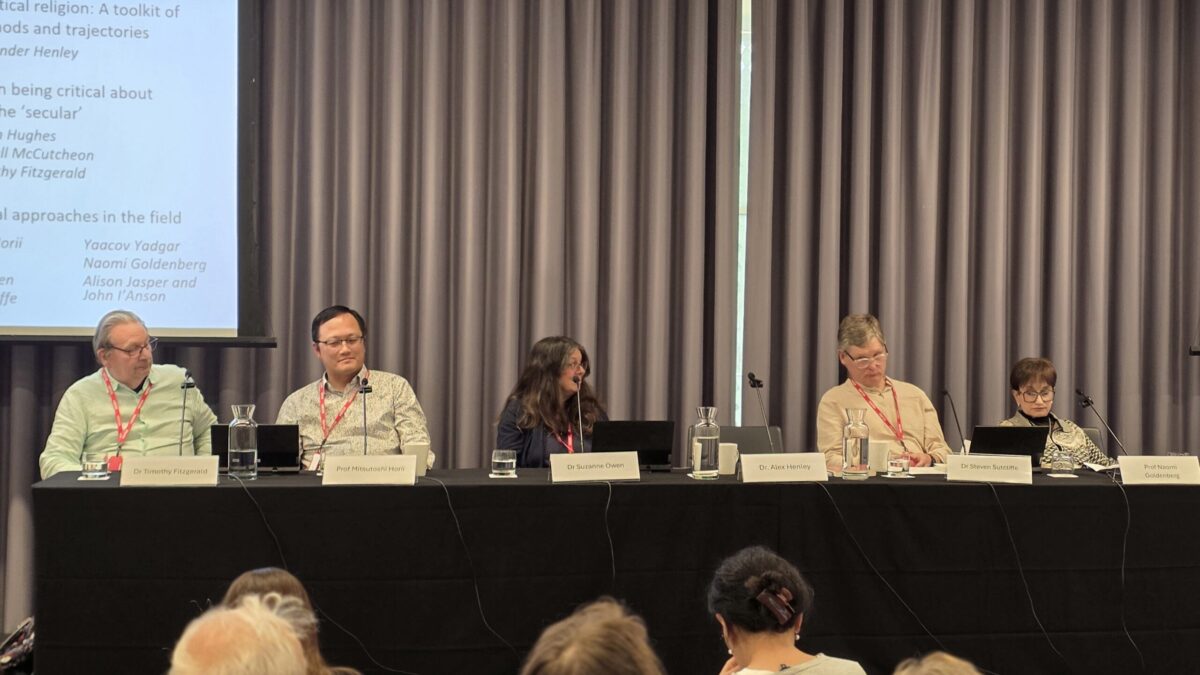
Panel of authors
The launch event brought together six contributors and leading voices from universities around the UK and as far as Canada. Each speaker on the panel reflected on what “Critical Religion” means in their own work and fields.
Dr Alex Henley, the book’s editor, leads IIS’ flagship Graduate Programme in Islamic Studies and Humanities. His research focuses on “religion” as a changing category of practice and governance in the modern West Asia, especially in relation to leadership, institutionalisation, and sectarianisation.
Dr Timothy Fitzgerald, Research Associate at the Center for Critical Research on Religion and formerly Reader in Religion at the University of Stirling, is widely recognised for coining the term “Critical Religion.” His pioneering work has helped shape debates in the field for more than two decades, including a formative influence on Shahab Ahmed’s landmark book What is Islam? (2016).
Professor Mitsutoshi Horii, Professor at Shumei University and Principal of Chaucer College, is a sociologist whose work examines how modern categories of “religion” and “the secular” have been constructed and normalised in the Japanese context and in the academic discipline of sociology.
Dr Suzanne Owen, Associate Professor at Leeds Trinity University and Honorary Secretary of the British Association for the Study of Religions, has written extensively on contemporary Paganism, Druidry, and indigeneity, and contributed perspectives rooted in anthropological and pedagogical practice.
Dr Steven Sutcliffe, Visiting Fellow at the Open University and formerly Senior Lecturer at the University of Edinburgh, studies the effects of category formation on public life and cultural production, including the governance of “faith” in UK state institutions.
Professor Naomi Goldenberg, Professor at the University of Ottawa, is known for her influential feminist scholarship and for developing “vestigial state theory,” which rethinks “religions” as entities operating within the sphere of modern statecraft.