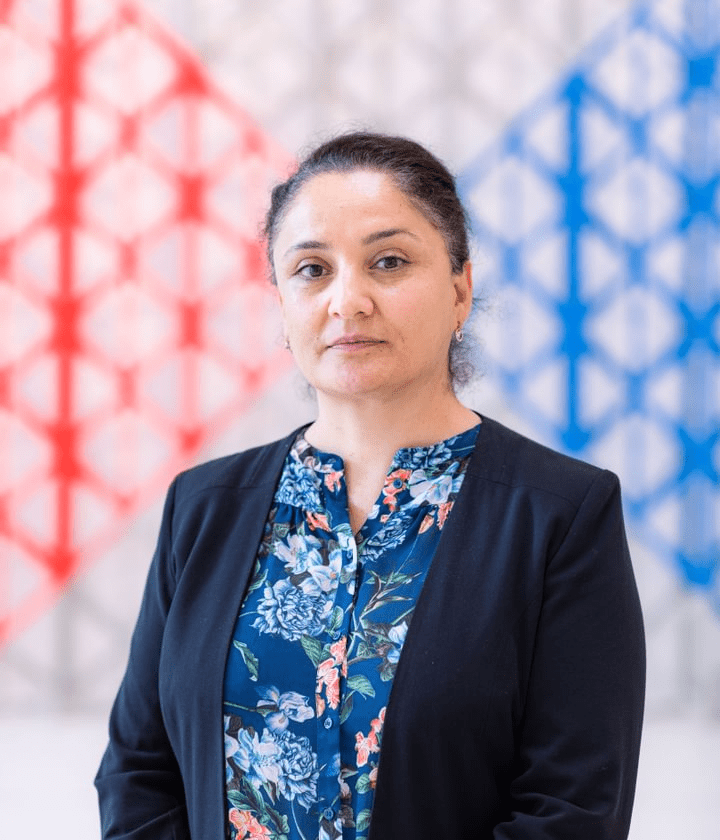
Dr Kumail Rajani, the Imam Sajjad Chair in Shiʿi Studies and Senior Lecturer at the Institute of Arab and Islamic Studies, University of Exeter, is the fifth recipient of the IIS Zahid Ali Fellowship. The fellowship is awarded once every five years to a scholar working in the field of Classical Arabic Literature who will use the award to publish research on a topic of relevance to Ismaili Studies.

Research focus and academic background
Dr Rajani’s primary research focuses on the origins and development of ḥadīthLit. ‘report’ or ‘narrative,’ used for the traditions of the Prophet Muhammad and in Shi‘i Islam also for those of the Imams. corpora, with broader interests spanning Qurʾanic exegesis, Islamic law and legal theory, South Asian Studies, Ismaili Studies, and Shiʿi Studies more generally. He previously served as a Postdoctoral Research Fellow (2019–2022) on the ERC-funded project Law, Authority and Learning in Shiʿite Islam. He has published in leading journals and has both edited and co-edited scholarly volumes. Dr Rajani also spent several years at a Shiʿi seminary in QumA historic city in Iran to the south of Tehran. It is considered by many Shi‘i Muslims as Iran’s second holiest city after Mashhad. Qum is a leading centre of…, where he studied and taught classical Islamic texts in ḥadīth, fiqhThe science of Islamic jurisprudence., and Islamic legal theory.
Dr Rajani is the recipient of multiple prestigious fellowships, including a Postdoctoral Fellowship from the British Institute for Libyan and Northern African Studies (2022), a British Academy Postdoctoral Fellowship (2023–2026), and a Templeton Fellowship (2025).
Fellowship project and scholarly contribution
The Zahid Ali Fellowship will enable Dr Rajani to expand a major strand of his current research on the origins, development, and transmission of the often underappreciated and underrepresented exoteric tradition of the FatimidsMajor Muslim dynasty of Ismaili caliphs in North Africa (from 909) and later in Egypt (973–1171) More. Building on the framework established in his doctoral research, this project addresses both general and specific problems in our understanding of Ismaili ḥadīth sources, thereby filling a significant gap in the study of Shiʿi traditions more broadly. His research will re-examine prevailing hypotheses in the secondary literature concerning the collection, arrangement, and presentation of ḥadīth in Ismaili works. The project is envisaged to culminate in a monograph that will offer a methodological approach to reconstructing early Ismaili textual traditions, drawing on manuscript evidence from public and private libraries across multiple regions.
Dr Rajani says: “The Zahid Ali Fellowship carries particular intellectual weight, not only for its prestige but for the scholarly legacy it invokes. Being associated with a figure who helped establish modern Ismaili studies as a rigorous academic field is both an honour and a responsibility. My project seeks to re-open early Ismaili sources that have long remained marginal to the study of Shiʿi Islam, to develop methodological tools for reconstructing fragmentary and lost materials, and, in doing so, to rethink how Shiʿi textual traditions are situated within Islamic intellectual history.”