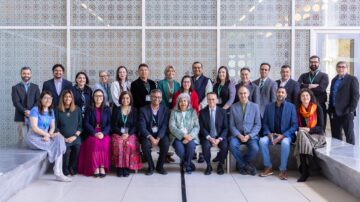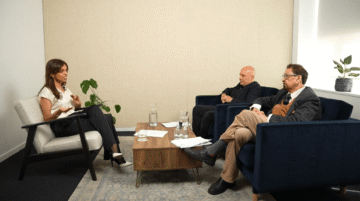
This video presents a panel discussion marking the launch of A Practical Guide to Critical Religion, edited by Dr Alex Henley, Programme Leader for the Graduate Programme in Islamic Studies and Humanities and a researcher at The Institute of Ismaili Studies (IIS). Recorded at the Aga KhanA title granted by the Shah of Persia to the then Ismaili Imam in 1818 and inherited by each of his successors to the Imamate. Centre, the discussion brings together five contributors to the volume for a conversation on how religion is defined, and by whom.
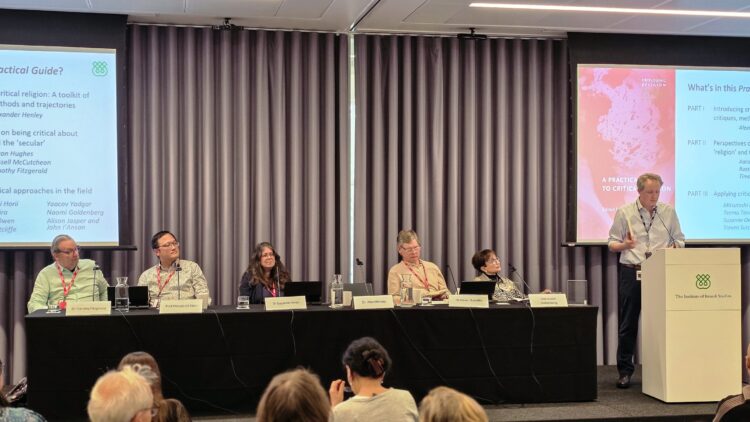
The panel explores critical religion, an approach that treats religion as a modern, contested category rather than a neutral fact. Drawing on case studies from Canada, Scotland, Japan and beyond, speakers examine how the term has been used to classify, govern and, at times, marginalise.
Themes explored in this video
- What critical religion means, and its parallels with critical race theory
- Prof Naomi Goldenberg’s theory of religions as “vestigial states”
- Dr Steven Sutcliffe on the Scottish Parliament’s Time for Reflection ritual
- Dr Suzanne Owen on Mi’kmaq communities and the rejection of “religion” as a label
- Dr Mitsutoshi Hari on the invention of “religion” in nineteenth-century Japan
- Dr Tim Fitzgerald on the religion–secular divide and the making of private property