Listening in Many Tongues
Multilingual Interpretive Communities and Acts of Translation in Early Modern South Asia
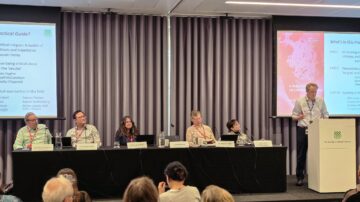
On 21–22 October 2024, the South Asian Studies Unit at The Institute of Ismaili Studies (IIS) convened scholars from across the UK, Europe, and South Asia for a two-day conference on multilingual textual production in medieval and early modern South Asia. Across seven panels, speakers examined how interpretive communities working in Persian, Sanskrit, Avadhi, Urdu, Arabi-Malayalam, Dakani, Apabhramsa, and Khwājah Sindhī/Khojki made equivalences, reinterpretations, and transcreations across literary and performative genres — from Sufi romances and Vedāntic dialogues to rāga treatises and Bengali Puranic verse.
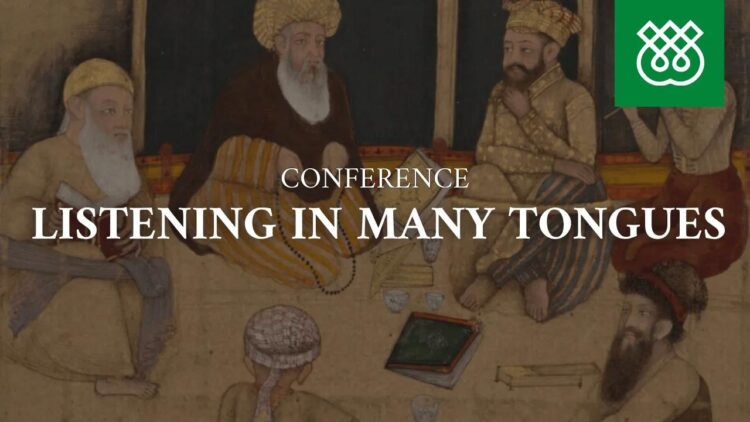
Brajification and the Erasure of Earlier Literary Idioms in Manuscript Transmission
Keynote Address
Brajification and the Erasure of Earlier Literary Idioms in Manuscript Transmission
Dr Imre Bangha (University of Oxford)
Discussant: Professor Katherine Butler Schofield (King’s College London)
In this keynote, Dr Bangha examines “translectism” — the shift of a text’s literary idiom into another vernacular register, as recorded across manuscript transmission — and sets it against the more familiar cosmopolitan-to-vernacular model of translation. Drawing on variant manuscript readings, he shows how scribes routinely “Brajified” archaic literary idioms across religious traditions, reshaping how the historical scope of Braj Bhasha is understood today.4
Conference Panels
- Welcome address Prof. Zayn Kassam
- Panel 1: Persian and Hindi Translations (I) (Hybrid)
- Panel 2: Multilingual Locals through Jain and Hindu Sources (Hybrid)
- Panel 3: Translating Eschatologies: Ismaili and Pranami Contexts of Millenarian Theologies (Hybrid)
- Panel 4: Translation of Musical Aesthetics
- Panel 5: Bengali and Malayalam Literary Translations
- Panel 6: Persian and Hindi Translations (II) (Online)
- Panel 7: Between Bhakti, Buddha, and Bawa Imamshah: Devotional Interactions (Hybrid)
- Closing Reflections on Translation Studies | Hussain Jassani