As artificial intelligence (AI) transforms how we live, work and make decisions, what can Islamic ethics contribute to the debate about its future? How might ethical principles rooted in Islamic thought help ensure that AI serves human dignity and the common good?
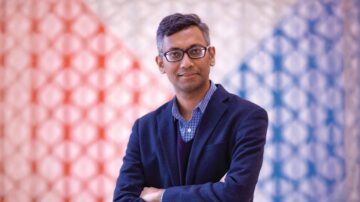
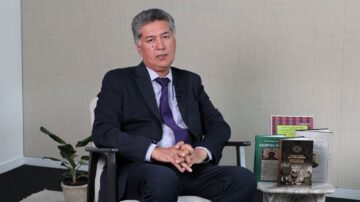
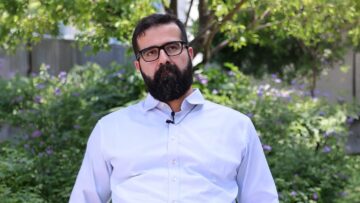
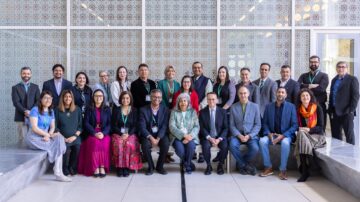
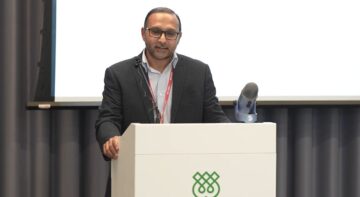
These questions are at the heart of this lecture in Voices of Contemporary Islamic Thought, a joint series by The Institute of Ismaili Studies (IIS) and the University of Melbourne. Dr Mohammed Gamal Abdelnour, Research Fellow at the Centre for Muslim-Christian Studies, Oxford, and Dr Hadi Enayat, Assistant Professor at Aga Khan University – Institute for the Study of Muslim Civilisations (ISMC), UK, explore these issues in a conversation moderated by Dr Mohamed Keshavjee. Professor Abdullah Saeed introduces the discussion and offers concluding reflections.

Artificial Intelligence and the Islamic Theology of Technology
About the discussion
Dr Abdelnour discusses his 2025 paper, Artificial Intelligence and the Islamic Theology of Technology: From “Means” to “Meanings” and from “Minds” to “Hearts” and argues that AI forces humanity to ask old philosophical and theological questions in new ways. Muslim responses so far tend to fall into either optimistic and pessimistic camps. Dr Abdelnour charts a middle path between them, drawing on the Qurʾanic idea of a “middle nation”.
Dr Abdelnour then shifts the focus to what AI reveals about human intelligence, values and moral responsibility. Using the Qur’anic understanding of the heart as a centre of reason, moral responsibility and spiritual awareness, he considers how these qualities can inform our relationship with technology. He also explores the implications of AI for employment and the value of work, arguing that advances in technology offer an opportunity to restore the importance of the humanities alongside science, technology, engineering and mathematics (STEM).
Turning to surveillance, Dr Abdelnour draws on Qurʾanic teachings on privacy, arguing that measures intended to protect people must not become instruments of control. He emphasises that while humans may delegate tasks to machines, they cannot relinquish moral responsibility. He also considers the implications for education, arguing that schools must cultivate wisdom and character alongside digital skills. Dr Enayat concludes by drawing attention to broad questions about AI, including the values embedded in AI design and the political and economic forces shaping its development.
Key themes discussed
- Muslim responses to AI: optimism, pessimism, and a middle path
- The heart as a centre of reason, morality, and spiritual awareness
- AI, employment, and the value of work in Islamic thought
- STEM subjects, the humanities, and the purpose of education
- Surveillance, privacy, and proportionality in Qurʾanic ethics
- Maqasid (higher objectives) in Islamic law and theology
- The political economy of AI and the case for ethical governance
The speakers challenges the idea that AI is inherently good or bad. Instead, they explore how technology reflects amplifies the values of the people who develop and use it. For the speakers, the central issue is both how AI will shape humanity and how humanity will shape AI.