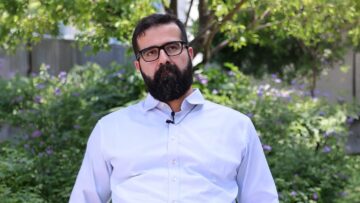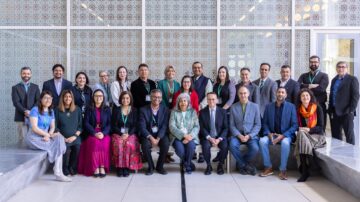
Can Muslims learn from other religious traditions while remaining firmly grounded in their own faith? This question was at the heart of a joint webinar hosted by The Institute of Ismaili Studies (IIS) and the University of Melbourne, exploring the possibilities of Islamic comparative theology. Dr Adis Duderija of Griffith University examined how engagement with other faiths can contribute to Muslim theological reflection, followed by a response from Dr Mohamed Keshavjee and closing reflections from Professor Abdullah Saeed of the University of Melbourne.

Comparative Theology for Greater Interfaith Dialogue: Opportunities and Challenges for Muslims
About the discussion
Comparative theology studies the texts, doctrines, practices, and religious experiences of another tradition from the perspective of one’s own faith. It offers opportunities formutual learning and theological reflection which potentially deepening a believer’s understanding ofboth traditions.
Dr Duderija Drawing on the work of Professor Francis X Clooney and Professor Catherine Cornille, Dr Duderija considers whetherIslamic sources provide a foundation for constructive engagement with other religions. He explores Professor Cornille five conditions for fruitful dialogue, using them as a framework for examining the possibilities and challenges of comparative theology within Islam.
Dr Duderija identifies both inclusive and exclusive strands within Islamic sources. He highlights Qurʾan 2:62 and the tradition of fasting on ʿAshura fasting as examples that offer possibilities for openness towards other religious traditions. He also examined interpretations of key doctrines that regard religious difference as a threat, calling for greater attention to their historical contexts and contemporary applications.
Responding to the presentation, Dr Keshavjee distinguished between civic interfaith cooperation and deeper theological engagement, emphasising the value of both. He highlighted the importance of interdisciplinary education, genuine empathy and the involvement of traditionally trained scholars. In his closing reflections, Professor Saeed emphasised the diversity of Islamic intellectual traditions, cautioning against treating any single perspective as representative of Islam as a whole.
Key themes discussed
- Comparative theology: studying another faith from within one’s own commitments
- Professor Cornille’s five conditions for dialogue: humility, commitment to one’s faith, recognition of shared concerns, empathy and “hospitality to truth”
- Inclusive and exclusive strands in Islamic sources
- Doctrines that can block engagement: takfir (declaring another Muslim an unbeliever), bidʿa (innovation in religion), al-walaʾ wa’l-baraʾ (loyalty and disavowal) and tashabbuh bi’l-kuffar (imitating non-Muslims)
- Muslim scholars of interfaith engagement, including Mahmoud Ayoub, Ismaʿil al-Faruqi, Mona Siddiqui, and Shabbir Akhtar
- Emerging Islamic theology in Germany
- The Qurʾan’s dialogue with the religious communities of its time
- Civic cooperation and theological engagement as two forms of dialogue
Meaningful interreligious dialogue requires both a strong ground in one’s own faith and an openness to learning from other traditions. The discussion explored how Muslim scholars might bring these commitments together, creating opportunities for deeper understanding, mutual respect and theological reflection.